
September 15, 2026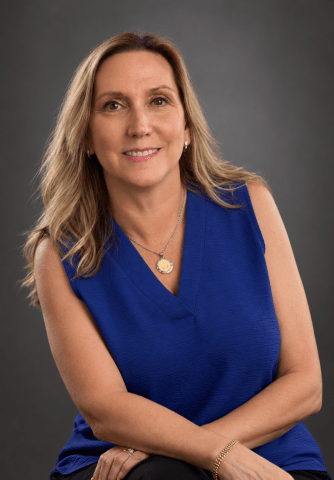
Loretta Corbisiero‑Drakos, a Ph.D. student in the Department of Curriculum and Instruction in The School of Education, had her paper, “Arts Integration and Belonging: Supporting English Language Learners Through a Critical Community of Practice,” accepted for double‑blind peer review by the Scientific Committee of the 11th World Conference on the Future of Education.
“As an advocate for arts education and arts integration, I am honored to present this work at an international forum such as the World Conference on the Future of Education,” she said. “This research highlights the efforts of educators who are deeply committed to creating inclusive learning environments where all students’ voices are heard and valued, including the voices of English-language learners.”
Loretta’s paper stems from a pilot study conducted within the Ph.D. program’s Community Immersion II course. The study explored how educators and teaching artists collaborated in a high school setting to integrate the arts through the Patchogue Arts Council’s PEACE (Partners in Education, Arts, and Community Empowerment) Project.
Inspired by the depth of this collaboration, Loretta sought to document the powerful impact of their work. Within a critical community of practice, teachers and teaching artists intentionally designed arts‑integration projects that supported English-language learners by creating spaces where students could share their stories, express their identities, and cultivate a sense of belonging.
“This work stands as a testament to the transformative power of arts‑integrated learning and the educators who champion it,” said, Regina Mistretta, Ed.D., Chair and Professor in the Department of Curriculum and Instruction. “By centering student voice, identity, and belonging, Loretta’s research affirms that when schools create intentional spaces for expression, English language-learners—and all students—gain the confidence to bring their full selves into the classroom. Her scholarship not only elevates the role of arts in education, but also reinforces a broader truth: inclusive, culturally responsive learning environments are essential for empowering the next generation of thinkers, creators, and leaders.”
Eric Akuoko, Ph.D., Assistant Professor, and Director of Curriculum and Instruction Ph.D. Program, adds that “Loretta is a prolific writer who consistently embraces faculty feedback and uses it to strengthen her scholarship and support her ongoing growth. Like Loretta, all students in our Curriculum and Instruction Ph.D. program benefit from adaptive, individualized feedback, with our small‑cohort model serving as a powerful affordance for high‑impact mentorship and sustained academic development.”
The conference will be held in Vienna, Austria, from November 27 through 29.