


November 9, 2026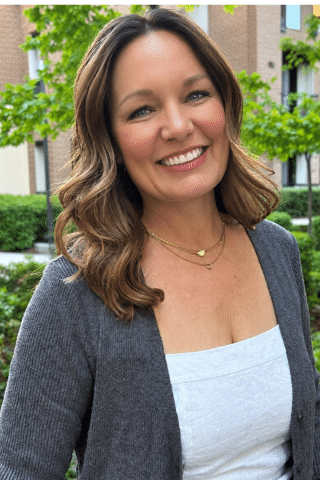
Jennifer Payne, a doctoral candidate in literacy in The School of Education at St. John’s University, is also a veteran educator, cofounder of Victory Garden Kids, and the recently published author of Sounds of America.
“Jennifer exemplifies the kind of scholar-practitioner we hope to cultivate in our Literacy Ph.D. program,” said Olivia G. Stewart, Ph.D., Associate Professor of Literacy in the Department of Education Specialties. “She thoughtfully brings together research, theory, and her extensive experience as an educator to create work that matters beyond the University. Sounds of America reflects her commitment to literacy as a means of fostering agency, belonging, and connection, and it has been wonderful to see her translate her doctoral learning into something that can have a meaningful impact on children, families, and educators.”
While her accomplishments are impressive, they tell only part of the story. For more than 25 years, she has dedicated her career to fostering literacy, inspiring student success, and empowering young people to recognize their strengths as learners. At the heart of her work is a simple yet powerful mission: helping students build confidence, discover their potential, and develop a lifelong love of learning.
Who did you write this book for, and who is your ideal reader?
I have learned from working with students and families over the last 25 years that every reader is my avatar for the ideal reader. My students have taught me that using a kid-filter for what readers need is the best way to write and teach, so I did my best to use that filter when writing Sounds of America. There is, of course, a target audience for the literacy features of ages four through eight, but the themes of belonging, community, and togetherness are meant to connect to the continuum of readers from earliest reader to grown-up who receives the message of the book.
What inspired you to write Sounds of America? Was there a particular experience, person, or idea that influenced its creation?
My husband and I were having dinner at an Italian restaurant in Manhattan with my writing mentor, Michael R. Sampson, Ph.D., Professor of Literacy, and he shared a story about the original owner of the restaurant, whose picture was hanging on the wall behind our table. My character, Paulie, was named and modeled after that story.
Later that night, my husband and I were walking along the banks of the East River, and all the sounds on the dock connected in my mind with what Paul’s story might have been like when he came to America. I wanted to connect the sounds an immigrant’s story might hold that I was experiencing on that walk on the docks with the literacy aspects of sound, and that’s how this story was born.
As an educator and current Ph.D. student in literacy, you have spent considerable time studying how people read, write, and learn. In what ways did your academic understanding of literacy support or challenge you during the writing process?
One of the most important characteristics of a teacher is to be a learner, themselves, and that is the case with me during this process. I have been so lucky to be able to publish a book while in this literacy program because of all I actively was learning during the creation of the content. It was essential me to write through the kid-filter, rather than my own, and to speak through the story to our digital native learners. The research and literature that our professors presented about digital, multi-, and critical literacies was instrumental in how I presented this story.
Serafini’s (2012) article, “Reading Multimodal Texts in the 21st Century,” presented in Dr. Stewart’s Digital Literacy and Learning course, describes the value of the reader as creator through postmodern picture-book style. It influenced the way I wanted to create a visual connection to sound that jumped off the page to pull the reader in as an active participant.
Hart and Risley’s (2003) article, “The Early Catastrophe: The 30 Million Word Gap by Age 3,” presented in Dr. Sampson’s Literacy for Social Justice course, also impacted my word choice to ensure that I leveled up the vocabulary with joyful integration. Simultaneously using repetition, all reader senses, and higher-level vocabulary were influenced by research from our program to guide my attempt at creating both a read-aloud platform for conversation and a solo reading experience that ignites self-talk about feelings of self-value as readers and citizens.
What is something you discovered about yourself while writing this book?
I have learned a lot about exactly how many hours of sleep one can do without when simultaneously publishing their first picture-book and writing a dissertation proposal! My real answer, though, is that I have learned that our mission in literacy is more crucial than ever, and that my voice individually and our academically empowered voices collectively must be the voice for those who are not able to speak for themselves. I have affirmed through both the process of writing this book and in our program that our voices matter, and that both evidence-based knowledge and our arm-in-arm pursuit of best practices is the best way to make a change in this literacy environment for today’s learners.
Now that the book has been released, what aspect of sharing it with the world are you most excited about? Is there anything that makes you nervous?
I am most excited about sharing the message of belonging and supporting kids’ confidence and feelings of value that I hope they will get from this book. Selfishly, I am so excited about all the school visits that I get to do because I miss being in the classroom every day. I am also excited about my little grandsons walking into a bookstore and seeing something that their Mimi wrote for them.
One thing I am nervous about that continually drives me is that I want to be sure to continually represent current literacy practices and evidence well. I will strive to always represent children and their needs accurately. I don’t ever want my literacy platform to be just about my opinion, but about proven research that serves the needs of children effectively. Maybe this is not something I am nervous about, but a responsibility I feel to the mission that I will always seek to uphold.
Beyond the story itself, what is the central message or feeling you hope remains with readers long after they turn the final page?
My biggest hope is that this book supports a readers’ feelings of belonging and value just because of who they are, that they know reading is a right that they can have ownership of and agency over, and that they feel supported and heard in whatever life circumstance they are in.
Was there a professor, mentor, or member of The School of Education community who played a meaningful role in supporting you throughout this journey?
Dr. Sampson has been instrumental in mentoring me as a writer and a literacy expert. Dr. Stewart’s perspective on speaking to learners multimodally and understanding theoretical frameworks as a guidepost has been so valuable. Daleene Janzen, has been an amazing friend and collaborative cohort peer since the inception of our program, and I was honored to read to her students for my very first Sounds of America classroom visit. I am so grateful for the St. John’s professors and peers who have been so personally and professionally supportive of this book release, and for this doctoral program that has informed and grown my beliefs about the current education system and the ever-evolving needs of our learners.
Now that this significant accomplishment is complete, what’s next for you? Are there any future writing, research, or professional projects on the horizon?
It’s dissertation time now! I have 10 million children’s book drafts written or outlined in my head, but will purely focus on my dissertation for now. I have a book for parents that is in the final editing phase called Level Up: Victorious Reading—How to Teach Your Kids to Read Efficiently, Effectively, and Victoriously, supporting how parents can teach their kids to read at home. Additionally, my husband and I cofounded Victory Garden Kids to provide parent coaching sessions both online and in person, and have written the first draft of a book for parents, Love Grows Here: A 30-Day Guide to Raising Victorious Kids, that shares the methodology we use with our clients in a daily workbook format, to be released in 2028.
Get your copy of Sounds of America.