
November 20, 2026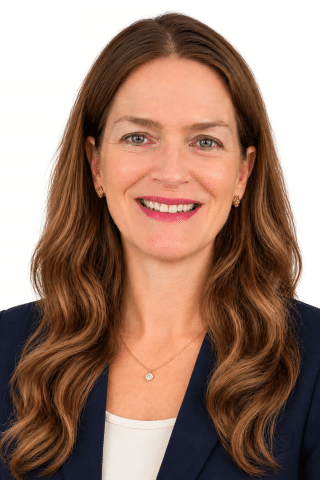
Victoria Gray Palmer, a student finishing her final classes in the Ph.D. in Literacy program in The School of Education at St. John’s University, recently had an op-ed piece, “Label Me a ‘Lifelong Herder’ in Place of an ‘Empty Nester’”, published in The SandPaper, a weekly newsmagazine covering Long Beach Island (LBI) and southern Ocean County in New Jersey.
Besides being a New Jersey state-certified English Language Arts, speech and theatre arts, and elementary school teacher who has worked with K–12 students for more than 18 years, Ms. Palmer is also a freelance writer whose work has appeared in The Sandpaper, The Beacon, The Beachcomber, The DoylestownPatriot, and The Princeton Packet.
Her academic work has been published in theNew England College Journal of Applied Educational Research, and she aspires to publish more academic writing and to publish her fictional work in children’s literature.
“There are many joys in working with my SJU Ph.D. students. Throughout our semesters together, I learn not only about their continuing contributions to the field of literacy but also, as Tori exemplifies in her engaging article, about their rich contributions to the community,” said Bonnie J. Johnson, Ph.D., award-winning author and literacy expert.
Ms. Palmer took some time to share with us her motivation behind her recent op-ed piece.
You opened with someone calling you an “empty nester.” Was there a specific conversation or moment when that label felt particularly jarring, prompting you to coin “lifelong herder”?
After those words had been suspended in my mind for several years—and as I had always viewed them as a deficit-related term—I had a moment when a server in a restaurant labeled me with those words, and I felt compelled to rebel against the term.
What does being a “lifelong herder” look like in your day-to-day routine now that your children are out of the house? How do you actively maintain that “Ariadne’s golden cord” across physical distance?
Using Greek mythology’s representation of a cord that can keep loved ones connected, “Ariadne’s golden cord” is how I can best describe the unbreakable, celestial, infinite bond that ties me to my children, my parents, and the whole of my extended family, which originated with my bond to my mother. There is not a day that goes by that I do not text and/or talk to my children, and as they live close to home, we see each other often and during summers and vacations; to me, they are “away,” and not “gone” from home.
You mentioned that society expects parents to fill an “empty nest” void with hobbies and activities. How did you push back against that expectation in your own life?
I have always been an optimist and someone who looks at the glass as being “half full,” not “half empty.” That is to say, although my children are away from home, they are still with me just as much, due to our strong bonds. I have dedicated my life to my children—and I continue to do so—while also improving myself to the best of my abilities and honoring my commitment to being a lifelong learner. Deciding to pursue a doctoral degree has helped me in this journey and has enabled me to continue to share that academic bond with my children.
Having taught both elementary and high school students, how did watching families grow and transition over the years shape your critique of the “launch and leave” mentality?
American society has been sold a sad story of family love. This idea that children are only meant to be raised to be independent of their familial bonds is a foreign concept to me, as I was raised by a second-generation Italian American mother who raised me and my siblings to be close with our own unit, as well as with our grandparents, cousins, aunts, and uncles.
Watching the bonds of other families as they spanned the educational school system, I got the sense that parents—and children—felt the pressure of succumbing to those American cultural norms by severing familial ties for those children to become “successful” in the world. This led me to explore how other countries viewed family bonds, and I learned that the bonds that I have with my family most represent those of European and Asian communities, and it appears that fostering a sense of separateness and independence from those ties—although loving—is uniquely an American invention.
Some parents genuinely grieve the end of daily life with their kids under one roof, even when they stay close. How does the “lifelong herder" mindset make room for that transition without framing it as a deficit or loss?
I can relate to people who grieve the loss of having their children live with them under one roof. However, since I was raised with the familial bonds that I have mentioned, I have never considered my time with my children—nor my parents and whole family—to be “over,” as it is a condition that is continuous and inextricable and never-ending.
I coined the phrase “lifelong herder” to show what it means to be part of your family’s life as you’ve lived it in the past, as you are living it in the present, and as you will live it in the future: together, with love, and with a family language that is all your own that was gifted to you through your ancestors and built upon by each member’s uniqueness.
Since this piece was published, how have other parents—especially those struggling with the “empty nest” label—responded to the idea of calling themselves “lifelong herders”?
I have received so many positive responses from readers who now feel vindicated in calling themselves “lifelong herders,” and from others who have always seen themselves in that light but lacked a fitting name for it. I am happy to report that as a result of reading this article, the parents that I have spoken with have claimed that they have become empowered and are talking with each other and debating about what family love is and of what place it should hold in their lives, giving people the ability to think critically about their lives and to perhaps redefine their attitudes and beliefs in ways that stretch their growth. After all, isn’t this what literacy affords all of us the chance to do?