

October 7, 2025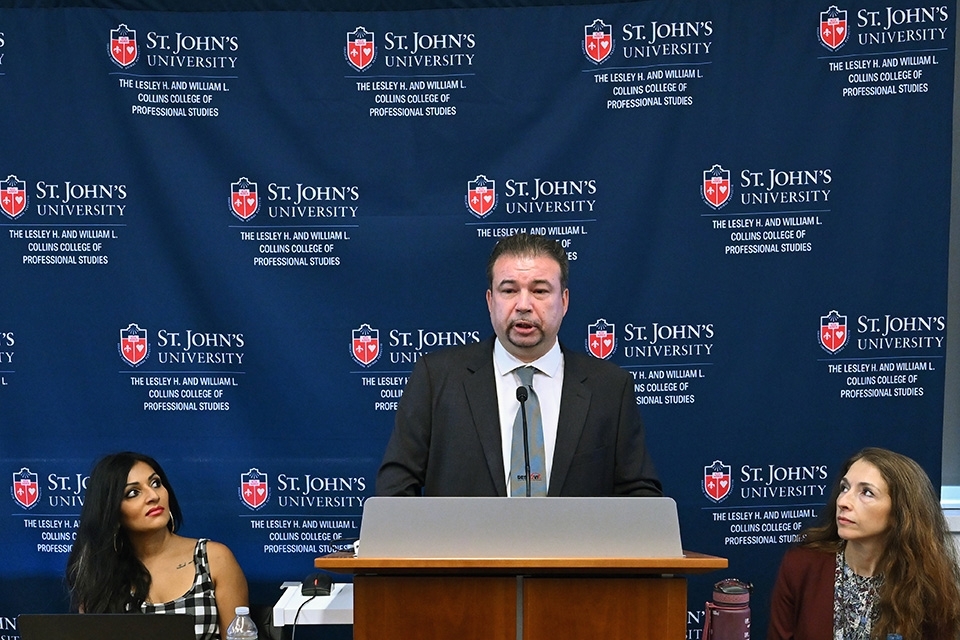
St. John’s University’s Justice Initiative Center explored several issues that drive wrongful convictions in a panel discussion that featured attorneys, exonerees, filmmakers, and researchers.
The October 2 event in St. Augustine Hall examined a troubling driver of injustice in the legal system—false confessions. The event coincided with the Justice Initiative Center’s recognition of the 12th anniversary of International Wrongful Conviction Day.
The program focused on how and why innocent people confess to crimes they did not commit—and what institutional reforms can prevent such confessions from occurring.
“False confessions are one of the major factors contributing to wrongful convictions,” said Marina Sorochinski, Ph.D., Assistant Professor of Criminal Justice, The Lesley H. and William L. Collins College of Professional Studies, and Research and Education Liaison for the Justice Initiative Center, which is housed under the Office of Mission Initiatives.
Speakers explored the issue from personal, legal, and media perspectives.
Jeffrey Deskovic, J.D., who spent 16 years in prison before proving his innocence, explained strategies for confronting coerced confessions in court. As a lawyer, he now leads the Deskovic Foundation, which supports exonerees and works to prevent wrongful convictions.
Mr. Deskovic recounted his experiences in confessing to rape and murder charges he did not commit. He was 17 years old at the time of his conviction.
“I certainly did not understand my rights—that anything I said could be used against me,” Mr. Deskovic recalled. “I am aware of the legal maxim that you are innocent until proven guilty. But that is fiction in a confession case. When you are defending a case with a false confession, you need to explain that confession.”
Anthony Dolci, Director of Stop False Police Reporting, a nonprofit that advocates for policy changes and supports survivors of false police reports, shared his experience of being falsely accused, and highlighted pending New York State legislative efforts to prevent such injustices.
One such effort is the Universal Stop False Reporting Act, which would make it a felony for police officers and civilians to lie in a police report. “We hear about exoneration, which is wonderful,” Mr. Dolci said. “What we do not hear enough about is the perpetrators being held accountable.”
From a prosecutorial perspective, Willoughby Jenett, Esq., Deputy Unit Chief at the Manhattan District Attorney’s Post-Conviction Justice Unit, emphasized the importance of blending justice reform with community trust.
“Our unit contributes to public safety by responding to and engaging with the community,” Mr. Jenett said. “Implementing community reforms and conducting real conviction reviews that vacate wrongful convictions builds public will and inspires confidence in DA offices.”
The lecture also featured filmmaker Jia Rizvi, whose projects Conviction and Sixteen Years document wrongful conviction stories. Ms. Rizvi described the unique ability of film to reach audiences and drive empathy.
“When I made a film, people showed up, they cared, and they understood,” Ms. Rizvi said. “Storytelling through film connects people to lived experiences, and that connection raises real awareness.”
Students engaged directly with the panel at the end of the lecture. Anna Giannichi, a Ph.D. candidate in Clinical Psychology, whose research focuses on trauma narratives, inquired about the potential effectiveness of reforms in a system that may be resistant to their implementation.
“As much as I would like to say this is housed exclusively within law enforcement, it is a much greater issue,” Anna said. “False confessions are one of the strongest tools we have in obtaining arrests and convictions. In some cases, it can feel like ‘evidence does not matter; you confessed.’”
International Wrongful Conviction Day was established in 2013 to shed light on the causes of wrongful conviction and to acknowledge the personal, social, and emotional costs of wrongful conviction on innocent individuals and their families.
The Justice Initiative Center aims to educate people—especially those lacking economic, physical, or social advantages—on the workings of the criminal legal system. Its research efforts are designed to uncover and remediate the causes of poverty and social injustice, and to advocate for the rights of justice-involved individuals.
At the St. John’s event, students, faculty, administrators, and staff were challenged to turn awareness of the issue of false confessions into action. “Justice demands more than sympathy; it demands change,” Dr. Sorochinski said.