
June 2, 2026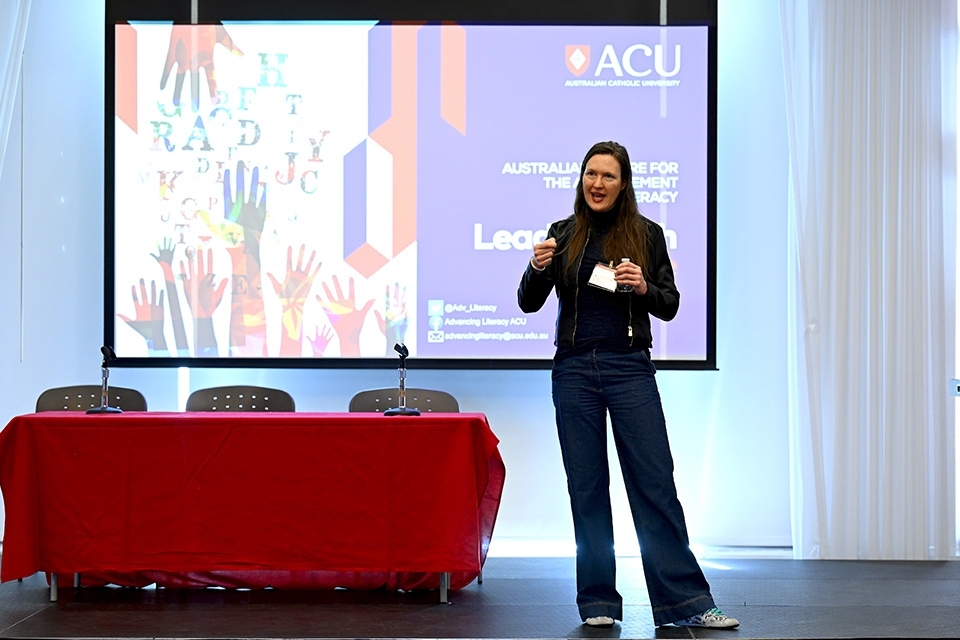
The impact of age, language background, cognitive ability, and other ingredients on bilingualism was the subject of a US National Science Foundation (NSF)-supported symposium that attracted scholars and students from across the United States to St. John’s University on May 7–8.
The first-of-its-kind BRIDGES Symposium on Individual Differences in Bilingualism sought to advance and explain current research on bilingualism, which has increased in recent decades as American society has become more diverse. St. John’s, located in the nation’s most diverse county —Queens, NY— was an ideal host for the academic gathering, according to Rafael A. Javier, Ph.D., Professor, Department of Psychology, St. John’s College of Liberal Arts and Sciences, one of the coordinators of the symposium.
“St. John’s is particularly positioned to take the lead on this subject,” Dr. Javier said. “There are 600 languages or dialects spoken in Queens. It is where so many multilingual people live. We have an obligation as an institution to study the impact of bilingualism.”
Scholars from as far away as Australia, California, and Florida gathered in the D’Angelo Center Ballroom to present research on topics as diverse as language development in children; mental health issues among bilingual students; teaching strategies in dual-language classrooms; and more. Keynote speakers included Wilma Bucci, Ph.D., Professor Emerita at Adelphi University, who discussed Multiple Code Theory, a system of brain processing she developed during her lengthy career as a clinical psychologist.
In presenting the opening day keynote address, Gigi Luk, Ph.D., Professor of Educational Psychology at McGill University in Montreal, Quebec, Canada, noted that children from bilingual households were once considered intellectually inferior to those from English-first families. “How do we reform both our researchers and practitioners?” Dr. Luk wondered. “How do we bring people out of these misconceptions?”
Welcomed by Simon G. Møller, Ph.D., St. John’s Provost and Senior Vice President for Academic Affairs, scholars and students engaged in panel discussions throughout the two days. More than 150 attended or participated online. “This is a really important area of research as it sits at the intersection of language, tradition, culture, and identity,” Dr. Møller told the audience. “What you are doing is important, and at St. John’s, this work resonates with us every day and every week of the year.”
Plans for the symposium date back to January 2025, said Ester D. Navarro, Ph.D., Assistant Professor, Department of Psychology at St. John’s. Support from the NSF enabled organizers to recruit top-tier researchers in communication, education, and psychology, and to award five travel stipends to students eager to showcase their work to a professional audience.
“We wanted to create a space to talk about issues in bilingualism,” Dr. Navarro explained. “We have several departments at St. John’s that do related work—The School of Education, Communication Arts, and Communication Sciences and Disorders. The NSF was interested in making this a big event.”
Scholarly presentations were complemented by student research on topics such as the role of bilingualism in processing traumatic circumstances, metalinguistic awareness, and the impact of media consumption on bilingualism. More than 30 student researchers presented posters summarizing their findings to an audience of linguistics experts and others eager to educate themselves.
“Biculturalism and bilingualism go hand in hand,” said Zuzanna Kromczyk '26SJC, a recent St. John’s graduate who, guided by Dr. Javier, researched the impact of media consumption on Polish Americans with close links to both cultures. “So many factors play a role in our eagerness to be a part of both cultures, or whether I prefer one to another. Your ability to adapt or at least be accepting of bilingualism is one of them.”
Next to Zuzanna, St. John’s doctoral candidate Christian Dellavella explained his research into the connection between metalinguistic awareness (MLA) and perspective creation. MLA is the ability to analyze and manipulate language rather than merely using it for communication. Perspective is the mental framework through which individuals view the world around them.
Christian, working with Dr. Navarro and Eleonora Rossi, Ph.D., of the University of Florida, studied how those with advanced MLA skills are better equipped to understand situations from another’s point of view. Researchers have proposed that bilingual people are more likely to possess those advanced skills.
“MLA aids in our ability to connect with others in meaningful ways,” Christian explained. “In adults, it might mean my ability to infer from a conversation that a friend is sad, even if he is not telling me he is sad. For some reason, multilingual people are better at this.”