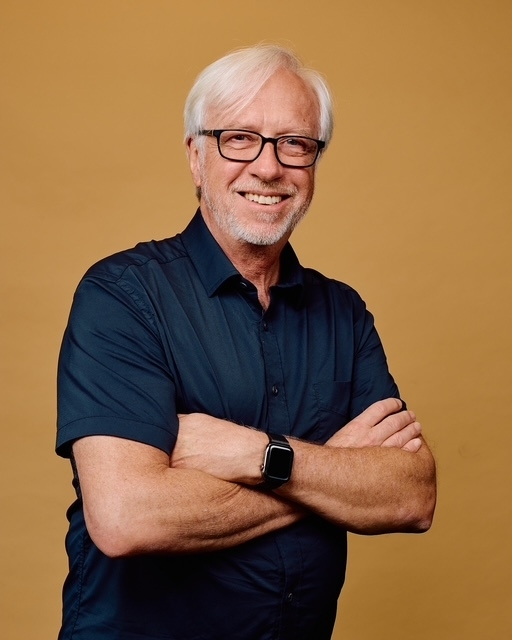
How Tobin alum Ronald Weidner ’81CBA applies a systems lens to the future of artificial intelligence
June 18, 2026
Ronald Weidner ’81CBA has spent much of his career working inside complex systems. From early roles at Commerzbank and large-scale urban redevelopment projects to founding the global sustainability platform Greenprint and advising initiatives such as Google X’s Anori, his work has focused on a single question: what happens when intelligence scales faster than the systems designed to guide it?
Today, as artificial intelligence moves from experimentation into everyday decision-making, Weidner approaches the technology through a lens shaped by decades of experience across industries. He does not begin with algorithms or computing power. He begins with systems.
A housing model optimized for cost efficiency, he explains, may lower construction and energy expenses. On paper, the model succeeds. But if it fails to account for indoor air quality, residents experience higher rates of asthma and chronic illness. Healthcare costs rise. Productivity declines. The savings generated in one column quietly reappear, amplified in another.
“The algorithm didn’t fail,” Weidner says. “It did exactly what it was trained to do. The problem is that the system became more fragile.”
That observation captures how Weidner approaches AI and explains why his work has drawn attention across finance, technology, and sustainability circles. Rather than treating artificial intelligence as a standalone technology, he views it as a force that scales whatever logic already exists inside the systems it touches. AI, he argues, does not simply automate decisions. It accelerates them, often without visibility into their downstream consequences.
For Weidner, this is not a theoretical concern. It reflects how he has spent much of his career thinking about risk, incentives, and alignment long before AI entered the mainstream conversation.
Ronald Weidner
A Tobin Foundation Built Around “Go, Go, Go”
Weidner’s systems mindset began long before artificial intelligence entered the conversation, during a St. John’s experience defined less by campus life and more by momentum. His days followed a rigid rhythm. Classes started at 8 a.m., coursework was completed in the library by early afternoon, and a 4 p.m. shift at Lufthansa awaited at John F. Kennedy International Airport, where he worked as a baggage handler while finishing his degree.
“I didn’t have the typical university life,” he says. “My day was just go, go, go.”
He had started working at Lufthansa at 16 years old, commuting to the airport after high school, and continued balancing work with his studies in accounting while taking extensive finance courses at Tobin. The pace left little room for downtime, but it cultivated habits that would shape his career. Curiosity, discipline, and an instinct to learn by doing became constants.
“Once I figured something out, it was always: what else can I do?” Weidner says.
That mindset formed an early foundation for the systems thinking that would later guide his work across finance, sustainability, and artificial intelligence.
A Career That Trained the Lens
Weidner’s professional life has unfolded inside complex, high-stakes environments where decisions compound over time. He has deployed capital through multiple financial cycles, helped finance large-scale urban redevelopment during periods of economic and political transition, and worked to integrate climate and health considerations into long-duration investment strategies.
Across those experiences, a consistent pattern emerged. Systems rarely fail because people lack intelligence. They fail because incentives drift out of alignment.
“You see it in finance, in cities, in infrastructure,” Weidner says. “What looks efficient in isolation often becomes unstable at scale.”
Ron Weidner off to his first day of work at Commerzbank.
That sensibility deepened when he moved into banking in the early 1980s during a highly competitive hiring environment shaped by recession. An interview arranged through a Lufthansa connection led to an unexpected turning point when Weidner was offered a role at Commerzbank on the spot. The position placed him close to leadership and inside a training environment where risk was never viewed in isolation.
“Banking is the system,” Weidner says. “You can’t look at certain risk in isolation and not see how it impacts other things.”
He believes that principle has weakened across industries as complexity increased and organizations moved into silos, outsourcing holistic judgment to narrower specializations.
Greenprint and the Case for Making Risk Visible
That systems-first thinking became operational through Greenprint, the global sustainability platform Weidner founded and now leads as Founder and Chairman. Greenprint integrated environmental, health, and financial performance data across trillions of dollars in institutional real estate assets. The platform helped investors understand how buildings affected not only energy use and emissions, but also human health and long-term value creation.
By reframing sustainability through measurable risk and performance metrics, Greenprint influenced how capital was deployed across portfolios. Systems change, Weidner argues, when intelligence is trained on better data and aligned incentives.
“Carbon is the new asbestos,” he says. Once carbon risk becomes embedded in valuation and regulation, it reshapes how assets are priced and managed.
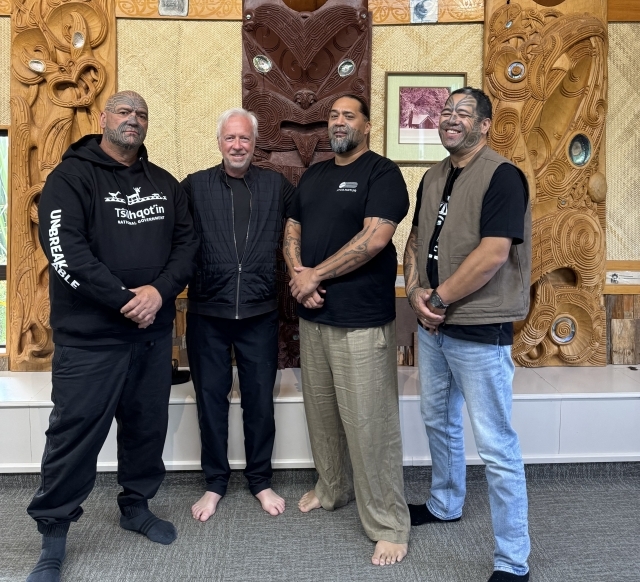
Maori Co-founder for AI and Humanity.
Why AI Is Different
That background explains why Weidner sees artificial intelligence as fundamentally different from prior waves of technology.
Earlier innovations extended human capability. Machines amplified physical labor. Computers accelerated calculation. Software automated processes. AI operates at a deeper layer. It learns from experience, identifies patterns, and increasingly influences decisions once governed by human judgment.
“When intelligence starts operating across systems instead of within silos, the consequences change,” Weidner explains. “You’re no longer optimizing a task. You’re shaping outcomes.”
Housing, finance, healthcare, climate, infrastructure, and education are deeply interconnected. AI systems trained to optimize narrow objectives such as speed, engagement, or cost reduction can unintentionally magnify risk elsewhere. Efficiency in one domain may erode resilience in another.
“The danger isn’t that AI will malfunction,” Weidner says. “The danger is that it will succeed inside systems that were never aligned to begin with.”
What makes this moment different, he adds, is not only technological capability but moral pressure. Modern markets reward speed and measurable growth, and AI amplifies those incentives. The real challenge is not whether systems can optimize, but what leaders choose to optimize.
“AI will scale whatever logic we embed within it,” he says. “The question is whether we embed wisdom or impulse.”
From Risk Management to Formation
Much of today’s AI debate centers on control. Regulation, guardrails, oversight, and technical safety mechanisms aim to limit misuse. Weidner views these efforts as necessary, but incomplete.
Control assumes intelligence can be constrained after deployment. Formation addresses what intelligence is trained to value before it scales.
“With AI, the real leverage point is upstream, how intelligence is trained before it ever touches the real world”, he says.
Training data, reward structures, governance models, and deployment context shape how intelligence behaves. If those inputs prioritize narrow or short-term objectives, AI will optimize accordingly regardless of broader system effects.
This, Weidner argues, is not a technical failure. It is a design and leadership failure.
AI for Humanity
These ideas underpin AI for Humanity, Weidner’s research framework for thinking about how artificial intelligence should be trained, governed, and deployed in real-world systems. For him, it is not a slogan. It is a design discipline that asks intelligence to see consequences across systems rather than optimize in isolation.
A distinctive element of the framework is its use of Indigenous knowledge systems as a governance model rather than ethical symbolism. Indigenous frameworks have long managed complex, interconnected systems by emphasizing relational responsibility to people, land, and future generations simultaneously. Weidner applies these principles directly to AI formation, arguing that they offer practical ways to train intelligence to recognize system-wide consequences rather than optimize narrow objectives in isolation.
“These systems already know how to manage complexity,” Weidner says. “They’re built around responsibility and relationship, not extraction. That’s exactly what AI lacks and exactly what it needs.”
In practice, the framework encourages models that evaluate how decisions in one area affect others. A housing decision, for example, can influence public health outcomes, climate risk exposure, educational stability, and long-term economic mobility. For Weidner, that systems awareness reflects the future of responsible intelligence.
From Framework to Practice
Weidner’s work in AI is not confined to theory. As a senior advisor to Google X’s Anori initiative, he has helped apply artificial intelligence to understand how housing, climate risk, population health, and economic outcomes interact in real-world systems.
Housing sits at the center of many of these interactions. The built environment shapes emissions, resource use, health outcomes, and financial resilience. What appears efficient in one metric often reappears elsewhere as risk or cost.
“If you look at housing, it creates communities,” he says. “You have to look at the whole system.”
Unlike traditional software development, AI requires specifying objectives, selecting data, and shaping how intelligence learns. In many ways, Weidner compares it to mentoring a new collaborator rather than programming a machine.
“In a way, you’re training it,” he says. “It becomes a collaborator. A superpower.”
What AI Should Serve
As AI becomes embedded in organizational and societal decision-making, Weidner believes traditional performance metrics are no longer sufficient. Accuracy, efficiency, and speed remain important, but they are incomplete measures of success.
AI systems that optimize the wrong objective can destabilize the systems they operate within. Models designed to maximize engagement may erode trust. Systems focused narrowly on cost reduction may shift risk onto populations least equipped to absorb it.
“As intelligence scales,” Weidner says, “purpose becomes as important as capability.”
That reframes artificial intelligence not simply as a technology challenge, but as a leadership challenge. Leaders must decide what intelligence is allowed to optimize and what outcomes matter over the long term.
An Alum’s Perspective
Weidner traces much of his systems-oriented thinking to his education at St. John’s University, where he learned to operate under constraint while continuing to push forward.
For him, AI represents a continuation of the same question that has shaped his career: how to design systems that align intelligence with long-term human wellbeing.
“Your degree gives you competence,” he says. “Your values determine your impact.”
In the Vincentian tradition of service, dignity, and opportunity, leadership is measured not only by performance but by who benefits and who bears the risk. In an era when artificial intelligence can amplify both wisdom and error at scale, character is not a soft skill. It is a strategic advantage.
“This is not ultimately a technology problem,” Weidner says. “It’s a leadership problem. The systems we design today will shape how intelligence behaves long after we’re no longer in the room.”
As artificial intelligence accelerates, that perspective places Weidner—and the work he is doing—squarely at the intersection of innovation, responsibility, and leadership. It is also why his thinking resonates beyond the world of AI itself, offering a framework for how intelligence, once unleashed at scale, might serve humanity rather than undermine it.
Heather C. Robertson, Ph.D., LMHC, CASAC, CRC, Professor and Chair of the Counselor Education Department, has been selected as the 2026–2027 Scholar‑in‑Residence for the Center for Faculty Success and...
St. John’s University’s Maurice R. Greenberg School of Risk Management, Insurance and Actuarial Science, part of The Peter J. Tobin College of Business, will honor The Hartford’s Chairman and CEO...
For Immediate Release Media Contact: Maureen Furlong Weber Director, Greenberg School of Risk Management, Insurance and Actuarial Science 212-277-5111 [email protected] NEW YORK (September 22, 2026)...