
This program is a rigorous course of study, combining didactic and laboratory-based academic instruction with clinical training. The first two didactic years integrate medical, behavioral, and social sciences to develop a comprehensive approach to patient care. The third year of the program is dedicated to clinical training, providing supervised, hands-on training by licensed clinicians at leading New York-area hospitals, medical centers, and private medical practices.
Upon completion of the program, graduates are eligible to take the National Commission on Certification of Physician Assistant (NCCPA)-administered Physician Assistant National Certifying Exam (PANCE) exam.
- Degree Type
- MS
- Area of Interest
- Nursing, Pharmacy & Health Sciences
- Associated Colleges or Schools
- Program Location
- Queens Campus
- Required Credit Hours
- 84
Graduates will achieve the following:
- Mastery of scientific and medical knowledge, as well as a rigorous clinical experience needed for a career in clinical care.
- Effective problem solving and critical reasoning skills to foster the development of positive attitudes, values, and appropriate behavior.
- Caring and competence needed to provide compassionate, effective health care to patients of all ages and ethnicities.
- Knowledge of diagnosing illnesses and medications needed to treat those conditions.
Physician Assistants (PAs) are in high demand. PAs practice in every specialty and work setting. Being a physician assistant is regularly ranked among the top 5 healthcare, STEM, and overall jobs in the U.S. From:
https://www.aapa.org/pas-go-beyond/
The Physician Assistant program within the College of Pharmacy and Health Sciences is committed to a student-centered, inclusive pedagogical model that supports student success, personal and professional development. Our graduates are equipped with the tools to become leaders in their respective fields who work effectively in interprofessional collaborative environments.
Program's Mission
Integrating Vincentian Tradition & Values
The St. John’s University Physician Assistant program utilizes a student-centered approach to provide learners with the necessary academic, clinical, professional, and interpersonal skills to function competently, confidently, compassionately, and efficiently as health care practitioners. Students are sensitized to the diversity of healthcare needs and the impact of socioeconomic factors on healthcare to promote non-discrimination and inspire graduates to provide high-quality, cost-effective, compassionate, and accessible care to underserved patients in urban communities.
Program’s History
St. John’s University is Catholic, Vincentian, Metropolitan and Global. It is committed to the pursuit of academic excellence, religious values, ethics, professionalism, and human experience.
Challenged by the belief that health care is a basic human right and driven by a similar mission, St. John’s University PA Program developed an educational program that would reach those most in need—“the poor, alienated and the aged.”
Conscious that culturally responsive healthcare is necessary to practice in diverse neighborhoods, we strive to provide exceptional educational opportunities to men and women of varied races and socioeconomic backgrounds so that our institution might continue its tradition of working as a partner with members of the local community. In this way, we will empower professionals to return to their own neighborhoods to promote preventive medicine and deliver affordable, high-quality primary care.
Committed to excellence in education, we will collaborate with institutions of higher learning. By combining institutional expertise, the clinical and academic arms of the healthcare profession might further unite to embrace and support those individuals seeking to become Physician Assistants.
Confident that we have the resources and the resolve, we seek to create an educational program where individuals might learn the art of healing and use their gifts to promote a vision of health care that encompasses not only the treatment of disease, but also the avoidance of illness through education and the promotion of healthy lifestyles. Thus, St. John’s PA program will continue its tradition of developing caring and committed healthcare professionals dedicated to the alleviation of suffering in our midst.
Program Admissions Requirements
Application Timeline
CASPA opens annually on April 30
The final application deadline is October 1 at 11:59 p.m. (ET)
Applications must be submitted and VERIFIED by CASPA by the deadline to be considered for review
This is a CASPA Green (Verified) deadline, meaning applications must be both submitted and verified by CASPA by the deadline to be eligible for review. Applicants may submit their CASPA application up to the October 1 deadline; however, applications that are submitted but not verified by CASPA by October 1 are not eligible for review.
CASPA verification may take 10 business days or longer, particularly during peak periods. Applicants are strongly encouraged to submit all application materials well in advance of the deadline.
Applicants are responsible for monitoring the status of their CASPA application and the CASPA portal to ensure that all required materials are received and verified by CASPA before the deadline.
Academic Requirements
Applicants must meet all of the following minimum academic requirements:
Earn a baccalaureate degree from a regionally accredited institution
Have a minimum cumulative (overall) GPA of 3.0 on a 4.0 scale
Have a minimum science GPA of 3.0 on a 4.0 scale
GPA calculations are based on CASPA-verified coursework
Prerequisite Coursework
All prerequisite coursework must meet the following requirements:
Completed within ten (10) years of the CASPA application submission date
Completed with a final grade of "C" or better
All in-progress and/or planned coursework must be self-reported by applicants on the CASPA application.
Applicants may have no more than three (3) outstanding prerequisite courses at the time of CASPA application submission.
All prerequisite coursework must be completed by the end of the spring semester immediately preceding matriculation. Official transcripts demonstrating completion of prerequisite coursework and/or degree conferral must be received by July 1 prior to matriculation. Failure to satisfy admission requirements by the required deadline may result in the revocation of an admission offer.
Required Prerequisite Courses
General Biology with laboratory – 2 semesters (minimum 8 credits)
General Chemistry with laboratory – 2 semesters (minimum 8 credits)
Microbiology (lab not required) – 1 semester (minimum 3 credits)
Human Anatomy & Physiology 1 and 2 with laboratory – 2 semesters (minimum 7 credits)
Biochemistry (lab not required) – 1 semester (minimum 3 credits)
Psychology – 1 semester (minimum 3 credits)
Mathematics – 2 semesters (minimum 6 credits), including:
Statistics – 1 semester (minimum 3 credits)
English Composition – 1 semester (minimum 3 credits)
Important Admissions Notice
The Physician Assistant Program does not provide transcript reviews, prerequisite evaluations, course equivalency determinations, patient care experience reviews, or competitiveness assessments.
Applicants are responsible for determining whether they meet published admission requirements.
Please review the Admission Requirements, Admissions FAQ, and Prerequisite Guide for detailed information regarding prerequisite coursework, acceptable substitutions, laboratory requirements and other prerequisite policies, patient care experience, letters of recommendation, interviews, and admissions policies.
Final determinations regarding prerequisite eligibility, patient care experience, and admission eligibility are made by the Admissions Committee only after review of a completed CASPA application.
Patient Care Experience (PCE)
Applicants must have a minimum of 200 hours of documented and verified Patient Care Experience (PCE) at the time of CASPA application submission.
Patient Care Experience must involve direct, hands-on patient care with responsibility for patient assessment, treatment, and/or monitoring within a structured healthcare setting.
Please review the Admissions FAQ for additional information regarding qualifying Patient Care Experience.
**Additional Patient Care Experience Verification
Applicants should not submit the Patient Care Experience Verification Form unless specifically requested to do so by the PA Program during the interview process.
This letter must clearly state: the applicant's role/title, dates of employment or service and total Patient Care Experience hours.
Please review the Admissions FAQ for complete letter of recommendation requirements and documentation standards.
Additional Policies
The program does not grant advanced standing, transfer credit, or credit for prior experiential learning.
International applicants and applicants whose first language is not English must satisfy all University English proficiency requirements.
Selected applicants will be invited to participate in a required admissions interview. An interview does not guarantee admission.
Application Fee
A non-refundable $100 St. John's University supplemental application fee is required. This fee is separate from and in addition to the CASPA application fee.
Applications will not be reviewed until the supplemental application fee has been received.
Competitive Admissions
Admission to the St. John's University Physician Assistant Program is competitive. Meeting minimum admission requirements does not guarantee an interview invitation or admission.
Preference is given to applicants with:
Competitive cumulative science GPA
No more than one repeated prerequisite course used to achieve the minimum required final grade
Prerequisite Guide
Applicants are responsible for determining whether coursework satisfies published prerequisite requirements based on the course title, catalog description, subject matter, credit value, and laboratory component. Please see Prerequisite Guide.
Admission FAQ
Please review this FAQ for questions related to Admissions processes.
Admissions Contact
For admissions-related inquiries, please directly contact Graduate Admissions
Graduate Admissions
Program Goals and Success
| Program Goals | Benchmark/Metric | Goal Outcomes - Class of 2026 |
|---|---|---|
| Goal 1: Prepare students with the requisite medical knowledge, competencies, and skills to provide holistic patient care. |
|
Program PANCE rate of 100% vs. national score of 91%. Class of 2025 - Target exceeded |
| A) 3.38/4.0 (Class of 2026) - Target exceeded B) 3.42/4.0 (Class of 2026) - Target exceeded | |
| Goal 2: Foster interpersonal and communication skills enabling students to participate as effective members of the healthcare team. |
| 97% of students passed |
| A) 3.41/4.0 (Class of 2026) - Target exceeded | |
| Goal 3: Cultivate an environment that promotes a commitment to provide culturally responsive care to underserved communities and diverse populations. |
| 100% of students (68 students) reported having at least 3 diverse rotation experiences. (Class of 2026) - Target exceeded **On average, students attended 8.39 diverse rotations, with the number of experiences ranging from a minimum of 3 to maximum of 10. |
| A) 3.45/4.0 (Class of 2026) - Target exceeded | |
| Goal 4: Enhance and develop student’s attributes of professionalism. |
| Aggregate score of 89.44% (Class of 2026) - Target exceeded |
| A) 3.45/4.0 (Class of 2026) - Target exceeded |
**The survey items utilize a 4-point Likert Scale of 1=strongly disagree, 2=disagree, 3=agree, 4=strongly agree
Program Contact
Danielle Kruger MS Ed., PA-C
Director and Associate Professor, Physician Assistant Program
Clinical Site Agreement Contact
St. John’s has established clinical site agreements that include a variety of practice settings, including medical centers, hospital systems, private practices, and many more. Sites are located throughout metropolitan New York and Long Island.
For more information on how to become an affiliate or preceptor of our program or to share job-related physician assistant opportunities for our graduates, please directly contact:
Daniel Podd, CAPT., USAF NY-ANG, MPAS, PA-C
Clinical Coordinator and Associate Professor, Physician Assistant Program
Physician Assistant Program Faculty

-
Associate Professor,
Industry Professional,
- Director, Physician Assistant Program
-
Associate Professor,
Industry Professional,
- Physician Assistant Program
-
Associate Professor,
- Associate Clinical Professor
-
Associate Professor ,
Industry Professional,
- Physician Assistant Program
-
Associate Professor,
Industry Professional,
- Physician Assistant Program
-
Associate Professor,
- Associate Professor Industry
Program Required Curricular Components
To earn their Master of Science Degree in Physician Assistant, students complete 84 credits, including didactic and clinical requirements as outlined below.
Fall Semester
| Course No. | Title | Credits |
|---|---|---|
| PAE 113 | Ethics and the PA Profession | 2 |
| PAE 121 | Anatomy, Physiology and Pathophysiology I | 3 |
| PAE 122 | Anatomy, Physiology and Pathophysiology I Lab | 1 |
| PAE 114 | Evidence Based Medicine | 2 |
| PAE 131 | Clinical Medicine 1 | 4 |
| PAE 115 | Current Topics in PA Practice | 0 |
Spring Semester
| Course No. | Title | Credits |
|---|---|---|
| PAE 123 | Anatomy, Physiology and Pathophysiology II | 3 |
| PAE 124 | Anatomy, Physiology and Pathophysiology II Lab | 1 |
| PAE 140 | Health History and Physical Diagnosis (HHPD) I | 1 |
| PAE 141 | HHPD I Lab | 1 |
| PAE 142 | Medical Diagnostics | 4 |
| PAE 132 | Clinical Medicine 2 | 5 |
Fall Semester
| Course No. | Title | Credits |
|---|---|---|
| PAE 233 | Clinical Medicine 3 | 5 |
| PAE 234 | Clinical Medicine 4 | 4 |
| PAE 235 | Clinical Medicine 5 | 4 |
| PAE 240 | HHPD II | 1 |
| PAE 241 | HHPD II Lab | 1 |
Spring Semester
| Course No. | Title | Credits |
|---|---|---|
| PAE 236 | Clinical Medicine 6 | 5 |
| PAE 237 | Clinical Medicine 7 | 4 |
| PAE 242 | Surgical Techniques | 1 |
| PAE 243 | Surgical Procedures Lab | 1 |
| PAE 244 | Clinical Mastery in Organ Systems: Problem-Based Learning Lab | 1 |
Summer Semester
| Course No. | Title | Credits |
|---|---|---|
| PAE 301 | Clinical Rotation – Internal Medicine | 3 |
| PAE 302 | Clinical Rotation – Primary Care I | 3 |
Total: 6 credits
Fall Semester
| Course No. | Title | Credits |
|---|---|---|
| PAE 304 | Clinical Rotation – General Surgery | 3 |
| PAE 305 | Clinical Rotation – Emergency Medicine | 3 |
| PAE 306 | Clinical Rotation – Women’s Health | 3 |
| PAE 313 | Clinical Rotation- Psychiatric and Behavioral Medicine | 3 |
Total: 12 credits
Spring Semester
| Course No. | Title | Credits |
|---|---|---|
| PAE 307 | Clinical Rotation – Long Term Care/Geriatrics | 3 |
| PAE 308 | Clinical Rotation – Orthopedics | 3 |
| PAE 309 | Clinical Rotation – Pediatrics | 3 |
| PAE 3010 | Clinical Rotation – Elective | 3 |
Total: 12 credits
Notes
*PAE 311 Senior Competencies (0 credit) is a seminar and assessment course that runs throughout the clinical year.
*The sequence of rotations will vary based on availability. Each rotation consists of 5-weeks of clinical experience. See course descriptions for PAE 300 courses.
*A complete overview of this program and others can be obtained from the online bulletin.
Student Support Services
St. John’s University supports the physician assistant program in developing and offering a wide range of programs and opportunities that provide students with academic and other support services:
These include:
- Individualized physician assistant peer-mentorship opportunities
- Peer physician assistant tutoring services
- Academic advisement and coaching by physician assistant faculty members
- The Inclusivity Resource Centers (IRC) provide brave, inclusive, and affirming space for students and guests.
- Student organizations and affinity groups that embrace diversity, equity and inclusion (DEI)
- Center for Counseling and Consultation is dedicated to helping students with a whole range of challenges that may interfere with the ability to live well, relate to others, and succeed academically.
- Other student services and programs.
St. John’s University PA Program Competencies
The Competencies for the PA Profession are designed to define the “specific knowledge, skills, and attitudes that physician assistants (PA) in all clinical specialties and settings in the United States should be able to demonstrate throughout their careers.” The competencies were first outlined by the Cross-Org Competencies Review Task Force, with representation from each of the four national PA organizations — the NCCPA, ARC-PA, AAPA and PAEA. The St. John’s PA program has used these to guide the development of the program’s competencies required for entry-level PA practice.
- Medical Knowledge
- Demonstrate current knowledge about basic and clinical health sciences and the application of this knowledge to patient care, disease prevention, diagnosis, and management.
- Demonstrate knowledge of the anatomy and physiology, disease etiology, pathophysiology, clinical manifestations, differential diagnoses, management, and appropriate interventions for general medical and surgical conditions.
- Interpersonal and Communication Skills
- Demonstrate organized and clear interpersonal, verbal, non-verbal, and written communication skills that result in the effective exchange of information and collaboration with patients, their families, and health professionals.
- Patient Care
- Integrate an appropriate contextual patient history, physical examination findings and appropriately order diagnostic tests for patient assessment to form a differential diagnosis.
- Provide individualized effective patient-centered assessment and care to diverse populations that is safe, evidence-based, culturally competent, and equitable.
- Counsel and educate a patient effectively.
- Explain the role of all members of the healthcare team and demonstrate collaboration to provide the highest quality of care.
- Clinical Reasoning and Problem Solving
- Utilize investigative, problem-solving, evidence-based decision making, and critical analysis in clinical situations.
- Exhibit fundamental skills in self-directed learning and self-awareness to identify strengths, improvement goals, address deficiencies, and recognize limits in knowledge and expertise.
- Clinical and Technical Skills
- Demonstrate ability to obtain a medical history and perform a physical examination.
- Safely and effectively perform medical, diagnostic, and surgical procedures considered essential for the practice specialty.
- Professional Behaviors
- Adhere to ethical and legal principles and standards of care that govern the medical profession and the delivery of healthcare.
- Demonstrate compassion, empathy, integrity, and respect for others and accountability to patients, society, and the profession.
Additional Information
Program policies apply to all students, principal faculty, and the program director regardless of location (Standard A3.01). Students can find program policies on the website and/or documented in their Didactic and Clinical Year Guidelines distributed at orientation.
Students are not required to provide or solicit clinical sites or preceptors. (Standard A3.03).
Students are not permitted to work for the program outside of peer tutoring/graduate assistantship through the College's Academic Success Center (Standard A3.04). Working while enrolled in the PA Program, even part-time, is strongly discouraged due to the challenging nature of the curriculum.
Students will not substitute for or function as instructional faculty, clinical or administrative staff (Standard A3.05).
Didactic Guidelines 2025 (Word)
In addition to academic achievements, exam results, and recommendations, physician assistant students must possess the physical, emotional, and behavioral capabilities requisite for the practice of medicine as a PA.
Physician Assistants must have the knowledge and skill to practice in a variety of clinical situations and to render a wide spectrum of care based on the patient’s needs. To successfully complete the PA clinical training program students must demonstrate proficiency in their academic and clinical education with regard to the technical standards:
Observation
PA students must have sufficient sensory capacity to observe in the lecture hall, the laboratory, the outpatient setting, and at the patient’s bedside. Sensory skills adequate to perform a physical examination are required. This includes functional vision, hearing, smell, and tactile sensation.
Communication
Students must be able to:
- communicate with patients and others in both academic and healthcare settings
- display effective writing, reading and verbal skills
- perceive and describe changes in mood, activity, and posture
- interpret non-verbal communication signals
Motor
Students should have sufficient motor function to:
- diagnose patients by palpation, auscultation, percussion, and other diagnostic maneuvers
- execute movements with reasonable dexterity in order to provide general care and emergency care to patients, including but not limited to:
- cardiopulmonary resuscitation
- administration of intravenous medication
- application of pressure to stop hemorrhage
- opening of obstructed airways
- suturing of simple wounds
- performance of simple obstetrical maneuvers
- negotiate patient care environments and must be able to move between settings, such as clinic, classroom building, and hospital
- maintain sufficient physical stamina to complete the rigorous course of didactic and clinical study. Long periods of sitting, standing, or moving are required in classroom, laboratory, and clinical settings.
Intellectual-Conceptual, Integrative, and Quantitative Abilities
Students must be able to:
- measure, calculate, reason, analyze and synthesize problem-solving skills
- interpret three dimensional relationships and understand the spatial relationships of anatomy structures
- critically read and interpret medical literature
In order to complete the Physician Assistant Program, candidates must be able to demonstrate mastery of these skills and the ability to use them together in a timely fashion in medical problem-solving and patient care.
Behavioral and Social Attributes
Student must:
- possess the emotional health required for full utilization of their intellectual abilities, the exercise of good judgment, and the completion of all academic and patient care responsibilities
- develop mature, sensitive, and effective relationships with patients, faculty and other members of the healthcare team
- function in the face of uncertainties inherent in clinical practice and adapt to changing environments
A student must demonstrate the above competencies with or without reasonable accommodation. Whether or not a requested accommodation is reasonable will be determined on an individual basis.
The Accreditation Review Commission on Education for the Physician Assistant, Inc. (ARC-PA) has granted Accreditation-Continued status to the St. John's University Physician Assistant Program sponsored by St. John's University. Accreditation-Continued is an accreditation status granted when a currently accredited program is in compliance with the ARC-PA Standards.
Accreditation remains in effect until the program closes or withdraws from the accreditation process or until accreditation is withdrawn for failure to comply with the Standards. The approximate date for the next validation review of the program by the ARC-PA will be March 2033. The review date is contingent upon continued compliance with the Accreditation Standards and ARC-PA policy.
The program’s accreditation history can be viewed on the ARC-PA website at https://www.arc-pa.org/accreditation-history-st-johns-university/.
The Program NCCPA PANCE Exam Performance (PDF) report is available for viewing.
Graduated Classes
| Class of 2023 | Class of 2024 | Class of 2025 | |
|---|---|---|---|
| Maximum entering class size (as approved by ARC-PA) | 75 | 75 | 75 |
| Entering class size | 77 | 76 | 77 |
| Graduates | 62 | 67 | 69 |
| *Attrition rate | 19.48% | 11.84% | 10.38% |
| **Graduation rate | 80.51% | 88.16% | 89.61% |
*Attrition rate calculation: Number of students who attritted from cohort divided by the entering class size.
**Graduation rate: Number of cohort graduates divided by the entering class size.
Students enrolled in the Master of Science Degree Program in Physician Assistant benefit from outstanding academic, technological, and professional resources.
St. Albert Hall features recently renovated ultramodern science labs. In addition, Physician Assistant students gain hands-on experience at nearly 40 affiliated hospitals, clinics, and private practices throughout metropolitan New York.
The Dr. Andrew J. Bartilucci Center is available to all College of Pharmacy and Health Sciences students and faculty. More than 700 books are available on topics ranging from accreditation standards to world health, anatomy to pharmaceutics. Led by renowned experts, educational programs focus on contemporary healthcare issues. In addition, the Center provides outstanding placement opportunities, symposiums, and seminars.
Students also gain an academic and professional edge by joining SAAAPA (Student Association of the American Academy of Physician Assistants). One of more than 180 student clubs and organizations at St. John's, the group holds meetings on issues such as fundraising events, job opportunities, and service-learning events. Each class elects its SAAAPA class representatives.
Of course, Physician Assistant students also benefit from the outstanding resources all St. John's students enjoy. Campus facilities include high-tech classrooms, laboratories, and our 1.7 million-volume Library. Our new D'Angelo Center is a five-story, 127,000-square-foot University and Student Center with classrooms, lecture halls, a Starbucks café, and a full-service food court.
Federal Regulations require all higher education institutions offering an academic program designed to meet the educational requirements for a professional license or certification, or advertised as such, to provide potential students with information about whether completion of that program would meet the educational requirements for licensure/certification in the state of the student’s location upon enrollment.
This program prepares students for licensure/certification in New York State. Students who plan to work in a state other than New York must visit our Professional Licensure Disclosure Information page, where we have indicated whether this program meets or does not meet the educational requirements for specific states.
St. John’s PA Program
Why St. John's
State-of-the-art technology
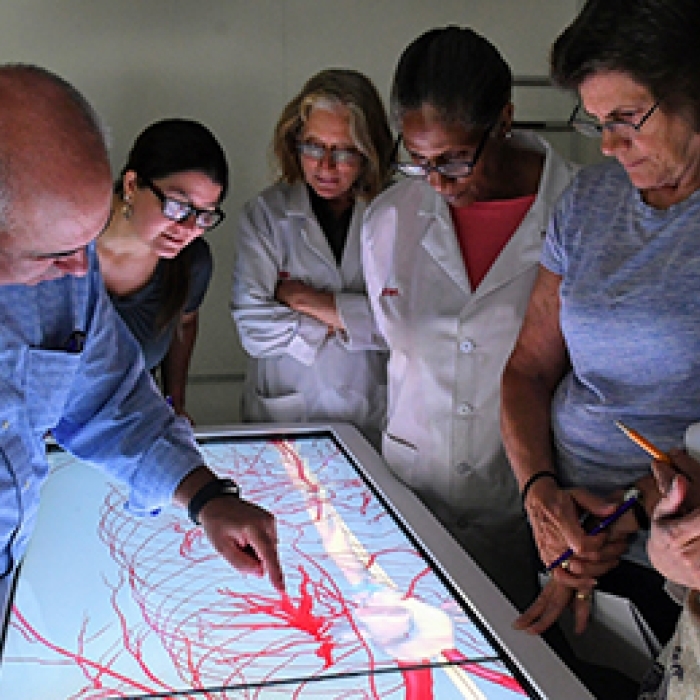
State-of-the-art technology incorporated into the curriculum, including a Simulation Lab, Anatomage (c) Virtual Dissection Table for anatomy and other courses, and smart classrooms.
Diversity
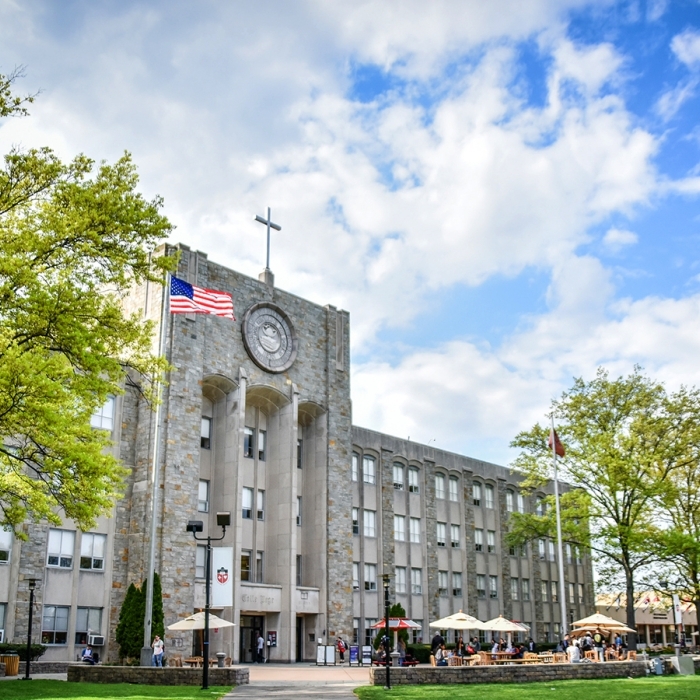
One of the most culturally and religiously diverse universities in the nation.

Experience
Abundant outstanding clinical experiences throughout the NY metro and Long Island areas
Interested in Nursing, Pharmacy & Health Sciences, but not sure if Physician Assistant, Master of Science is right for you?
Take the Next Step

Explore Affordability
The Office of Student Financial Services is committed to providing students and their families with the information they need to navigate and understand the financial aid and payment process.
Apply to St. John's
St. John’s offers a free online application for all 100+ undergraduate programs, and graduate applications carry a low cost for most programs.