

September 9, 2026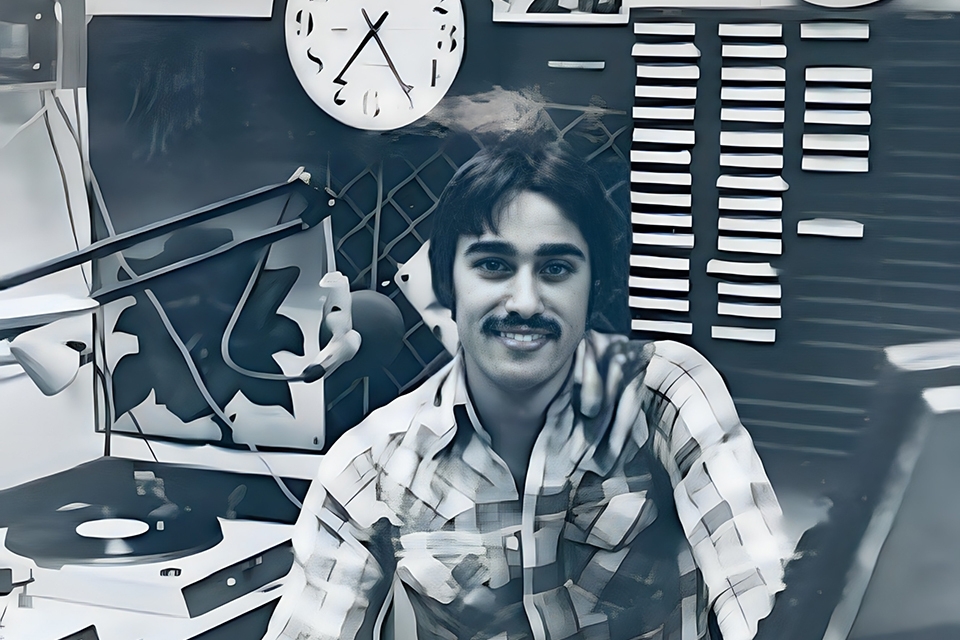
On September 9, 2001, Frank Cipolla ’80CCPS was covering former New York City Mayor Rudolph Giuliani at City Hall for UPN 9 News (now MY9NJ).
“It was a beautiful day. It was one of those great days in New York where it’s about 75 degrees with low humidity,” he recalled. “If you knew anything about City Hall, the World Trade Center loomed over it. They were just a couple of blocks away, and they were huge. I had seen them a zillion times from every angle, from everywhere in the New York metropolitan area. A voice (that day, however) told me, ‘Turn around and look at those buildings one more time.’ It was the last time I saw them.”
Mr. Cipolla would spend the next several months covering the aftermath of the attacks that occurred two days later. By then, he had spent two decades living his childhood dream—covering breaking news throughout the tristate area.
That dream crystallized at St. John’s University.
Growing up in South Ozone Park and Howard Beach in Queens, NY, Mr. Cipolla said St. John’s appealed to him because of its reputation and proximity to home. More importantly, he arrived with an unusually clear idea of what he wanted to do.
“I decided at the age of 10 that I wanted to be a television or radio news anchor or reporter. So, I didn’t wander into college not really knowing what I was going to do. I had analyzed all the news anchors in New York. I was watching guys like Rolland Smith, Jim Jensen, Bill Beutel, and Roger Grimsby.”
From that moment on, Mr. Cipolla was “laser-focused” on breaking into the industry. At St. John’s, he joined WSJU Radio, the University’s student-run radio station, as well as the Television Club, now known as WRED-TV.
“I learned by doing, by reading, by listening to the great disc jockeys in New York City at that time and the great radio newsmen. Radio and television were king back then. This is well before the internet, well before anybody ever had a blog or a podcast. I was lucky enough to grow up in the largest market in the country and be exposed to the top-notch people in their fields.”
One day, iconic New York sports broadcaster Warner Wolf came to speak to one of Mr. Cipolla’s classes. Only 30 people attended in a room that held 100.
“I said to myself, ‘That’s 70 fewer people I have to compete with,’ because they’re not as focused as I am on getting this done.”
During his time at St. John’s, Mr. Cipolla landed his first internship at WPIX-FM (WFAN has since taken over their FM frequency as well as WNBC’s AM frequency). “My job basically was a gopher. I would do whatever they wanted me to do.”
One day, he happily dressed up as the PIX 101 kangaroo. “I was so excited to be around the disc jockeys and the news people there. I was always observing.”
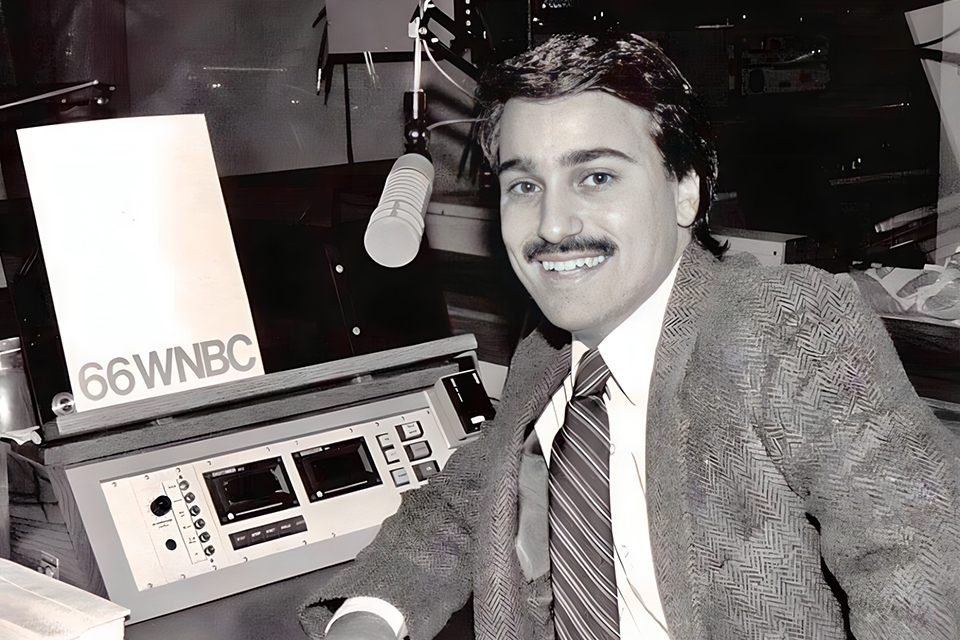
From there, Mr. Cipolla wrangled an internship at WNBC radio, home to iconic personalities like Soupy Sales, Don Imus, and, eventually, Howard Stern. “I used to go in at 4:30 in the morning. I would sit at this long table with all these thunder voices of New York City radio—people like Jim Eyer, Jack Welby, Charles McCord, and Sam Hall.” It was there he started writing news copy and being critiqued by the best of the best.
Mr. Cipolla worked at WNBC until 7 a.m., then took the train back to Queens. “My car was parked near the train station, and then I’d drive to St. John’s and attend a whole day of school.” After classes, he worked at a florist until 7 p.m.
“I was having the time of my life because I was at WNBC with all these great people,” he recalled. “This kid from Queens happened to be working among them. I felt like I deserved to be there.”
Upon graduation, Mr. Cipolla knew he had to leave the New York market if he wanted to come back. He began working at a WNBC affiliate in New Jersey near the Pennsylvania border, making mistakes and honing his craft. Eventually, WNBC hired him to file freelance reports from New Jersey, and he began a relentless networking regimen, making connections that would serve him throughout his career.
“It’s about relationships,” he stressed.
Mr. Cipolla kept a notebook on every television and radio employee he met, often including details about their families. “If I bumped into them, I’d say, ‘Hey, Joe, how are you? Your son must be 12 years old by now.’ I’d do my research, and then I’d find out that this guy worked in Louisville, KY. If I bumped into him, I’d say, ‘Didn’t you work in Louisville?’”
Before the days of intense scrutiny and high-tech security, Mr. Cipolla would ease his way past guards at stations like WNBC or WCBS with an official-looking clipboard. “I had it down to a science.”
In July 1986, the WNBC news director needed someone to fill its weekend anchor slot over the Fourth of July holiday. “I said, ‘Open your door. I’m outside your office right now.’ That was the call up to the major leagues.”
His relationship building also paid off. WNBC’s Judy DeAngelis advocated for him with the news director. “All that schmoozing led up to her saying, ‘Don’t even look around. Just give Frank the gig. He’ll do a good job.’”
Mr. Cipolla’s goal was to be on the air reading the news by age 30. He was 27. “I received plenty of rejections along the way, but always found a way around the ‘no,’” he said.
The weekend job eventually led to a weekday gig on Soupy Sales’s show, where Mr. Cipolla encountered a never-ending parade of celebrities such as Mel Tormé, Stevie Wonder, and John Cleese, among many others.
Mr. Cipolla later made the leap to television, hosting a news program on Staten Island cable. As before, he identified opportunities, engineered creative introductions to the right people, and made sure he was seriously considered. He was hired as a reporter for News 12 New Jersey when it was launched in 1996 and found himself behind the anchor desk within nine months. He held that job for five years.
He left News 12 in April 2001 and spent the spring and summer working for both UPN 9 and WCBS Newsradio 880. “Sometimes I’d be working 20, 30, or 40 days in a row,” he explained. “It didn’t matter because I was working.”
Mr. Cipolla recalled that summer as especially quiet news wise. “That always worries me,” he said. “We went a couple of months where we had the usual mayhem, but there wasn’t any big story that stood out. When that happens the hackles on the back of my neck always stand up, because I get a gut feeling that something’s coming.”
About 10 days before the attacks, Mr. Cipolla covered a funeral for a young firefighter on Staten Island. He stood outside the church gathering quotes from the young man’s comrades.
“I can still see them,” he said. “I don’t know how many of them that day were among those who were killed a week later, but their faces haunt me.”
His coverage of the aftermath remains a potent memory. “I remember reporting from the site. I’d have a handkerchief in my pocket and cover my mouth until they threw it to me from Channel 9. I’d do my intro to the report, and then while the report was running, I’d have the handkerchief over my mouth. They’d come back to me, I’d wrap up the report, and then I’d put the handkerchief over my mouth again.”
In the years since, Mr. Cipolla has lost friends in the industry who developed cancer after covering 9/11 and its aftermath, including a friend from St. John’s. “The reason I tell these stories is because of them,” he said.
Mr. Cipolla continued working in the industry for nearly two decades, often alongside broadcast heroes like Rolland Smith and Gary Nunn. He produced work of which he remains enormously proud, including a three-part News 12 New Jersey series on the little-known internment of Italian Americans during World War II.
Today, through his company Contacts Media, Mr. Cipolla uses relationships built over decades in broadcasting to connect professionals and experts with television and radio outlets. He also provides media coaching, helping clients prepare for on-camera appearances and navigate interviews effectively.
He looks back on his time at St. John’s with great fondness. “St. John’s University is a great venue for higher learning, and I recommend it wholeheartedly,” he said. “I learned a lot there. If you’re inclined to get into the media in any way, shape, or form, St. John’s is the premier college to do that in the New York metropolitan area. I have done everything I’ve always wanted to do. I have left nothing on the table, and it all started at the St. John’s radio station.”