At The Peter J. Tobin College of Business, research is grounded in the real forces shaping today’s economy. Across finance, public policy, entrepreneurship, and management, our faculty are advancing work that brings clarity to complex challenges, examining how decisions are made, how systems respond, and how outcomes can be improved. The research featured here reflects both the rigor of academic inquiry and its relevance beyond the classroom.
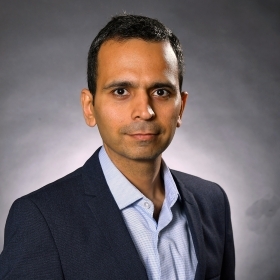
Vaibhav Anand, Ph.D., MBA, Assistant Professor of Risk Management
Vaibhav Anand, Ph.D., MBA
American Economic Journal: Economic Policy: “Does Getting Forecasts Earlier Matter? Evidence from Winter Advisories and Vehicle Crashes” (November 2025)
Earlier Warnings, Safer Roads When winter storms approach, is it better to wait for a precise forecast or issue an early warning? This research shows that timing can be just as important as accuracy. By analyzing winter advisories, crash data, mobile location patterns, and snowplow activity across the United States, the study finds that earlier alerts significantly reduce vehicle accidents, even when forecasts are less precise.
Key Insights
Lead time saves lives: each additional hour of advisory notice reduces crashes by nearly 0.75%
Earlier can outperform perfect: advisories issued sooner lower accident rates even when later forecasts are more accurate.
Real economic impact: longer warning times translate to roughly $190 million in avoided crash costs annually across the 11 states studied.
Behavior plus infrastructure: fewer crashes result from both individual travel decisions and faster deployment of road maintenance crews.
Why It Matters
Governments continue to invest in advanced forecasting systems, often prioritizing precision. This research highlights a different strategy: issuing earlier advisories can deliver substantial safety and economic benefits, offering new guidance for policymakers balancing accuracy with speed.
Rachel Atkins, Ph.D., MPA, Assistant Professor of Economics
Rachel Atkins, Ph.D., MPA
Entrepreneurship Theory and Practice: “How Should We Study Heterogeneity in Entrepreneurship? Moving the Field to an Inclusive Approach” (October 2025)
Co-authored research
Rethinking How We Study Entrepreneurs
Entrepreneurship research has traditionally focused on broad patterns among founders, often overlooking the diverse experiences that shape how individuals start and grow businesses. In this study, Dr. Atkins and her co-authors explore how scholars can better capture those differences.
Drawing on optimal distinctiveness theory, the research examines how entrepreneurs navigate the balance between belonging and uniqueness, particularly among groups whose experiences have historically been underrepresented in entrepreneurship scholarship.
Key Insights
• Entrepreneurship is shaped by context: Cultural background, social environment, and structural barriers all influence how individuals pursue entrepreneurial opportunities.
• Belonging and uniqueness both matter: Entrepreneurs often navigate the tension between fitting into established business norms while also leveraging the perspectives that make them distinct.
• Research methods must evolve: Insights gathered from responses by 29 entrepreneurship scholars suggest that more inclusive approaches are needed to fully understand the diversity of entrepreneurial journeys.
Why It Matters
Entrepreneurs do not all follow the same path. By encouraging more inclusive research frameworks, this study helps scholars and policymakers better understand the wide range of experiences that shape entrepreneurial success, ultimately supporting a more accurate and representative view of innovation and business creation.
Rachel Atkins, Ph.D., MPA, Assistant Professor of Economics and Tracey Freiberg,Ph.D., MA, Assistant Professor of Economics
Tracey Freiberg, Ph.D., MA
Rachel Atkins, Ph.D., MPA
Eastern Economic Journal: “Impact of State-Level Changes in Paid Family Leave Policies: Evidence from New Jersey” (December 2025)
Co-authored research
Paid Leave and Business Outcomes
When New Jersey introduced paid family leave in 2009, many predicted it would strain employers and reduce jobs. This research revisits those assumptions by comparing business outcomes in New Jersey with similar counties in New York and Pennsylvania. The findings suggest a more nuanced story: rather than triggering widespread losses, the policy appears to support stability for many existing firms.
Key Insights
No wave of closures: the study finds no evidence that paid family leave caused widespread business shutdowns.
Greater stability for existing firms: fewer job cuts occurred in contracting establishments after the policy took effect.
Mixed effects in metro areas: while business exits and layoffs declined, newly opened firms created slightly fewer jobs.
Modest overall impact: paid family leave functions less as a heavy cost and more as a small stabilizing force for businesses.
Why It Matters
As conversations around a potential federal paid family leave program continue, policymakers and employers are closely watching state-level outcomes. This research suggests that such policies may expand worker benefits without the large-scale employment disruptions often predicted, offering new insight into how social policy and business performance can coexist.
Mikael Bergbrant,Ph.D., MBA, MSF, CFA Charterholder, Professor of Finance
Mikael Bergbrant, Ph.D., MBA, MSF, CFA Charterholder
Journal of Financial Economics: “Expected Idiosyncratic Volatility” (May 2025) Co-authored research
Forming Asset Prices
Traditional asset-pricing theory argues that investors are rewarded only for broad risks affecting most companies, not for risks unique to individual firms. Yet recent studies have challenged that idea. This research revisits the debate by testing how firm-specific risk should actually be measured and whether, when measured correctly, it truly affects expected returns.
Key Insights
Theory still holds when measured correctly: using improved forecasting models, firm-specific risk shows no meaningful link to returns.
Better modeling matters: analyzing nearly 80 million daily stock returns across more than 19,000 firms, the study finds that a simple ARMA(1,1) model best predicts firm-specific variances, while the commonly used martingale model performs worst.
Past contradictions may be overstated: earlier evidence connecting firm-specific risk to returns appears driven by a small number of extreme observations.
Why It Matters
Accurate asset pricing underpins trust in financial markets. When prices reflect available information, investors gain confidence that they will be fairly compensated for the risk they take on, and capital flows more efficiently to its most productive uses. By reaffirming core asset-pricing theory with stronger modeling, this research helps clarify how markets interpret risk and form prices.
Sven Horak,Ph.D., Zizza Tobin Professor of Management
Sven Horak, Ph.D., Zizza Tobin Professor of Management
Journal of Management: “Corporate Scandals as Punctuating Events That Change Human Resource Role” (March 2025)
Co-authored research
Rethinking the Role of Human Resources
Corporate scandals often make headlines for reputational damage, but this research looks deeper, exploring how crises transform organizations from within. Drawing on multinational case studies, the study shows that scandals act as turning points that elevate human resources from a support function to a central driver of ethics, compliance, and cultural change.
Key Insights
Scandals accelerate change: disruptive events break routine and create momentum for organizational transformation.
HR moves to the center: teams take on expanded responsibility for ethics, compliance, and guiding employee behavior.
Balancing profit and legitimacy: HR helps organizations navigate the tension between business performance and moral accountability.
An event-systems lens: the timing, scale, and reach of a scandal determine how deeply HR roles evolve.
Shifting internal priorities: HR responses are shaped less by outside pressure and more by changes inside the organization after a crisis.
Why It Matters
As public expectations around corporate responsibility continue to rise, scandals no longer affect only reputation, they reshape how companies operate. This research highlights HR’s growing role as a steward of trust, helping organizations rebuild credibility and emerge stronger, more transparent, and more accountable.
Nicos Scordis,Ph.D., MBA, Professor of Risk Management, John R. Cox/ACE Limited Chair in Risk and Insurance
Nicos Scordis, Ph.D., MBA
Journal of Business Ethics: “Transparency in Place of Fair Insurance Pricing “ (February 2026)
Rethinking Fairness in Insurance
What makes an insurance premium feel fair? This research explores the tension between shared responsibility and individualized risk, arguing that the mathematics of volatility and the economics of capital make it impossible to answer what a fair price for insurance is.
Rather than chasing an elusive technical definition of fairness or continuing to argue what a diverse society considers fair, the study proposes a new path forward: enacting transparency. An interactive pricing simulator would allow consumers to see how behaviors, risk exposure, and community choices shape prices in real time, making complex, opaque pricing models intuitively understandable in the context of everyday life.
Key Insights
Fairness pulls in two directions: shared solidarity versus individualized risk-based pricing.
Pooling creates unavoidable complexity: overall volatility is not linear, and early vs. late participants can affect the pool differently.
Consumer acceptance is value-based: prices feel fair when they align with social norms, expectations, and reference points, not just technical models.
A proposed remedy: a real-time pricing simulator that shows, first-person, how behaviors and community risk choices influence premiums.
Why It Matters
As climate risks drive rising premiums and market exits, trust in insurance pricing is under pressure. Transparency is the key to helping consumers understand not just what they pay, but why.
Professor Scordis is currently working on an argument that U.S. insurers have a moral obligation to mitigate climate risk.
St. John’s University is joining a network of 12 area institutions in a program designed to shepherd research discoveries from the laboratory to the real world. The University’s Venture & Innovation...
St. John’s University students had a unique opportunity to draw on the experiences of a former investment banking titan recently when Lloyd Blankfein , former Chairman and Chief Executive Officer (CEO...
The Peter J. Tobin College of Business at St. John’s University kicked off its centennial celebration on September 29 with a knowledge competition that brought employee teams from across the Queens...