

June 18, 2026
If artificial intelligence is redefining modern business, it is also reshaping how business is taught. As students prepare to enter an AI-driven global economy marked by rapid technological change and new ethical questions, The Peter J. Tobin College of Business is ensuring that innovation begins in the classroom.
Through dedicated grants supporting AI research and curricular development, faculty across marketing, finance, accounting, and economics are integrating artificial intelligence into their teaching and scholarship. The goal extends beyond technical fluency. It is about cultivating the judgment, curiosity, and ethical awareness required to use these tools responsibly.
Here, Tobin professors share how they are incorporating AI into their classrooms and research, and why preparing students for this new era requires both confidence and care.
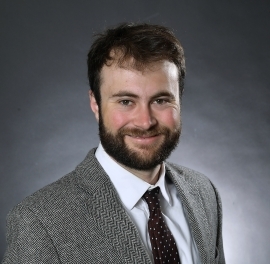
Alexander J. Buoye, Ph.D., MA
Associate Professor, Marketing
Modeling Marketing in the Age of AI
For Professor Alex Buoye, the question is no longer whether to use AI, but when—and how much.
In his Direct Marketing Models course, Buoye has redesigned the curriculum to reflect a marketing landscape increasingly driven by automated optimization. Students learn the fundamentals of predictive modeling using real campaign data before examining how those same principles power modern advertising platforms.
Today, much of that modeling happens automatically inside systems like Meta’s ad platform. But Buoye emphasizes that marketers still need to understand the strategy and data behind those algorithms rather than treating platforms as black boxes that magically produce results.
“AI is at the forefront of almost everything in business,” he says. “Business as usual is not an option.”
In Digital Marketing, Buoye also explores how AI is reshaping the industry—from shifts in search engines toward AI-generated summaries to evolving ad-targeting algorithms. The goal is to help students understand that AI is influencing marketing on multiple levels, from creative content to the data-driven systems that decide which messages reach which audiences.
“The question is no longer whether to use AI, but when to use it—and how much.”
For future marketers, success will depend not just on using AI tools, but on understanding when to trust automation and when human judgment should lead.
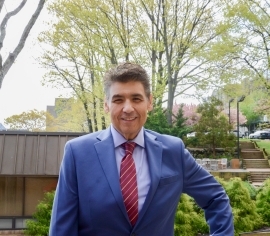
Ansel Schiavone, Ph.D.
Assistant Professor, Economics
Designing AI to Augment, Not Replace
In Professor Ansel Schiavone’s Microeconomics courses, he has developed AI-powered tools designed to strengthen the mathematical foundations of economic analysis. His Derivative Tutor Bot interprets handwritten calculus problems and guides students through step-by-step solutions, helping them master concepts essential to understanding economic models.
He is also building tools that generate individualized datasets based on student interests, from sports to financial markets, allowing students to explore econometrics with data that feels personally meaningful.
Schiavone approaches these technologies through an economic lens: technology is valuable when it augments human effort, but harmful when it replaces it.
His philosophy is clear. AI should deepen learning, not shortcut it.
“Better tools mean higher expectations,” he says. “Thinking fast isn’t thinking hard. Long live the bluebook exam.”
In Schiavone’s classroom, students are encouraged to experiment with new technologies while developing the analytical discipline and reasoning skills that no algorithm can replace.
“The goal at Tobin has always been and will continue to be to prepare students as best we can for their future. We remain committed to small class sizes, in-person instruction, and continuous updating of curricula to meet changing needs of students and society. Nobody can say what the future will hold. But creating a learning environment for students where they are trained in the capabilities and exposed to the limitations of these new technologies will ensure the greatest possible outcome.” Ansel Schiavone
Joseph Trainor, Ph.D., MBA
Associate Professor, Accounting
Safeguarding Judgment in the Age of AI
In a profession that has always evolved alongside technology, Professor Joe Trainor sees AI as the next inflection point in fraud examination.
With AI tools rapidly adopted by auditors, regulators, forensic accountants, and even fraudsters themselves, Trainor integrates AI into AIS 660 and AIS 4360 as a structured investigative tool. Students analyze datasets for fraud indicators, generate investigative leads, and simulate real-world fraud cases tied to course material.
His central question: How can AI enhance detection without weakening professional skepticism?
Equally important is reflection. Students assess how AI helped, what it missed, and why investigators must question AI outputs rather than accept them at face value.
“We’re teaching students to think with AI,” he says, “not to let AI think for them.”
In the future of fraud detection, the differentiator will not be access to tools, but the ability to interpret, challenge, and clearly explain their results.
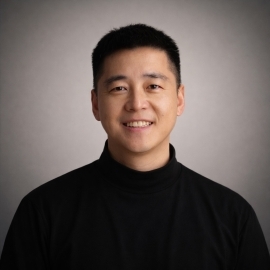
Yun Zhu, Ph.D.
Associate Professor, Finance
Guiding AI with Structure and Strategy
Recognizing that students were already using generative AI regardless of policy, Professor Yun Zhu made a deliberate pivot from prohibition to guidance.
“Adaptability to AI is no longer optional,” he says. “Avoidance is not a strategy.”
In his undergraduate Fintech course, Zhu integrates AI as both a subject of study and a practical tool. Students examine how organizational capital—from governance structures and managerial style to human capital and collaborative networks—shapes a firm’s ability to generate and sustain AI-driven innovation.
His research challenges the long-held view of AI initiatives as purely high-risk investments. Instead, it explores how intangible organizational design can become a measurable driver of innovation and performance.
In the classroom, AI helps streamline tasks such as data gathering and literature searches, allowing students to spend more time interpreting results, forming evidence-based conclusions, and making strategic financial decisions.
The goal is not passive use, but disciplined inquiry—preparing graduates to think critically and strategically in an AI-driven financial system.