
The Long Road to Reconciliation
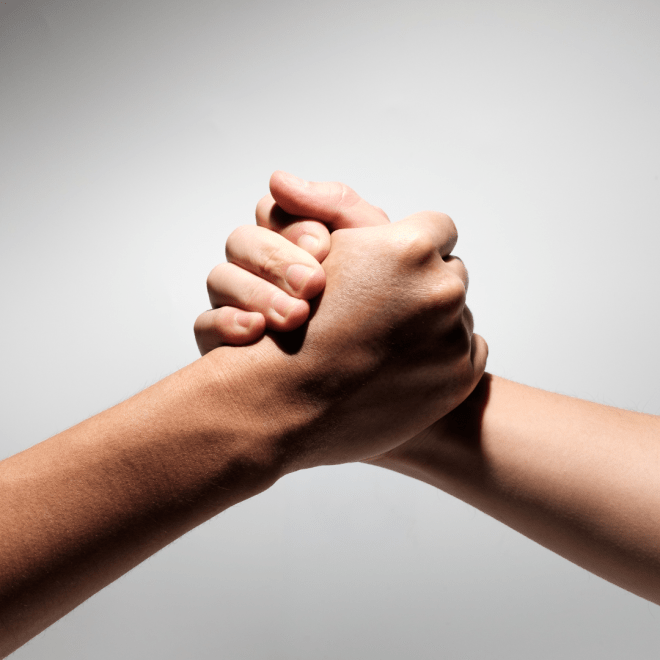
Reconciliation is not a single act. It is a journey—a collective movement of healing and acknowledgment, one generation passing on scars and salves to the next. A journey that every single native and resident knew they would share the exact sentiment of welcoming change, but rejecting the pains associated with change. In New York, one of the world's most diverse, robust, and dynamic places, reconciliation has often taken the form of grassroots initiatives, family resilience, political response, and community struggle. From the residue of the Vietnam War to the crack epidemic, from the poverty-stricken households in the Bronx to welfare lines in Queens, this study traces the lineage of efforts that have sought peace through justice and healing through unprecedented policies. These efforts, often small in scope but monumental in purpose, lay the foundation for what we know today as community peacebuilding. This study focuses on the era from the 1970s through the present day, contextualizing movements like the Black Panther Party, the formation of welfare programs, and presidential economic strategies as acts of reconciliation.
In the 1970s, New York was the city under siege—from itself. Wounded veterans returning from Vietnam, many physically and psychologically broken, arrived home to economic instability due to New York's financial crisis, high crime rates, and limited support systems. Mothers who were made to be the sole heads of households, not by choice but by force through circumstance, faced the insurmountable task of feeding families on meager wages while living in deteriorating housing. Despite these challenges, the community showed remarkable resilience. Food insecurity became a quiet crisis, creeping into the homes of the working class. Where did that leave the innocent? Children were often left without safe spaces to grow, play, or thrive during the long, hot summers when school was not in session. The lack of care and resources created the breeding grounds for urban unrest, street violence, and drug infiltration.
One of the most pronounced cries for reconciliation came through the Black Panther Party's community programs. The Black Panthers, often misunderstood as militant and grundy, provided free breakfast programs for children, community clinics, and education campaigns. These were not just tangible efforts, but powerful statements of reconciliation. Little did they know this would be the seed for free breakfast and lunches at public schools nationwide. My mother and her siblings, including the children who would later reap the benefits of such infrastructure. Stanley Nelson's 2016 documentary The Black Panthers: Vanguard of the Revolution offers powerful insight into the Party's dual role as activist and provider. Through grassroots work, they fed hungry children, something the state failed to do consistently. Their work, particularly in New York, laid the blueprint for what peacebuilding could look like: bold, unapologetic, and rooted in love for community.
Welfare in the United States did not begin as an act of generosity—it began as a response to an enkindled crisis. The rise in poverty, particularly among single mothers, forced federal and state governments to act. Programs like the Supplemental Nutrition Assistance Program (SNAP) and Temporary Assistance for Needy Families (TANF) were created to address the imbalance. At their core, these programs were acts of national reconciliation—acknowledgment that capitalism had failed the most vulnerable, the innocent.
The relevance of welfare in New York extended far beyond policy—it became a matter of survival. Interestingly, its societal impact became so profound that it was embedded in popular culture. Films and television shows like Crooklyn and Everybody Hates Chris vividly portrayed the challenges of the 1970s and 1980s, often highlighting families navigating life on welfare, sometimes forced to choose between paying rent and putting food on the table. The influx of immigrants, the growing homelessness crisis, and soaring unemployment rates made the need for reconciliation through resource distribution even more critical. Welfare checks became lifelines—enabling children to eat, parents to keep a roof overhead, and families to preserve dignity. While not without criticism, these initiatives represented a necessary public reckoning and acknowledgment of past governmental failures.
The 1980s and 1990s were shaped by conservative economics. Under President Ronald Reagan, policies like trickle-down economics did little to alleviate poverty in urban areas. In fact, those very same policies widened the gap. New York felt the brunt of these decisions as federal funding for social services declined. Instead of funding after-school programs or urban job initiatives, money was rerouted to military expansion and tax breaks for the wealthy—a typical pattern we see today.
Fast forward to the Presidency of the Obama era, and we begin to see a shift. The Great Recession of 2008 hit New York hard, particularly Black and Brown communities. The Obama administration's American Recovery and Reinvestment Act included education, Medicaid expansion, and food assistance provisions. These were not just steps, but significant strides toward reconciling with commonly overlooked and neglected populations. President Trump's policies, including tax reform and immigrant bans, rolled back many of those gains, destabilizing low-income communities in New York, specifically immigrant enclaves. Under President Biden, we saw renewed efforts to reconcile with marginalized communities through expanded Child Tax Credits and pandemic relief. However, with statistics and effectiveness, these measures remain a subject of debate.
It is impossible to discuss reconciliation in New York without addressing the crack epidemic of the 1980s and 1990s. This era did not just touch the edges of the city—it gutted entire neighborhoods already drowning in poverty and unemployment. The introduction of crack cocaine became one of the most venomous infiltrations in the history of American urban life. It was as if a war had been declared on the very fabric of Black and Brown communities, not from outside forces, but from within, driven by the policies and indifference of those in power.
Many of the fathers who returned from Vietnam came back wounded not only in body but in mind. Their traumas were unspoken, untreated, and when ignored for too long, trauma transforms. Many turned to alcohol, becoming ghosts in their homes and strangers to their families. Then, crack arrived—cheap, fast, and devastating. It offered a high price but cost generations their futures. With addiction came judgment, criminalization, and a government that chose incarceration over rehabilitation. Families were not just broken—they were pulverized.
New York's streets were filled with young men who once dreamed of better, but were now cornered by systems that gave them no way out. For many, becoming a drug dealer was not a glamorous choice—it was a survival tactic. The pressure to provide for their young children without access to viable jobs forced many into fast money. Crack, sadly, was the easiest source. It moved quickly, and so did the money. However, with every deal, a new link was added to a chain that was already choking the community.
Some of the world's most recognized celebrities once walked these same streets, many falling victim to the seduction and trap of crack. These were not nameless nor faceless addicts. They were performers, artists, and visionaries whose talent was derailed by a chemical storm that robbed them of stability. Crack did not discriminate—it devoured.
As communities became poisoned by their desperation, the war on drugs swept in, not to heal, but to condemn. Harsh sentencing laws targeted crack possession more severely than powder cocaine, a drug more associated with affluent white users. This racial disparity in enforcement and punishment only deepened the wounds. Mothers visited their sons through plexiglass. Children were raised by grandmothers or in foster care, and entire neighborhoods were left gutted, haunted by what could have been.
Yet, amidst this ruin, resilience took root. Churches refused to close their doors, offering sanctuary, structure, and mentorship. Pastors spoke life back into the addicted. Teachers turned classrooms into safe havens. Local nonprofits, often founded by women who had lost their own children to the streets, became grassroots powerhouses, offering tutoring, job training, counseling, and food distribution. These efforts were not born from billion-dollar budgets but from heartbreak, conviction, and an unshakable belief in the power of community. These peacebuilding actions were radical acts of love. They rejected the narrative that these communities were beyond saving. They planted hope in scorched soil. In doing so, they became the heartbeat of reconciliation—one life at a time, one act of grace at a time.
Today, New York stands as a mosaic of both unresolved wounds and healing victories. Peacebuilding is no longer just a response to crisis—it is an ongoing, deliberate strategy to nurture justice, foster dignity, and repair long-standing harm. Programs like Cure Violence, which treat gun violence as a public health issue, exemplify how public health models can be used to disrupt cycles of violence and trauma. Similarly, organizations like the Bronx Defenders continue to fight systemic injustice through holistic legal representation that addresses not just criminal defense, but also civil issues, housing, and immigration, offering entire families a chance at stability.
Churches have remained foundational pillars of healing, from small congregations in the Bronx to large ministries in Brooklyn and Harlem. Ministries like the Greater Allen A.M.E. Cathedral and Abyssinian Baptist Church have provided food pantries, reentry programs, and youth leadership initiatives. These sacred spaces have doubled as community service hubs, healing centers, and platforms for social justice advocacy.
On a broader scale, national organizations have played a vital role in connecting New York's local struggles with wider systemic movements. The Southern Christian Leadership Conference (SCLC), co-founded by Dr. Martin Luther King Jr., continues to fight for justice through voter registration, civic engagement, and economic development. The National Association for the Advancement of Colored People (NAACP) has remained active in legislative advocacy, especially in New York's efforts around criminal justice reform. Though formally disbanded, the Student Nonviolent Coordinating Committee (SNCC) left behind a legacy of grassroots mobilization that modern youth movements continue to echo. The Third World Women's Alliance began in the 1970s and helped lay the groundwork for intersectional feminism and community care models now central to peacebuilding in marginalized communities.
According to a 2021 report by the Urban Institute, "peacebuilding must be rooted in localized care infrastructure, community knowledge, and intergenerational leadership "to create a lasting impact (Urban Institute, 2021). This is evident in grassroots organizations like Youth Represent, which provides legal services and mentorship to justice-involved youth in New York City. Similarly, RISE (Resilience, Identity, Safety, Empowerment) trains formerly incarcerated women to become peer leaders in violence prevention and restorative justice work.
Nationwide, reconciliation efforts surged in response to the murder of George Floyd in 2020. The Black Lives Matter movement reawakened a national dialogue about systemic injustice, pushing issues of police reform, racial equity, and reparative policies to the forefront. In New York, these conversations led to budget reallocations toward community-led safety programs, equity audits in education, and renewed investment in mental health care as a strategy for conflict prevention.
The importance of these efforts cannot be overstated. As political theorist Angela Davis once said, "We have to talk about liberating minds and society." That liberation starts with truth-telling and continues through policy, protest, and persistent acts of care. New York's evolving peacebuilding landscape embodies this philosophy by investing in people, recognizing community knowledge, and addressing systemic wounds not just with reform, but with deep cultural and structural healing.
Reconciliation in this era is not only possible but also visible, dynamic, and alive. It thrives in classrooms, courtrooms, kitchens, and churches. It moves forward with every child who finds safety, every elder who is honored, and every broken system made whole by those who dare to believe healing is a communal right, not a distant dream.
New York's historical wounds are deeply interwoven with the nation's broader conflicts—racial injustice, economic disparity, political apathy, and systemic violence. What the city faced in the 1970s continues reverberating today in varying forms. Yet, what distinguishes New York is not just the presence of conflict but the city's collective resistance to being defined by it. In this context, forgiveness becomes both an individual and communal act—one that starts with understanding the past and building a future around truth and equity.
Following the Vietnam War, there was no national healing program for soldiers, no trauma-informed services to reintegrate veterans, and no acknowledgment of their mental and emotional unraveling. According to a 2017 study published in the Journal of Traumatic Stress, veterans who returned to low-income communities like those in New York experienced higher rates of post-traumatic stress disorder (PTSD) and were less likely to receive care due to barriers like race, class, and location (Tanielian et al., 2017). For the families they returned to, the burden was inherited. Trauma passed from father to son, silence settling into kitchens where conversation should have been. The drug era only compounded these effects.
The rise of crack cocaine in the 1980s and the associated criminalization disproportionately affected these same neighborhoods. Public forgiveness often begins with public acknowledgment. When leaders fail to recognize harm, they delay healing. It was not until decades later that PTSD in veterans was entirely accepted and addressed as a medical condition, proof of how long reconciliation can take when it is not proactively pursued. Moreover, while we have made strides in addressing veteran trauma, the same level of commitment has not been seen in addressing the trauma experienced by entire communities wracked by poverty, drugs, and systemic neglect.
Scholars such as Alexander and West (2016) have argued that collective healing requires a cultural shift in how we frame justice through punitive measures and restoration, education, and access. When government institutions turn a blind eye to the layered needs of struggling neighborhoods—welfare reforms, mental health services, or safe housing—communities inevitably turn inward to create their own systems of care and accountability.
The legacy of avoidance from federal and state authorities has left a complicated imprint. As Dr. Joy DeGruy's theory of Post-Traumatic Slave Syndrome explains, historical trauma, when unaddressed, shapes generations of behavior, coping mechanisms, and interpersonal relationships (DeGruy, 2005). In New York, this translates into a collective experience of intergenerational stress that continues to shape urban culture, identity, and family dynamics.
However, reconciliation efforts rooted in research and practice are emerging. Trauma-informed care models are now integrated into school systems, community centers, and nonprofit programming, informed by social work frameworks and psychological studies emphasizing the link between unhealed trauma and social dysfunction (Substance Abuse and Mental Health Services Administration, 2020).
In neighborhoods like East New York and the South Bronx, these new approaches represent more than policy—they are lifelines. Restorative justice circles in schools, community-based therapy led by culturally competent practitioners, and mobile crisis response teams are all part of a modern reconciliation infrastructure. They embody the understanding that forgiveness—real, transformative forgiveness—requires both visibility and investment.
What we are witnessing now is the slow pivot from survival to intentional healing. It is a critical stage in reconciliation, marked not by forgetting past harms but by naming them, understanding their consequences, and designing systems that prevent recurrence. One scholar notes, "The past is not behind us, but within us. Only through acknowledgment and care can we ensure it does not become our future" (Williams, 2019).
This evolving framework, grounded in historical context and research-backed practice, shapes a more just New York—one that does not merely patch wounds but works to prevent them. In doing so, it offers a vision of reconciliation that is both brave and deeply necessary.
One of the most overlooked mechanisms for long-term peacebuilding is education. In New York, disparities in public school funding reflect systemic injustice. Low-income communities—often communities of color—continue to experience under-resourced schools, over-policed hallways, and minimal access to mental health services. However, schools are often the first spaces where reconciliation can begin.
Programs such as the Urban Assembly Schools and the Harlem Children's Zone offer blueprints for educational equity as a form of reconciliation. These programs integrate wraparound services—counseling, academic mentorship, college readiness, and family support—into the school experience. These programs are actively undoing decades of disinvestment by creating environments where students are seen, heard, and supported.
Furthermore, student-led initiatives across New York have been instrumental in shaping discourse around equity. Youth advocacy organizations like IntegrateNYC work directly with students to dismantle school segregation and advance inclusive policies. This is reconciliation in motion—young voices addressing inherited challenges with innovative solutions.
Healing cannot happen in isolation; it is inherently intergenerational. Elders in many communities across New York serve as storytellers and memory keepers, preserving the stories that often go untold in mainstream media. Oral history has been pivotal in community cohesion, from Puerto Rican organizers in the Lower East Side to Black elders in Harlem and Dominican grandmothers in Washington Heights.
Organizations like Weeksville Heritage Center in Brooklyn and the Schomburg Center for Research in Black Culture serve as living archives, honoring the struggles, victories, and legacies of those who came before. These spaces offer more than history—they provide context, anchoring today's movements in yesterday's truths.
As writer Audre Lorde said, "Without community, there is no liberation." This liberation is evident when children participate in cultural festivals, when immigrant families teach their languages to their children, and when Juneteenth is celebrated in public parks across the city. Cultural preservation is not nostalgia—it is strategy and peacebuilding.
The lessons drawn from New York are not confined to city lines. They offer a national blueprint. What if other major cities embraced reconciliation as a guiding principle in policymaking? What if federal budgets reflected the values of repair and restoration over punishment and neglect?
National programs like the Community Violence Intervention Collaborative (CVIC), backed by the Biden administration, show promise. The initiative supports local peacebuilders, mental health practitioners, and formerly incarcerated leaders in reducing violence. By investing in community wisdom, the program reflects the kind of grassroots-centered governance that has long been successful in New York's most resilient neighborhoods.
Additionally, the United States Department of Housing and Urban Development's (HUD) recent efforts to prioritize racial equity in housing policy mirror the lessons of 1970s New York, when urban neglect led to multi-generational homelessness and disenfranchisement. Reconciliation must include reparative housing efforts that center displaced families and communities of color.
Reconciliation is incomplete without a forward-looking vision. For New York and the nation, this means drafting a new covenant that prioritizes justice, joy, and mutual responsibility. It requires imagination and investment, not just in infrastructure but in people.
Restorative justice practices must be embedded in every institution—schools, courts, workplaces. Mental health access must be universal, particularly in communities shaped by violence and poverty. Arts and culture, long regarded as luxuries, must be treated as essentials—avenues through which identity, resistance, and healing are expressed.
Community gardens, housing co-ops, and youth entrepreneurial incubators are examples of this future. Joy and justice are not mutually exclusive. In fact, joy is a revolutionary act in spaces that have historically denied it. Reconciliation invites us not only to repair what is broken but also to reimagine what is possible.
With all its contradictions, New York remains one of the clearest case studies of community peacebuilding in the United States. It reminds us that reconciliation is never static—it is dynamic, deliberate, and deeply human. From grassroots breakfast programs to national policy shifts, from crack-era heartbreak to Gen Z-led protests, the story of New York is one of seeds planted in adversity and watered by collective hope.
The soil was hard. The work was hard. But the bloom? Unstoppable.
This healing journey has never been easy, nor has it been linear. It has been messy, interrupted by tragedy, and revived by perseverance. New York stands not as a symbol of perfection, but as an example of tenacity. It is the story of families who stayed, rebuilt when buildings fell, and believed in the strength of a block, a borough, and a people. Their stories are woven into the parks, the street corners, the schools, and the sanctuaries. Their voices echo in City Hall and over protest chants in Union Square.
This reflection is also an invitation to take what New York has demonstrated and apply it elsewhere. No matter its size, every city bears the weight of injustice and the responsibility to restore what has been broken. Reconciliation is equally personal and political; it is neighborhood barbecues and federal policy. It is choosing to forgive without forgetting. It is creating futures that honor those who came before.
Nevertheless, the path toward true peace is layered. It is not only about repairing what's broken—it is about imagining and cultivating something entirely new. This means actively dismantling structures that thrive on oppression and creating new systems rooted in justice, joy, and community wealth. We must ask ourselves: What does safety really look like? What does prosperity mean when measured not in dollars but in dignity?
In neighborhoods like Brownsville and Mott Haven, community gardens have bloomed beside public housing complexes. These gardens are more than green spaces—they are manifestations of hope and resistance, cared for by people often excluded from traditional power systems. They feed bodies and spirits alike and remind us that growth is possible even in neglected soil.
Arts programs have emerged as havens for healing. Initiatives like the Laundromat Project and Groundswell bring art into everyday spaces—laundromats, parks, schools—transforming them into canvases for expression and resistance. When a mural appears on a crumbling wall, telling the story of a people's resilience, that, too, is reconciliation. Its history is rewritten in color and clay.
Faith-based communities have also remained essential to this vision. Churches, mosques, temples, and synagogues across the city are beacons of stability and safety. In them, survivors of violence find therapy, returning citizens find reentry support, and young people find mentorship. From Friday youth nights to Sunday suppers, these institutions quietly do the labor of healing each week.
Reconciliation must also honor elders' wisdom while elevating the youth's voices. We are witnessing a generational reckoning in which young people demand accountability, equity, and environmental justice. Their courage builds on the foundations of ancestors who marched, spoke truth, and built bridges before them. Reconciliation means listening to both the seasoned and the rising.
Let us not forget the role of women. Women—especially Black, Brown, and immigrant women—have been the subtle architects of peacebuilding for decades. They have juggled advocacy with caretaking, led movements while nursing wounds, and built institutions out of pure necessity. Their names may not be written in history books, but their impact is carved into every corner of New York's healing landscape.
Ultimately, this is not just a New York story—it is an American story—one of pain and power, of broken systems and brilliant recoveries. It is a story that demands to be told, not only with statistics and citations but with spirit. Peacebuilding, at its core, is a spiritual act. It is the belief that transformation is possible, even when everything around us says otherwise.
May this study serve not only as an academic exploration but also as a testimony—a testimony that when people organize, when leaders listen, and when healing is prioritized, communities thrive. The seed is hope. The soil is resilient. The roots are our struggle. The bloom is justice and peace, tended daily by those who dare to believe in something better and water it with love, truth, and unwavering commitment.
Works Cited
Michelle Alexander & Cornel West, The New Jim Crow: Mass Incarceration in the Age of Colorblindness (The New Press 2016).
Angela Davis, “We Have to Talk About Liberating Minds and Society” (n.d.) (quotation).
Crooklyn (Universal Pictures 1994) (directed by Spike Lee).
Cure Violence Glob., Public Health Approach to Reducing Violence, https://cvg.org (last visited May 14, 2025).
Everybody Hates Chris (CBS television broadcast 2005–2009) (created by Chris Rock).
Nat’l Ass’n for the Advancement of Colored People (NAACP), Our Work, https://naacp.org (last visited May 14, 2025).
RISE Project, Resilience, Identity, Safety, Empowerment, https://www.risewomen.org (last visited May 14, 2025).
S. Christian Leadership Conf., About, https://nationalsclc.org (last visited May 14, 2025).
The Black Panthers: Vanguard of the Revolution (Firelight Films 2016) (directed by Stanley Nelson).
Terri Tanielian et al., Veterans Returning to Underserved Communities: Risk of PTSD and Lack of Care, 30 J. Traumatic Stress 305 (2017).
The Bronx Defenders, Holistic Defense Model, https://www.bronxdefenders.org (last visited May 14, 2025).
Third World Women’s All., Legacy and Activism, [archival source] (n.d.).
Urban Inst., Peacebuilding Must Be Rooted in Localized Care Infrastructure, https://www.urban.org (2021) (last visited May 14, 2025).
U.S. Dep’t of Agric., Supplemental Nutrition Assistance Program (SNAP), https://www.fns.usda.gov/snap (last visited May 14, 2025).
U.S. Dep’t of Health & Human Servs., Temporary Assistance for Needy Families (TANF), https://www.acf.hhs.gov/ofa/programs/tanf (last visited May 14, 2025).
Youth Represent, About Us, https://www.youthrepresent.org (last visited May 14, 2025).
Related Blog Posts
How AI Is Changing Finance: a Q&A with Yun Zhu, Ph.D.
Finance has always been driven by data, but artificial intelligence (AI) is changing who can analyze it, how quickly, and what questions are even worth asking.
Students Share the Decisions That Changed Their College Experience
College isn’t defined by one big decision. Often, it’s the smaller choices—like joining a club, saying yes to a mentor, entering a competition, or pursuing an idea—that shape your experience in meaningful ways.
We asked four St. John’s University students to reflect on one decision they would make again, and their answers may inspire your own college journey.
Six Experiences That Helped Me Launch My Tech Career Before Graduation
From hackathons and internships to mentorship and leadership opportunities, discover the experiences that helped launch my tech career before graduation.
