Core Curriculum, Prereqs, Electives: College Class Terms Explained
Confused by core curriculum or prereqs? Get a clear guide to college course types and learn how St. John’s University supports your academic success.
Between picking a major, choosing classes, and trying to build a schedule that makes sense for your life, the academic side of college can feel like a whole new language. Words like gen-ed, core requirement, prereq, and elective get thrown around constantly, but no one seems to stop to explain what they actually mean or how they fit together. Before you start registering for classes, it helps to understand how all of these pieces work so you can build a plan that supports your goals, matches your interests, and keeps you on track for graduation.
We’re going to break down the most common types of college courses you’ll encounter, what purpose they serve, and how St. John’s University structures its core curriculum to help every first-year student transition into college-level learning with confidence.
What Are General Education (“Gen-Ed”) or Core Courses?
Almost every college has a version of general education classes, foundational courses meant to strengthen your writing, communication, analytical thinking, quantitative reasoning, and understanding of the world. You might take a literature course to sharpen your reading skills, a philosophy class to practice developing arguments, or an intro-level science course to learn how evidence is built and tested.
Gen-eds aren’t random. They’re designed to help you become a stronger learner in any field by building essential academic skills. They also expose you to subjects you may never have explored otherwise, which is why many students with undecided majors end up discovering new interests or even changing majors because of a gen-ed that surprised them.
How St. John’s Approaches Its Core Curriculum
St. John’s core curriculum is rooted in the University’s Catholic, Vincentian, metropolitan, and global mission. It’s built around helping students develop curiosity, cultural awareness, critical thinking, and a commitment to service, all while preparing you academically for upper-level coursework.
While there are multiple classes as a part of our core curriculum, we have three unique first-year core courses that every student takes, each designed to support a smooth transition into college life:
First-Year Seminar
First-Year Seminar helps you learn to think critically about the world while exploring New York City as an academic and cultural landscape. Courses are taught through different disciplinary lenses, like art, business, literature, media, or social science, and often include Academic Service-Learning. You’ll learn information literacy, how to analyze complex ideas, and how to navigate the diversity and energy of New York City.
Scientific Inquiry
Scientific Inquiry introduces you to the way scientific knowledge is built. You explore themes like evolution, energy, or atomic theory while learning the scientific method, how evidence is interpreted, and how data connects to real-world decisions, from public health to technology. It’s designed to strengthen quantitative reasoning and help you understand how science shapes everyday life.
First-Year Writing
Every St. John’s student takes First-Year Writing, a course focused on developing strong academic, analytical, and digital communication skills. You learn how writing works across different disciplines, how to use evidence effectively, and how to write for multiple audiences. Faculty meet with students individually throughout the semester to help you improve your writing and build confidence.
Together, these courses form the foundation of your academic life at St. John’s, and they intentionally connect skills across subjects so you feel prepared for whatever major you pursue next. You can get even more detail into how the core curriculum works together in the St. John’s Undergraduate Bulletin.
Prerequisites: What You Need Before You Move Ahead
Prerequisites, or “prereqs,” as you’ll likely hear them referred to, are the classes you must take before enrolling in more advanced courses. Try not to think of them as roadblocks; they’re stepping stones. Intro-level courses give you the background knowledge you need to succeed in upper-level work.
For example, before taking advanced biology, you might need introductory biology and chemistry. Before enrolling in a specialized business course, you may need foundational classes in economics or accounting. Mapping out your prereqs early helps you plan each semester intentionally and avoid surprises later.
Advisers at St. John’s work closely with students to review prereq paths and keep your four-year plan on track through DegreeWorks. It’s one of the easiest ways to make sure you always move forward in your degree.
Major-Specific Courses: Where Your Degree Comes to Life
Once you complete a portion of your core courses and prereqs, you move into the classes that define your major—the ones that shape your academic identity and prepare you for your future career. These classes tend to be more hands-on and in-depth. You might design experiments, conduct fieldwork, analyze case studies, create digital media, or participate in group projects that mirror real-world work. This is where you start building specialized knowledge and discovering which topics you truly connect with. At St. John’s, many major-specific courses incorporate internships, service-learning, New York City partner organizations, and faculty mentorship. It’s an approach that blends classroom learning with practical experience to make you career-ready.
Electives: Your Chance to Explore and Personalize Your Education
Electives give you the freedom to explore interests outside your major, or dive deeper into areas related to your field. They’re built into every degree so you can shape your education around your interests, not just your requirements.
You might be a biology major who takes a photography class, or a business student who tries coding, or an English major who decides to explore psychology. Electives often help you discover new passions, choose minors, or build skills employers value.
If you’re unsure which electives to choose, the University Learning Commons (ULC) offers Academic Strategy Sessions to help you design a balanced schedule and explore options.
Lecture Courses: What to Expect and How to Succeed
Lecture classes are common for gen-eds and early major requirements. They’re typically held in larger spaces with more students and are designed to introduce big ideas, theories, or foundational content.
Success in lecture courses often comes down to developing strong study habits: taking organized notes, reviewing material regularly, and asking for help when you need it. At St. John’s, tutoring and support through the ULC can help you sharpen your study skills and keep up with the pace.
Discussion-Based Courses: Smaller, Deeper, and More Interactive
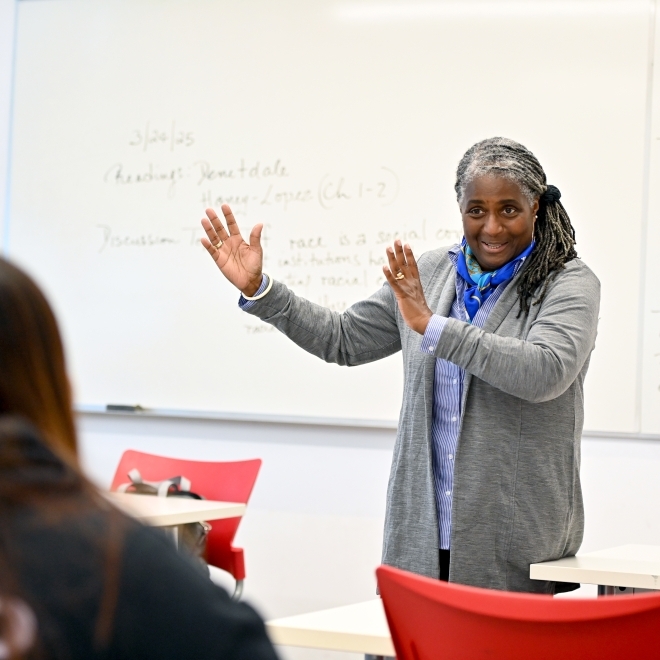
Discussion-based classes are usually smaller and focus on conversation, debate, analysis, and collaboration. These courses help you practice articulating your ideas, build confidence speaking in groups, and make deeper connections with the material. Many St. John’s courses, including several in the First-Year Seminar, use a discussion-heavy format to encourage critical thinking and bring diverse perspectives into the classroom.
Laboratory Courses: Where Theory Meets Practice
Labs are typically paired with science or technical courses and give you hands-on experience applying what you learn in lecture. Whether you’re conducting an experiment, analyzing data, or working with specialized equipment, lab courses strengthen your practical skills and deepen your understanding of scientific concepts.
These courses often require structured time commitments outside your regular schedule, which is why time management support from Career Services and the ULC can be incredibly helpful.
Studio Courses: Learning by Creating
Students in art, design, theatre, or music will take studio courses which are immersive, hands-on classes built around creative practice. You’ll spend more time producing work, receiving feedback, and refining your craft. For creative majors at St. John’s, this often includes engagement with New York City’s arts scene, providing exposure far beyond the classroom.
Independent Study: Designing Your Own Academic Path
Independent study allows you to explore a topic deeply with guidance from a faculty mentor. These projects are perfect for students preparing for graduate school, working on research, or building a unique academic portfolio. They typically involve self-directed reading, research, writing, and scheduled check-ins with your professor. It’s one of the best ways to customize your education and stand out academically.
Online and Hybrid Classes: Flexibility Without Sacrificing Quality
Online and hybrid courses offer flexibility for students balancing jobs, commuting, athletics, or family responsibilities. They rely on a learning management system where you can submit assignments, participate in discussions, and access your coursework from anywhere. Online classes at St. John’s maintain the same rigor and faculty engagement as in-person courses, giving you options that fit your schedule without losing support.
How St. John’s Supports You Through Every Class Type
No matter which class format you take, St. John’s provides a wide range of academic and personal support to help you succeed:
- University Learning Commons (ULC) offers free tutoring, Academic Strategy Sessions, and small-group skills workshops focused on time management, reading strategies, and organization.
- Career Services provides guidance on workload management, study-life balance, and long-term academic planning, including a popular time management video series.
- Johnnies Blog Resources provide information on a wide range of topics, including how to avoid burnout, stay healthy, form strong habits, and transition from high school to college.
St. John’s structures its support system to make sure no student has to navigate college academics alone.
When you’re ready to imagine your future here, you can schedule a visit or start your application to take the next step.
Related Blog Posts

What to Look for on a College Website: Nine Things to Check
A college website can tell you a lot more than how much tuition costs or when an application is due.
You can meet the professors you could learn from, discover research happening on campus, find scholarships you may be eligible for, explore internships and other hands-on opportunities, and see how current students are turning their college experiences into opportunities for the future.
As you research your college options, here are nine places on a university website worth clicking into.


College Brag Sheet: What It Is and What to Include (with Examples)
You have asked your teacher, counselor, or another mentor to write you a letter of recommendation. But, before they can start writing, they may ask you for something you have probably never heard of: a brag sheet.
Despite the name, a brag sheet is not about showing off. It is your opportunity to share the experiences, accomplishments, goals, and qualities that make you who you are.
Feeling Behind on College Applications? 6 Things to Do
If your social media feed has suddenly become filled with classmates talking about college essays, campus visits, or where they’re applying, it can be easy to feel like everyone is ahead of you.
You may be wondering where to start or how much you need to accomplish before application deadlines begin to arrive.
Here are six things to do if you’re feeling behind on college applications.