Fast-Track vs. Traditional Degrees: Why Accelerated Programs Work
With rising tuition costs, competition intensifying in the job market, and the drive to make an impact sooner, today’s ambitious students are increasingly turning to accelerated—also called fast-track — degree programs.
In this blog, you learn what a fast-track program is, how it compares to the bachelor’s and master’s traditional degree path, and the transformative benefits it can deliver for your career.
What is a Fast-Track or Accelerated Degree Program?
A fast-track program allows students to complete both their undergraduate and graduate degrees in less time than it would normally take. In many cases, students can finish a bachelor’s and master’s degree in about five years, rather than the usual six or more.
These programs are designed for high-achieving students who want to maximize their return on education, accelerate their professional trajectory, and gain a competitive edge early. At St. John’s University, the Fast-Track Programs in College The Lesley H. and William L. Collins College of Professional Studies give students the chance to do just that.
Fast-Track vs. Traditional College Degree
Below are the key distinctions between pursuing a Fast-Track, accelerated degree and the traditional Pathway.
| Feature | Fast-Track / Accelerated Degree | Traditional Pathway |
|---|---|---|
| Time to Graduate | ~5 years for bachelor’s + master’s | 6+ years for bachelor’s + master’s |
| Cost | Lower overall tuition and living expenses | Higher overall tuition and extended living expenses |
| Course Load | More rigorous workload; blended undergraduate + graduate coursework | Standard pacing with clear separation between undergrad and grad |
| Career Entry | Enter the workforce sooner with advanced credentials | Enter the job market later, after completing both degrees |
| Skill Development | Accelerates resilience, leadership, and advanced skills | Builds skills more gradually over longer timeline |
| Networking | Early access to graduate faculty, research, and industry connections | Networking often begins after graduate enrollment |
Top Benefits of Accelerating Your College Degree
So why are these programs gaining momentum? In one word: advantage. They save time and reduce costs, while opening doors to career opportunities earlier than the traditional path.
Benefit No. 1: Graduate Sooner, Get Ahead Faster
One of the biggest draws of fast-track programs is speed. Students can complete multiple degrees in fewer years, giving them a head start in their professional journeys. The earlier you enter the job market, the sooner you build experience and expand your network. In short, you can have an opportunity to reach your career goals more quickly.
Benefit No. 2: Reduce Overall Tuition Cost
Accelerated programs shrink the total cost of education by cutting tuition and living expenses if you live on campus: Fewer semesters mean lower expenses.
Benefit No. 3: Begin Graduate-Level Learning Earlier
Fast-Track students access graduate-level coursework while completing their undergraduate degree. This allows them to
- Tackle more rigorous academic challenges.
- Build relationships with graduate faculty and mentors.
- Explore specialized research topics that shape career direction.
- Prepare for future leadership roles.
Benefit No. 4: Launch Your Career Ahead of the Curve
Employers notice candidates who show initiative. Graduating with both a bachelor’s and a master’s degree in a shortened time frame signals drive, discipline, and expertise.
Benefit No. 5: Strengthen Confidence and Professional Skills
Beyond academics, an accelerated pathway builds resilience. Managing an accelerated workload develops your professional skills in management, adaptability, and problem-solving—all skills that employers rank among the most sought-after. By the time students graduate, they carry not only advanced credentials, but also the confidence to thrive in complex professional environments.
Related Blog: The Top 10 Skills Employers are Looking for in 2025
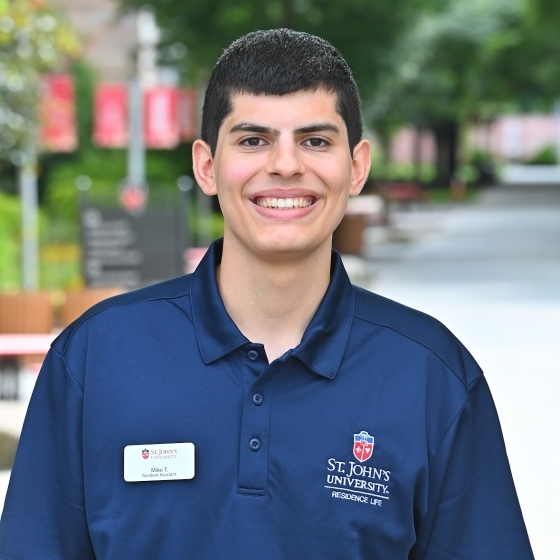
Student Success Story: Michael Trivino ’25CCPS
To see these benefits in action, look no further than Michael Trivino’s journey. Michael, a St. John’s fast-track student in Homeland Security, chose the program to challenge himself and accelerate his future. Along the way, he developed the discipline to balance graduate-level coursework with undergraduate commitments, and in return, gained valuable professional opportunities through various internship programs that put him on the path toward his career goals.
Is a Fast-Track Program Right for You?
If you’re wondering whether this path is a fit, ask yourself
- Do you thrive in rigorous academic environments?
- Are you motivated to start your career sooner?
- Do you want to maximize the value of your tuition investment?
If you answered “yes,” a Fast-Track program may be the perfect fit. Consider connecting with an admission counselor or your advising dean to learn more.
Frequently Asked Questions
As a CCPS Fast-Track student, when do I earn my undergraduate and graduate degrees?
Students are awarded their bachelor’s degree upon completion of all undergraduate requirements and subsequently earn their master’s degree after fulfilling the graduate coursework.
Is financial aid available to Fast-Track students?
Financial aid typically changes at the graduate level. Undergraduate aid and scholarships do not carry over, but Student Financial Services can guide you through costs and available funding.
To learn more, visit Student Financial Services and Tuition and Financial Aid.
How does the CCPS Fast-Track Program work?
Fast-Track Program students will automatically matriculate into their graduate program upon successful completion of all undergraduate degree requirement —no graduate application required.
Am I required to remain enrolled in graduate coursework once admitted to a Fast-Track program?
Yes. Upon admission to a Fast-Track program, students are expected to maintain continuous enrollment in graduate-level coursework each term until the completion of the master’s degree.
How do I apply to a Fast-Track program, and what does the process involve?
Each Fast-Track program listing includes an Apply Now button. Click to begin your application or scroll to the top of this webpage; once your application is submitted, you can expect to receive an admission decision within three to five business days.
Fast-Track to Success Through The Lesley H. and William L. Collins College of Professional Studies
The Lesley H. and William L. Collins College of Professional Studies at St. John’s University offers Fast-Track students the ability to graduate sooner, save money, and step confidently into careers across industries.
If you’re ready to take the next step, explore CCPS fast-track opportunities to see if this pathway is right for you.
Related Blog Posts


How AI Is Changing Finance: a Q&A with Yun Zhu, Ph.D.
Finance has always been driven by data, but artificial intelligence (AI) is changing who can analyze it, how quickly, and what questions are even worth asking.
Students Share the Decisions That Changed Their College Experience
College isn’t defined by one big decision. Often, it’s the smaller choices—like joining a club, saying yes to a mentor, entering a competition, or pursuing an idea—that shape your experience in meaningful ways.
We asked four St. John’s University students to reflect on one decision they would make again, and their answers may inspire your own college journey.

6 Experiences That Helped Me Launch My Tech Career Before Graduation
From hackathons and internships to mentorship and leadership opportunities, discover the experiences that helped launch my tech career before graduation.
