
A Day in the Life of a Cybersecurity Analyst

The world of cybersecurity is fast-paced, high-stakes, and always evolving. For St. John’s alumnus Sam Daniele ’22CCPS, that dynamic environment was exactly what he was looking for. Now, three years into his role as a Security Analyst, he’s gained firsthand insight into what it really takes to thrive in the field.
In this Q&A spotlight, Sam reflects on how he broke into cybersecurity, the skills that continue to drive his growth, and how his time at St. John’s laid the foundation for a career that continues to challenge and inspire him.
A Day in the Life of a Security Analyst: A Q&A with Sam Daniele
What first drew you to a cybersecurity career?
Sam: I’ve always been fascinated by how technology works behind the scenes. Back in high school, I loved experimenting with everything from customizing firmware on my game consoles to installing emulators on my calculator just to play Pokémon between classes.
The turning point came during my senior year, when I attended a Cyber Defense Training Camp at the University of Maryland. We used professional tools like Wireshark and Metasploit, heard from top cybersecurity faculty, and even toured the National Security Agency’s (NSA) Cryptologic Museum. That experience confirmed that cybersecurity was a career path I genuinely wanted to explore.
What does a typical day look like in your role as a Security Analyst?
Sam: My mornings usually start by reviewing our Security Information and Event Management (SIEM) platform. It aggregates system logs across the company, and I analyze those logs, investigate alerts, and prepare a daily recap report for our Chief Security Officer.
I also spend time on vulnerability management, which means installing security updates, patching systems, and closing potential weak spots before they become real threats. Some days are calm and structured; other days, something unexpected pops up that needs immediate attention. That unpredictability can be stressful for some people, but for me, it keeps the work exciting.
What are the biggest cyber threats you deal with?
Sam: Phishing is definitely one of the most common threats. You can have all the right systems and defenses in place, but at the end of the day, people are often the weakest link. That’s why employee awareness and ongoing training are so important.
We also use a concept called defense in depth, which layers multiple security controls (such as two-factor authentication, firewalls, and network segmentation) to make it much harder for attackers to get through.
Related Article: How to Recognize and Avoid Phishing Scams – Federal Trade Commission (FTC)
What is Phishing?
Phishing is a type of cyberattack in which scammers trick people into sharing personal information by posing as trusted sources through email, text, or social media. These messages often look convincing, but small clues can reveal the scam.
How did your coursework and campus experiences at St. John’s prepare you for a career in cybersecurity?
Sam: Earning a bachelor’s degree in cyber security cystems with a minor in digital forensics at St. John’s gave me a strong foundation, both technically and professionally. Professors like Erald Troja, Ph.D.; Suzanna Schmeelk, M.B.A., Ed.D., D.P.S.; and Assistant Adjunct Professor, Sajdan Naseem, were incredibly supportive.
The ACM (Association for Computing Machinery) Student Chapter, which is moderated by the Chair of the Division, Dr. Joan E. DeBello also played a big role towards my professional training at St. John's University. When I was a first-year student, I barely knew where to start. The lab sessions and competitions provided as part of the ACM student-engagement activities gave me the confidence and the early hands-on practice I needed to grow.
What opportunities helped you turn that classroom knowledge into real-world experience?
Sam: I was fortunate to build hands-on experience early through an internship with the New Jersey Courts, where I worked as an Information Security Analyst Intern. I secured that opportunity under Sajed Naseem, the Chief Information Security Officer and an Assistant Adjunct Professor in The Lesley H. and William L. Collins College of Professional Studies at St. John’s University.
I truly believe that year-long internship was vital to my early success. It helped me understand how cybersecurity functions in a real organization. I also earned my CompTIA Security+ certification, which I always recommend as a great first step for anyone serious about entering the field.
About five months after graduating, I landed my current role at Gen II Fund Services. The job search wasn’t easy, but between the internship, certification, and support from St. John’s faculty, I felt prepared.
As you began your career, what skills did you find most important for success?
Sam: Employers definitely look for technical foundations like a degree, certifications, and internship experience. However, soft skills such as communication, teamwork, and adaptability are just as critical.
You need to be able to explain complex issues clearly, collaborate across departments, and think on your feet. Resilience and curiosity go a long way, too. There’s always something new to learn.
What’s one of the biggest career misconceptions people have?
Sam: A big one is that cybersecurity is an entry-level field. The truth is, most employers want to see some prior experience. That doesn’t mean it’s impossible to get started, but it does mean you should build your foundation first.
I often tell students to start with information technology roles such as help desk or systems support, get certified, and then transition into cybersecurity. Those experiences give you the context and troubleshooting skills that make you more effective once you’re in the field.
Cybersecurity is constantly evolving. How do you continue learning and pushing your skills forward?
Sam: I’ve been involved with the U.S. Cyber Games, a national initiative that identifies and trains some of the country’s top cybersecurity talent to represent the United States in international competitions like the International Cybersecurity Challenge (ICC). The program brings together students and professionals to strengthen technical skills, teamwork, and cyber defense readiness through hands-on training and competition.
Last year, I competed to be part of the US Cyber Team and advanced to the semifinals after several rounds of technical challenges and assessments. It was an incredible experience that pushed me to apply advanced skills in areas like network defense, threat analysis, and incident response, all while collaborating with talented individuals from across the country.
This year, I’ve returned to the program as a Technical Mentor, where I assist with curriculum development and coaching. I recently helped deliver a lecture on attack and defense fundamentals and supported the identification of open-source projects with exploitable vulnerabilities for the team’s CVE (Common Vulnerabilities and Exposures) exercises. It’s rewarding to help shape the next generation of cybersecurity professionals while continuing to grow my own skills.
Outside of work, how do you unwind from the demands of cybersecurity?
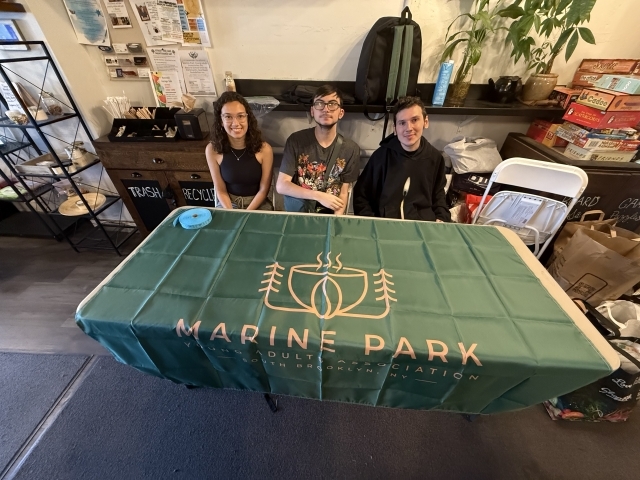
Sam: I’m passionate about giving back to my community. I’m part of the Liberty Kiwanis Cub in Bay Ridge, Brooklyn, and I founded a nonprofit called the Marine Park Young Adults Association, Inc. We host movie nights, trivia, karaoke, and game nights for people ages 18–35. It’s an affordable way for young adults to connect and build community.
Finally, what advice would you share with students who are just starting to explore a career in cybersecurity?
Sam: Don’t be intimidated by how broad the field is; use it to your advantage. Cybersecurity has so many paths. Try to explore each area early so you can focus on what excites you most.
Also, take advantage of Artificial Intelligence (AI) tools instead of fearing them. In my role, I use AI-based tools like Claude to streamline analysis. The key is learning to use these technologies responsibly and strategically—they can make you more effective, not replace you.
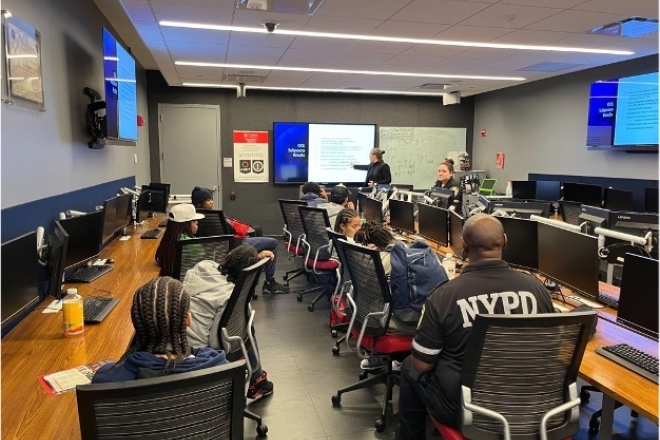
Explore Your Future in Cybersecurity
At St. John’s University, the B.S. in Cyber Security Systems program, offered through The Lesley H. and William L. Collins College of Professional Studies (CCPS), blends technical knowledge, hands-on learning, and industry connections to prepare students to meet the challenges of an evolving digital world.
Related Blog Posts


Students Share the Decisions That Changed Their College Experience
College isn’t defined by one big decision. Often, it’s the smaller choices—like joining a club, saying yes to a mentor, entering a competition, or pursuing an idea—that shape your experience in meaningful ways.
We asked four St. John’s University students to reflect on one decision they would make again, and their answers may inspire your own college journey.

9 Ways to Explore Your Career Interests in College
Choosing a major or career path can feel like a lot of pressure, especially if you’re just starting college. While some students arrive on campus with a clear plan, many spend their first year exploring different subjects, experiences, and opportunities before deciding what feels right.
Whether you’re unsure, thinking about a few majors, or just curious about careers, you have options. Here are nine ways to explore your interests in college.