
What Are the Admission Requirements for the St. John’s University M.S. in Cybersecurity?

Considering a master’s degree in cybersecurity often begins with practical questions. Am I prepared for graduate-level study? Does my academic or professional background align with the program's expectations? How do universities assess readiness in a field where precision, accountability, and judgment are essential?
Cybersecurity professionals today are responsible for far more than technical execution. They manage organizational risk, protect complex information systems, respond to evolving threats, and operate within legal and ethical frameworks that continue to expand across industries. For working professionals and career changers alike, the challenge is not interest in the field, but understanding how prior education and experience translate into graduate-level cybersecurity study.
At St. John’s University, the Master of Science in Cyber and Information Security is structured around these realities. The program emphasizes applied learning, analytical thinking, and responsible practice aligned with current industry expectations. A closer look at the admission criteria clarifies how readiness is evaluated and what preparation supports success in the program.
A Quick Overview of the St. John’s M.S. in Cybersecurity Program
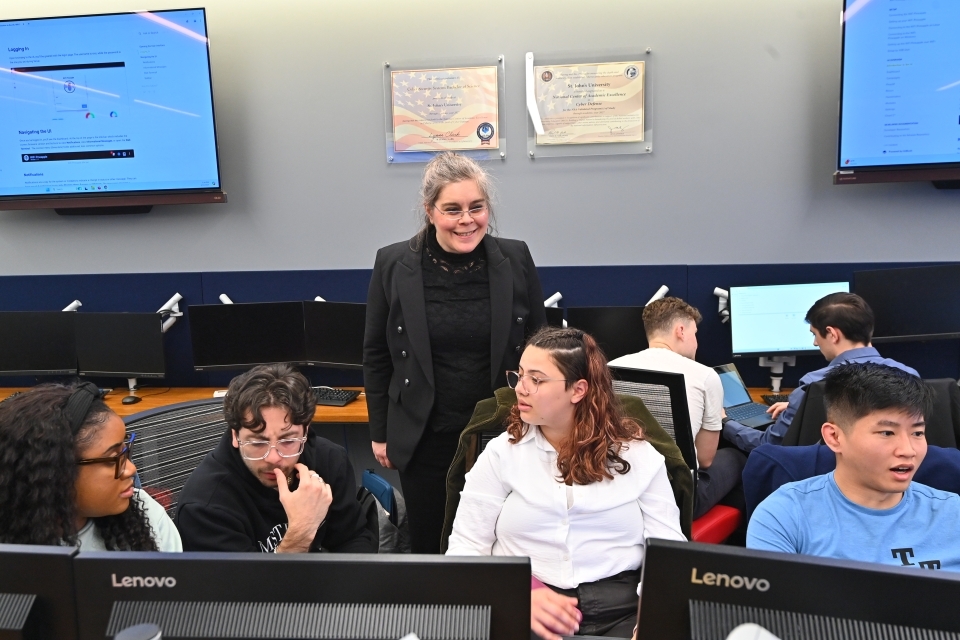
The M.S. in Cyber and Information Security at St. John’s University is a 30-credit graduate program designed for professionals preparing to work in environments where security decisions directly affect systems, data, and organizational risk. The focus is on applying cybersecurity principles in real settings, not simply learning tools in isolation.
You may enter the program with a background in computer science, information technology, or a related technical field, or you may be transitioning into cybersecurity with relevant analytical or systems experience. The curriculum strengthens core knowledge while advancing into specialized security topics. Courses are offered in online, hybrid, and on-campus formats, allowing you to continue progressing professionally while completing the degree.
By the time you complete the program, you are prepared for roles such as information security analyst, information technology (IT) security architect, and network security professional. Studying at St. John’s also places you in a New York–based academic environment where regulatory, enterprise, and risk-management considerations are integral to how cybersecurity is taught and understood.
M.S. in Cybersecurity Admission Requirements
The admission requirements for the M.S. in Cyber and Information Security at St. John’s University are designed to assess whether your academic background and experience align with the demands of graduate-level cybersecurity study. Rather than relying on a single profile, the admission process reflects the reality that professionals enter cybersecurity from multiple pathways.
Bachelor’s Degree Requirement
To be considered for admission, you must hold a bachelor’s degree from an accredited college or university, or an equivalent international credential. While many applicants have degrees in technical or analytical disciplines, St. John’s evaluates how your prior education has prepared you for advanced study, not simply the title of your undergraduate major.
Academic Prerequisites for Cybersecurity Programs
Graduate study in cybersecurity builds on core concepts such as programming, networking, and computer systems. You are expected to demonstrate familiarity with these areas through prior coursework, professional experience, or industry training.
If your background does not yet include this preparation, admission counselors work with you to clarify prerequisite expectations and identify appropriate academic pathways before enrollment. The goal is to ensure you enter the program ready to engage fully with the coursework.
Required Application Materials
Your application provides a comprehensive view of your readiness and motivation. To apply, you will submit
- A completed online graduate application;
- Official academic transcripts;
- A professional résumé detailing relevant experience; and
- A statement of professional goals.
The statement of goals is your opportunity to explain how the M.S. in Cybersecurity fits into your career direction and why you are prepared for advanced study in the field.
Letters of Recommendation
At least one academic or professional letter of recommendation is required. These references help the admission committee understand how you approach complex work, collaborate with others, and handle responsibility qualities that are essential in cybersecurity roles.
GRE or GMAT Requirements for Cybersecurity M.S.
When you apply to the M.S. in Cyber and Information Security at St. John’s University, your application is reviewed as a whole rather than reduced to a single metric. Academic preparation, professional experience, and the strength of your application materials all play a role in how readiness for graduate study is evaluated.
Depending on your background, GRE or GMAT scores may not be required. For applicants with relevant coursework, technical experience or demonstrated professional responsibility, standardized testing is often not the deciding factor. If your situation is less straightforward, discussing your profile with a graduate admission counselor can help clarify whether test scores would strengthen your application.
Applying as an International Student
If you completed your prior education outside the United States, St. John’s University requires a few additional materials to evaluate your academic preparation accurately and fairly for the M.S. in Cyber and Information Security.
As an international applicant, you will be asked to provide
- English language proficiency scores from an approved exam, such as TOEFL, IELTS, or the Duolingo English Test, unless you qualify for an exemption; and
- A course-by-course credential evaluation of international academic records to confirm degree equivalency and coursework alignment.
These steps help ensure that you enter the program prepared for graduate-level study conducted in English and grounded in US academic standards. St. John’s international admission team is available to guide you through documentation requirements, timelines, and next steps so you can plan your application with clarity and confidence.
How St. John’s Reviews Cybersecurity Applicants
When your application to the M.S. in Cyber and Information Security at St. John’s University is reviewed, the admission committee looks at how your background prepares you for the demands of graduate-level cybersecurity study. The process is holistic, meaning no single factor determines the outcome.
Your application is evaluated based on how effectively you demonstrate
- Academic preparation that supports advanced study in cybersecurity concepts;
- Professional or technical experience relevant to security, systems, or analytical work;
- Readiness for applied learning, including problem-solving and collaboration;
- Clarity of career goals, as outlined in your statement of purpose; and
- Capacity for ethical judgment and responsibility, which is central to cybersecurity practice.
This review approach reflects St. John’s focus on preparing cybersecurity professionals who can operate thoughtfully and responsibly in environments where security decisions have real-world consequences.
Tips for Building a Strong Graduate Applicatio
A strong application shows how your background, preparation, and goals align with graduate-level cybersecurity study. As you prepare your materials for St. John’s University, focus on presenting a clear and well-supported profile.
You can strengthen your application by
- Defining your cybersecurity focus, explaining the types of roles or responsibilities for which you are preparing;
- Connecting your experience to cybersecurity, whether through technical work, systems analysis, risk management, or related responsibilities;
- Demonstrating readiness for applied learning, including problem solving, collaboration, and analytical thinking;
- Using your statement of goals intentionally to explain why the M.S. in Cyber and Information Security fits your professional direction; and
- Submitting complete materials early, allowing time for review and follow-up if needed.
Thoughtful preparation and early engagement with the admission office help ensure your application reflects both your readiness and your long-term intent in the cybersecurity field.
Shaping Your Next Step in Cybersecurity at St. John’s
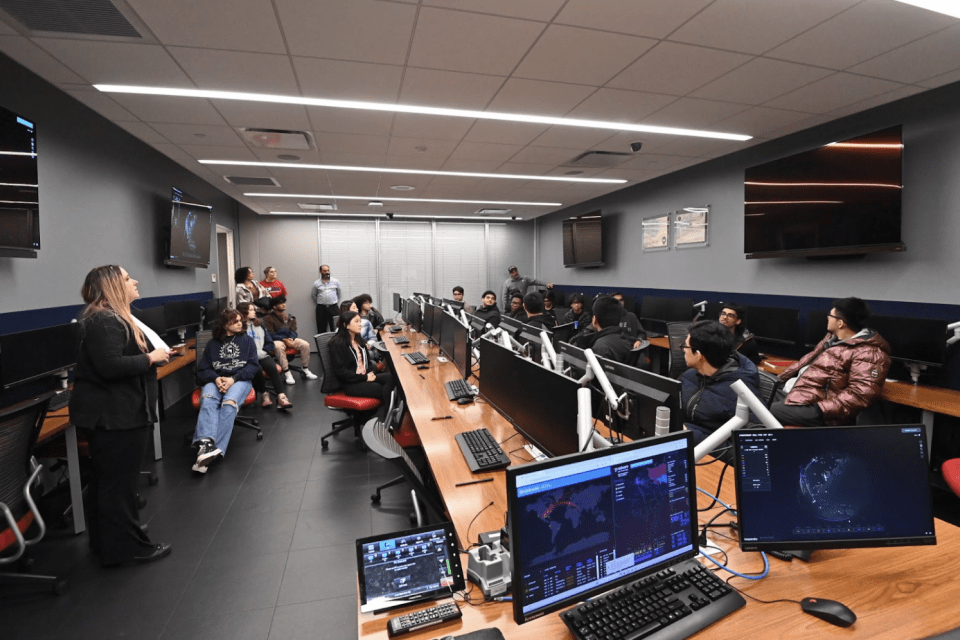
The Master of Science in Cyber and Information Security at St. John’s University is designed for professionals who want to deepen their technical judgment and prepare for the responsibilities of securing complex systems and sensitive information. The program combines applied coursework, faculty expertise, and an academic environment informed by real-world security considerations.
You build the knowledge and analytical perspective needed to move forward with confidence, whether you are strengthening your role in IT, transitioning into cybersecurity, or preparing for greater responsibility in your organization. At St. John’s, graduate study in cybersecurity is grounded in academic rigor, ethical practice, and preparation that reflects how security work is carried out today.
Connect with St. John’s to speak with an admission counselor and explore how the M.S. in Cyber and Information Security aligns with your professional goals.
Frequently Asked Questions (FAQs)
What do you need for an M.S. in information technology cybersecurity?
To pursue an M.S. in cybersecurity, you typically need a bachelor’s degree and foundational knowledge in areas such as computing, information systems, or analytical disciplines. For a cybersecurity master’s program at St. John’s University, preparation may come from prior coursework, professional experience, or approved prerequisite study. The Office of Admission review focuses on readiness for graduate-level work rather than a single academic path. This approach supports students entering a cybersecurity graduate degree from both technical and adjacent fields.
What can you do with a master’s degree in cybersecurity?
A cybersecurity master’s degree prepares you to work in roles that protect systems, data, and organizational infrastructure across industries. Graduates of a master’s in cybersecurity often contribute to security planning, risk assessment, incident response, and compliance efforts. At St. John’s University, the curriculum emphasizes applied learning so skills translate directly to professional environments. This preparation supports advancement within IT, security, and technology-focused organizations.
Is a master’s in cybersecurity worth it?
A master’s in cybersecurity can be worth it if you seek deeper technical judgment, broader responsibility, or advancement in security-focused roles. Employers increasingly value candidates with a cybersecurity graduate degree who understand both technical controls and organizational risk. At St. John’s University, the M.S. in Cybersecurity is structured to align academic preparation with real-world security expectations. The value comes from developing skills that remain relevant as threats and regulations ev
Related Blog Posts

What to Look for on a College Website: Nine Things to Check
A college website can tell you a lot more than how much tuition costs or when an application is due.
You can meet the professors you could learn from, discover research happening on campus, find scholarships you may be eligible for, explore internships and other hands-on opportunities, and see how current students are turning their college experiences into opportunities for the future.
As you research your college options, here are nine places on a university website worth clicking into.



College Brag Sheet: What It Is and What to Include (with Examples)
You have asked your teacher, counselor, or another mentor to write you a letter of recommendation. But, before they can start writing, they may ask you for something you have probably never heard of: a brag sheet.
Despite the name, a brag sheet is not about showing off. It is your opportunity to share the experiences, accomplishments, goals, and qualities that make you who you are.

Feeling Behind on College Applications? 6 Things to Do
If your social media feed has suddenly become filled with classmates talking about college essays, campus visits, or where they’re applying, it can be easy to feel like everyone is ahead of you.
You may be wondering where to start or how much you need to accomplish before application deadlines begin to arrive.
Here are six things to do if you’re feeling behind on college applications.