
The Johnnies Blog


How AI Is Changing Finance: a Q&A with Yun Zhu, Ph.D.
Finance has always been driven by data, but artificial intelligence (AI) is changing who can analyze it, how quickly, and what questions are even worth asking.

Tri‑National Online Exchange: A Cyber Security Research Experience Across the Americas
When many people hear the phrase global learning, they imagine passports, flights, and study‑abroad travel. At St. John’s University, however, global learning can also take place through sustained digital collaboration—connecting students across borders, languages, and institutions without leaving campus.

Fast-Track vs. Traditional Degrees: Why Accelerated Programs Work
With rising tuition costs, competition intensifying in the job market, and the drive to make an impact sooner, today’s ambitious students are increasingly turning to accelerated—also called fast-track — degree programs.
In this blog, you learn what a fast-track program is, how it compares to the bachelor’s and master’s traditional degree path, and the transformative benefits it can deliver for your career.

Fast Track to Impact: How St. John’s Accelerated My Homeland Security Career
Michael Trivino '25CCPS shares how St. John’s University’s Fast Track program helped him complete a Homeland Security degree, gain real-world experience, and build a successful career.


The Role of Generative AI in Cybersecurity
Discover how generative AI is revolutionizing cybersecurity. Gain new insights for cybersecurity professionals with St. John’s University, New York's M.S. in Cyber Security Program.

Marketing Intelligence vs. Marketing Analytics vs. Business Analytics: Choosing the Right Master’s Degree
As the Director of St. John’s University’s Master of Science (M.S.) in Marketing Intelligence degree program at The Peter J. Tobin College of Business, I often receive questions about the unique aspects and advantages of a master’s degree in marketing intelligence compared to degrees in marketing analytics or business analytics. In this blog post, I provide an overview of each of these programs offered at the University, highlighting the skills you develop and the career opportunities available with each degree.
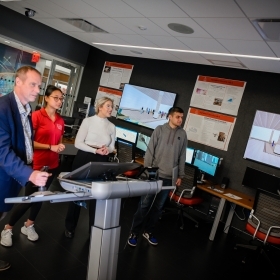
Navigating Real-World Challenges: Inside St. John’s Homeland Security Simulation Lab
Explore the intersection of theory and practice in homeland security at St. John’s University. Learn how our simulation lab provides hands-on experience, research opportunities, and industry connections to prepare you for a career in the field.
Homeland Security & Criminal Justice Leadership: Master Dual Program
In today’s dynamic landscape, a career in homeland security and criminal justice leadership is a responsibility—a dedication to safeguarding communities and upholding equity. A cornerstone of meeting this responsibility lies in an understanding of both homeland security and criminal justice leadership, the discipline in which encompasses unique insights and challenges that demand specialized knowledge and skills. Homeland security demands a keen understanding of cybersecurity, counterterrorism, and emergency preparedness, while criminal justice leadership focuses on enforcing laws and ensuring equitable justice for all.