Earning an Economics Degree in the Age of AI: a Conversation with Ansel Schiavone, Ph.D.
Economics has always been about understanding how systems work, how they change, and what drives those changes. Today, artificial intelligence (AI) is reshaping those systems while also changing how students learn about them.
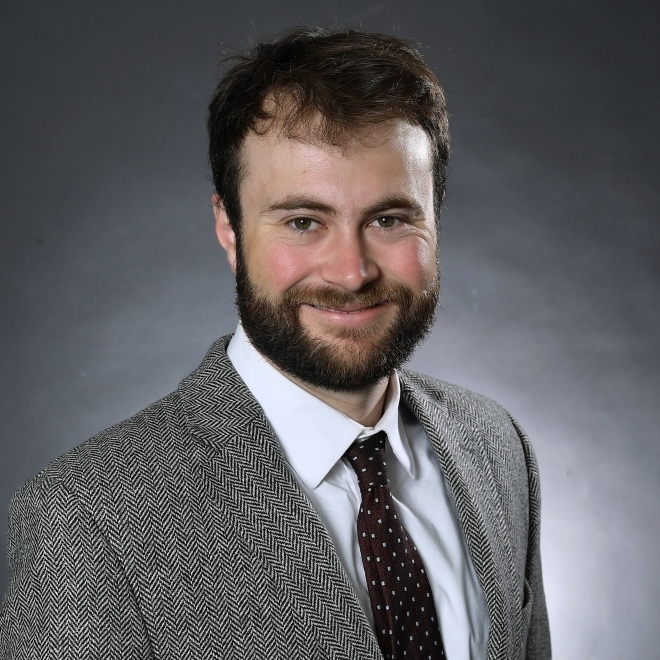
As part of our AI in the Classroom series, we sat down with Ansel Schiavone, Ph.D., Assistant Professor of Economics at The Peter J. Tobin College of Business, to learn how he is using AI and other digital tools in his courses, what he is building for his students, and how he believes an economics education can prepare students for a changing world.
What was the moment you realized AI was going to change everything about how you teach?
I remember very distinctly the first time I used ChatGPT in Fall 2022. I was browsing Twitter/X and came across a post talking about how OpenAI had released an impressive new chatbot. I decided to test it by uploading one of my essay prompts. From the result I got back, I immediately realized the education landscape had changed. I sent an email to all my colleagues alerting them to the fact that many of our “traditional” forms of instruction and evaluation would likely no longer function in the way we have come to expect.
I am of the belief that technological change is the primary driver of change in human society. But I am not a technological determinist, and I believe human agencies play a crucial role in how technology is adopted into institutions and society. As an educator and someone who has long enjoyed computer programming, I feel therefore that it is my responsibility to contribute—in a very small part—to shaping how these new technologies will be integrated into the classroom.
What tools are you building for your students and what problem are they solving?
I received the 2025 Teaching Innovations Grant in AI. The aim of the project is to incorporate AI and other digital technologies into teaching in a way that will advance student learning.
Over the past months, I have developed and deployed several AI tools and web applications for use in my courses. One example is my Derivative Tutor Bot, an AI assistant that interprets handwritten calculus problems and walks students through step-by-step derivative solutions. This tool is used by students to refresh and strengthen their mathematical foundations for microeconomics.
I am currently developing a new AI tool for my econometrics course that generates individualized datasets based on student interests—sports, politics, financial markets, etc. Research shows that students are more engaged with material and experience better learning outcomes when lessons are tailored to their specific interests. Alongside these AI tools, I have built a suite of more traditional interactive web applications using R and Python that allow students to dynamically interact with various economic models.
Economic theory tells us that technology is good for workers when it augments labor, and bad for workers when it replaces labor. I think the same applies for students. The goal, therefore, is to develop and incorporate these new technologies in a way that augments students’ ability to learn, rather than merely complete more assignments or create prettier slide decks.
What does Tobin’s approach to AI say about how it prepares students for an uncertain future?
Education is somewhat akin to placing a bet. You decide on an area of study with the hope that the relative demand for that skill set will be high when you complete your studies years from now. Technological change is the roulette wheel in this metaphor, and the truth is nobody knows where exactly it will land.
But the goal at Tobin has always been and will continue to be to prepare students as best we can for their future. We remain committed to small class sizes, in-person instruction, and continuous updating of curricula to meet the changing needs of students and society. Nobody can say what the future will hold. But creating a learning environment where students are trained in the capabilities and exposed to the limitations of these new technologies will ensure the greatest possible outcome.
What advice do you have for students navigating all of this?
I don’t know, but I think there are two pitfalls that students should look out for. The first is not using the technology. The second is using it too much.
I might summarize my evolving teaching philosophy with the following points:
- Better tools = Higher expectations
- Thinking fast ≠ Thinking hard
- Speaking > Typing
Prepare to Understand What Comes Next.
AI is changing how we learn, work, and understand the economy, but the ability to think critically, analyze complex problems, and adapt to change remains essential. At The Peter J. Tobin College of Business, you’ll study economics while developing the analytical skills and technological fluency to navigate an evolving world. Explore our undergraduate economics program to discover how a Tobin education can prepare you to understand the forces shaping the future.
Related Blog Posts
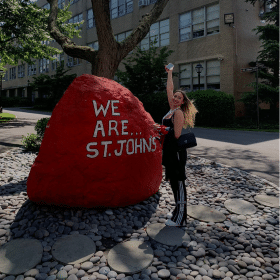
A Leap of Faith: From Romania to St. John’s and Beyond
From Romania to St. John’s, international student Adina Stancu shares how her leap of faith opened the door to a college experience filled with global opportunities, meaningful connections, and a life she once never imagined.

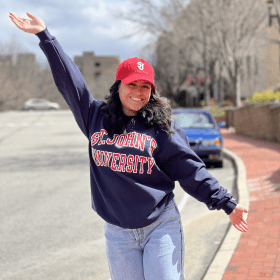
Getting Involved on Campus: Finding Community and Confidence at St. John’s
Starting college can feel overwhelming. A St. John’s University student shares how getting involved helped her find her place, build confidence, and feel at home on campus.

How AI Is Changing Finance: a Q&A with Yun Zhu, Ph.D.
Finance has always been driven by data, but artificial intelligence (AI) is changing who can analyze it, how quickly, and what questions are even worth asking.
Students Share the Decisions That Changed Their College Experience
College isn’t defined by one big decision. Often, it’s the smaller choices—like joining a club, saying yes to a mentor, entering a competition, or pursuing an idea—that shape your experience in meaningful ways.
We asked four St. John’s University students to reflect on one decision they would make again, and their answers may inspire your own college journey.