Tri‑National Online Exchange: A Cyber Security Research Experience Across the Americas

When many people hear the phrase global learning, they imagine passports, flights, and study‑abroad travel. At St. John’s University, however, global learning can also take place through sustained digital collaboration—connecting students across borders, languages, and institutions without leaving campus.
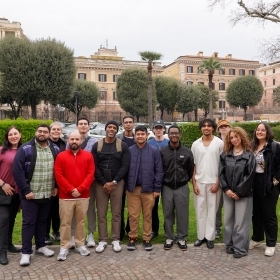
Through a tri‑national Global Online Learning Exchange – Research Experience (GOLE‑RE), graduate students in the M.S. in Cyber and Information Security program. The M.S. graduate cohort was led by Dr. Schmeelk, a Fulbright Cyber Security Specialist, who partnered with peers and faculty from Pontifícia Universidade Católica de Campinas (PUC‑Campinas), São Paulo, Brazil (South America), led by Dr. Carlos Moreira, Guilherme Oliveira, and PUC Cybersecurity Faculty) and Universidad Nacional Autónoma de Honduras (Tegucigalpa, Honduras, Central America), led by Dr. Elías Leonardo García Urquía and UNAH Engineering Faculty. Together, they engaged in applied cybersecurity research addressing real‑world challenges affecting financial systems and critical infrastructure across the Americas. This blog highlights how the tri‑national exchange model brings global learning to life by combining virtual collaboration, research, and workforce‑aligned cybersecurity education.
What is GOLE-RE?
The Global Online Learning Exchange – Research Experience (GOLE‑RE) connects St. John’s students with international partner universities to engage in collaborative, research‑focused coursework. In this tri‑national exchange, students worked in multinational teams to analyze applied cybersecurity case studies, share regional perspectives, and produce collective research deliverables—mirroring how global cyber teams operate in professional environments.
This initiative builds on Dr. Schmeelk Fulbright‑supported international collaboration and St. John’s long‑standing commitment to global online learning, strengthening cybersecurity research capacity across North, Central, and South America.
Learn more
What Cyber and Information Security Graduate Students Gain
Over the course of several weeks, graduate students in the St. John’s University M.S. in Cyber and Information Security dual modality graduate program—accredited/validated by Middle States, ABET (graduate level), and as a CAE‑NSA Program of Study (PoS)—gained applied international research experience extending well beyond the classroom, including:
Multilingual cyber security research communication for global industry contexts
Students developed the ability to communicate technical security findings, threat analyses, and mitigation recommendations across English, Spanish, and Portuguese—an essential skill for cyber security research and coordination within multinational enterprises and global industry partners.
Applied collaboration in tri‑national, sector‑focused cyber research teams
Working in tri‑national teams, students examined how regional industry regulations, sector‑specific risk profiles, and governance frameworks influence cybersecurity decision‑making and operational resilience across international markets.
Hands‑on experience managing globally distributed industry research projects
Coordinating research activities across time zones, institutions, and professional expectations reflected the realities of conducting cybersecurity research within globally distributed industry environments, including vendor ecosystems and third‑party partnerships.
Sector‑driven cybersecurity research and threat analysis
Students applied threat modeling, incident analysis, and risk‑mitigation strategies to international case studies drawn from critical industry sectors, gaining insight into how cyber threats, defenses, and compliance requirements differ across jurisdictions and economic regions.
Together, this tri‑national GOLE‑RE experience demonstrates how virtual exchange can deliver rigorous, globally relevant cybersecurity education while preparing students for careers in an interconnected digital world.
Highlighting International Cyber Security Research Outcomes: Student Perspectives and Impact
Below, students in cybersecurity reflect on their participation in the 2025 GOLE‑RE initiative, Cyber in the Americas: South, Central, North—a tri‑national, research‑driven collaboration uniting students and faculty from St. John’s University (United States), Pontifícia Universidade Católica de Campinas (PUC‑Campinas), São Paulo, Brazil, and Universidad Nacional Autónoma de Honduras (UNAH), Tegucigalpa, Honduras. Working in internationally distributed research teams, students engaged in applied cybersecurity analysis, addressed real‑world industry and financial‑sector challenges, and navigated the technical, operational, and cultural complexities inherent to global cyber research. Their reflections highlight how cross‑border collaboration strengthened their research skills, expanded their understanding of international threat landscapes, and prepared them to operate as globally informed cybersecurity professionals.
Cassey Burrell (M.S. Cyber and Information Security, St. John’s University)
“During this year’s capstone class, we were presented with an opportunity to participate in the Americas Virtual Exchange program, collaborating with cybersecurity students in Brazil and Honduras. We analyzed a data breach involving Brazil’s real-time payment system, PIX, and worked together to identify vulnerabilities and propose mitigation strategies.
While I initially expected communication to be difficult due to time zones and language differences, it turned out to be no issue at all. Our team communicated effectively, often switching between Spanish and Portuguese to support one another. This experience was fulfilling and provided the opportunity to meet cybersecurity students across Central and South America while learning about international security frameworks.”
Vinicius Pereira De Castro (Pontifícia Universidade Católica de Campinas (PUC‑Campinas), São Paulo, Brazil)
“This experience was unique because it was my first time working on an academic project with international students. Balancing academic and personal commitments was challenging, but our team succeeded.
The biggest challenges for me were language barriers and time zone differences. Still, everyone made an effort to communicate clearly and support one another. WhatsApp was our primary tool for staying connected, alongside Microsoft Teams for meetings. Beyond learning cybersecurity concepts, I improved my written and spoken English and gained confidence in cross-cultural collaboration.”
Luis Diaz (Universidad Nacional Autónoma de Honduras)
“This project was a rewarding and educational experience that allowed us to collaborate with talented students across three universities. I am grateful to the organizers for making this possible. Working with international students helped me improve my English and learn from different perspectives.
Managing time zones and language barriers was challenging, but we succeeded as a team. This experience reinforced the value of global collaboration, teamwork, and cultural exchange.”
Juan Carlos Flores (Universidad Nacional Autónoma de Honduras)
“From our first team meeting, I could tell this would be a great experience. We introduced ourselves, shared ideas, and began organizing our tasks. Communicating in English was challenging for me since it is my second language, but I saw it as an opportunity to practice and improve. Everyone was patient and supportive, which made the process much easier.
Working with students from different backgrounds taught me a great deal. We faced time zone differences and busy schedules, but we learned to adapt. I enjoyed hearing diverse perspectives and learning how each person approached problems in their own way. Overall, this collaboration was an amazing experience. I learned the importance of teamwork, communication, and flexibility. Most importantly, I gained confidence using my second language and saw how much we can achieve when we combine ideas across cultures.”
Devanie Gajada (M.S. Cyber and Information Security, St. John’s University)
“Working with team members from PUC in Brazil and UNAH in Honduras provided valuable cultural and communication experience. Collaborating across different backgrounds helped me become more adaptable, open-minded, and respectful of diverse work styles. This project strengthened our teamwork and prepared us to succeed in multicultural professional environments.”
Miguel Guerrero (M.S. Cyber and Information Security, St. John’s University)
“This is my final semester of graduate school at St. John’s University. I did not know what to expect from this experience, especially since it involved not only students from St. John’s, but also from Honduras and Brazil.
Fortunately, through collaboration across the group, we were able to coordinate an effective plan to accomplish the project. This experience allowed us to engage in real-world teamwork. Overall, this was a rewarding opportunity that enabled me to collaborate with students from different countries while learning through a real-world cybersecurity case.”
Gulnaz Mukanbetova (M.S. Cyber and Information Security, St. John’s University)
“This month-long journey has been nothing short of inspiring. Working with nine students from St. John’s University, PUC in São Paulo, and UNAH in Tegucigalpa, I felt energized from day one.
Every day brought new challenges and opportunities to grow. I loved seeing how each team member approached problems differently. PUC students brought creativity and innovation; UNAH students shared practical, context-driven solutions; and my peers from St. John’s pushed technical rigor and critical thinking. By the end of the month, I felt inspired, confident, and more committed than ever to making a meaningful impact in cybersecurity.”
Brianna Mendiola (M.S. Cyber and Information Security, St. John’s University)
“At first, I was very nervous about what collaborating with students from different countries would entail. I worried about time zone differences and possible language barriers. Thankfully, we were paired with a great group. We set things in motion early, created a plan, and communicated efficiently. Overall, it was a great experience.”
Roberto Morales (Universidad Nacional Autónoma de Honduras)
“This project helped me understand how to collaborate across time zones and cultural contexts. It showed how teamwork across cultures can strengthen the quality of the work.”
John Thomas Pedone (M.S. Cyber and Information Security, St. John’s University)
“This class was challenging due to the workload of both our capstone and the international collaboration project. Communication was sometimes difficult, especially with students spanning multiple time zones and languages.
As the project progressed, I adapted to approaches that worked better for the group. Overall, while the experience was stressful at times, it was ultimately a positive and valuable research opportunity.”
Calebe Foresti de Carvalho Pierozzi (Pontifícia Universidade Católica de Campinas (PUC‑Campinas), São Paulo, Brazil)
“This project transformed my understanding of how rich and meaningful exchanges can be, even at a distance. The discussions and meetings surrounding the security breach in Brazil’s PIX system gave me a clearer understanding of the importance of security in digital systems. I am grateful to St. John’s and UNAH for the opportunity to collaborate on this project.”
Adam Reilly (M.S. Cyber and Information Security, St. John’s University)
“Getting five people in the same location and time zone to schedule a meeting is challenging on its own. Adding international students across different time zones and schedules made coordination even more complex.
Despite these challenges, our team was able to identify weekly meeting times that worked for everyone. While we initially thought language barriers would be the biggest obstacle, most students were bilingual in our shared languages, which made communication smoother than expected. Overall, the adaptability of the group and the willingness to collaborate made this experience successful.”
Erhan Sahin (M.S. Cyber and Information Security, St. John’s University)
“We had the opportunity to collaborate with international students, which was both enriching and insightful. We made a conscious effort to understand and respect cultural differences so that everyone felt included and heard.
By actively participating in group chats and video calls, I built strong working relationships and contributed meaningfully to our shared goals. This experience strengthened my teamwork and communication skills while broadening my perspective on global collaboration and research.”
Guilherme Alves Tavares (Pontifícia Universidade Católica de Campinas (PUC‑Campinas), São Paulo, Brazil)
“Discussing a major cybersecurity breach that occurred in Brazil was especially valuable, given its national significance. Each meeting was enriching, particularly for foreign language practice, and served as preparation for future professional work.”
Dominick Vandenberge (M.S. Cyber and Information Security, St. John’s University)
“Coming from a background in classical studies and adolescent education, I bring strong analytical and communication skills to the field of cybersecurity. Working on an international, cross-disciplinary team introduced unique challenges, including differences in academic levels, native languages, and time zones. However, those differences ultimately strengthened our collaboration. Each team member brought distinct skills and perspectives, which fostered creativity and allowed everyone to contribute in meaningful ways.
Overall, this experience pushed me out of my comfort zone in the best way. I strengthened my communication skills and developed a clearer understanding of how security frameworks operate across borders.”
Gerardo Andree Salinas (Universidad Nacional Autónoma de Honduras)
“I was pleased to participate in the GOLE exchange program because it allowed me to deepen my knowledge and apply cybersecurity standards through the study of a real-world case. Experiences such as these help us become better professionals while strengthening our teamwork and communication skills.”
Kauan Messias da Silva Santos (Pontifícia Universidade Católica de Campinas (PUC‑Campinas), São Paulo, Brazil)
“This project was especially challenging due to both the demanding workload and my personal difficulty with the English language. Communication was the greatest obstacle for me.
Video meetings were particularly difficult, as following fast-paced discussions in a non-native language required intense focus. Despite these challenges, our team made a strong effort to stay aligned by scheduling weekly meetings and sharing detailed documents. While demanding, this experience was deeply positive and enriching.”
Muhammad Yousaf (M.S. Cyber and Information Security, St. John’s University)
“This collaboration shaped my perspective and strengthened my ability to work across cultures. While coordinating across multiple time zones and navigating language differences was challenging at first, our communication improved over time.
The most important aspect of this project was that our team continued to show up, collaborate, and support one another. By working through these challenges together, we gained valuable insight from this global experience.”
Preparing St. John’s Graduate Students for Global Industry Leadership
Through initiatives such as the Global Online Learning Exchange Research Experience (GOLE-RE), St. John’s University graduate M.S. in Cyber and Information Security dual modality program—accredited/validated by Middle States, ABET (graduate level), and as a CAE‑NSA Program of Study (PoS)—equips students to engage directly with complex, globally relevant research challenges across critical industry sectors. GOLE-RE provides structured opportunities to develop industry‑aligned cyber security research skills, collaborate across international and multilingual teams, and analyze real‑world threats affecting global enterprises. By integrating applied research with cross‑border collaboration, the program prepares students to contribute meaningfully to cybersecurity leadership and innovation in an increasingly interconnected global economy.
GOLE Cyber Research Faculty & (Graduate) Student Contributors
St. John’s University, Queens, New York
Faculty Lead: Dr. Suzanna Schmeelk
Contributing Team:
Dr. Zoe Petropoulou
Ian M. August
Dr. Geoff Dick
Susan Peterson
Greg Bruhn
Cyber Security Graduate Students:
Cassey Burrell
Miguel Guerrero
Brianna Andrea Mendiola
Gulnaz Mukanbetova
Dominick Vandenberge
Monique Crowther
Devanie D Gajadar
John Pedone
Adam Reilly
Erhan Sahin
Muhammad Ali Yousaf
Nathanael Dorsey
Augustine Ibeh
Joeal James
Samuel Thamrin
Oscar Xu
Peter Thorson Andrews
Brian Fitzgerald
Troy Georges
Shalisa McKenzie-McAulay
Daniel O Wilson-Eche
Schuyler Emanuele Winston
PUC-Campinas in São Paulo, Brazil, South America
https://www.puc-campinas.edu.br/
Faculty Leads:
Dr. Carlos Moreira
Guilherme Oliveira
Contributing Team:
PUC Cybersecurity Faculty
Cyber Security Students:
Calebe Foresti de Carvalho Pierozzi
Guilherme Alves Tavares
Kaun Messias
Vinícius Pereira de Castro
Lucas Gomez Machado
Gabriel Figueiredo Spaziante
Vitor Hugo Alvarenga Alves
Diego Mauad Peixoto
Débora Biguzzi
Universidad Nacional Autónoma de Honduras (UNAH), Tegucigalpa, Honduras
Faculty Lead:
Dr. Elías Leonardo García Urquía
Contributing Team:
UNAH Engineering Faculty
Cyber Security Students:
Gerardo Andree Salinas
Hogla Sarahi Calix Gamez
Juan Carlos Flores Trujillo
Pablo Cesar Flores
José Roberto Martínez Morales
Bryan Daniel Gallardo Rodrigues
Jorge Adalberto Cantarero
Eros Daniel Rivera Buezo
Luis Daniel Díaz Cáceres
Related Blog Posts
How AI Is Changing Finance: a Q&A with Yun Zhu, Ph.D.
Finance has always been driven by data, but artificial intelligence (AI) is changing who can analyze it, how quickly, and what questions are even worth asking.