
Seven Things I Wish I Knew Before Studying Abroad
Rome Was My Classroom is a six-part series about my study abroad experience and the lessons I brought home from my two-week stay in Rome, Italy.
Before leaving for Rome, I had plenty of questions. What would a typical day look like? Would I make friends? How intense is this program? Would I have time to actually experience Rome, or would I spend two weeks inside a classroom?
Here are seven things I wish I had known before arrival.
1. You Don't Need to Know Anyone Before You Go.
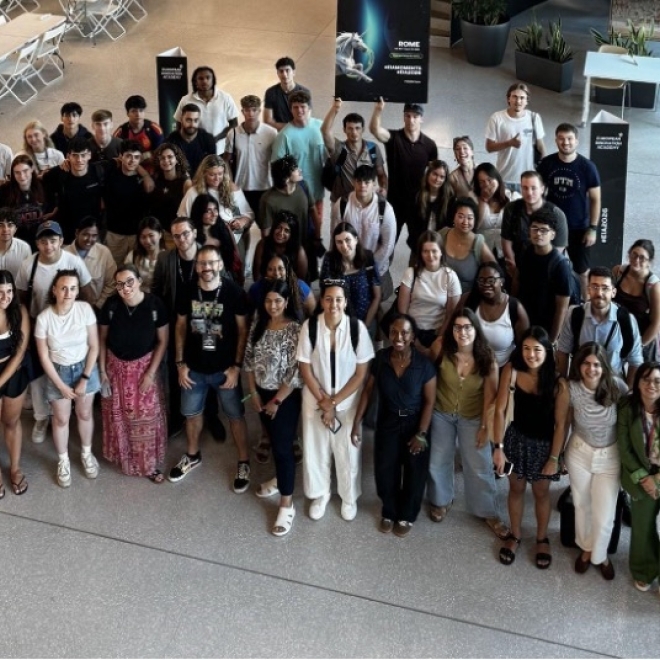
On our first day, we arrived at Università Campus Bio-Medico di Roma and were welcomed by the European Innovation Academy (EIA) team. After a keynote about teamwork and collaboration, we participated in an icebreaker activity.
There were approximately 60 of us, all from different countries, universities, academic programs, and professional backgrounds. At first, it was a room filled with unfamiliar faces. Then, we were given an open space and asked to start meeting one another to form our own startup teams.
That immediately took away the awkwardness of not knowing anyone. You couldn’t stand in the corner waiting for someone else to introduce themself. You had to start conversations: What are you studying? What are you interested in? What skills do you have? What kind of problem would you like to work on?
If you’re considering studying abroad but are nervous about not knowing anyone, don’t let that stop you. Most people arrive in the same situation. There will be structured activities to give you reasons to start talking to one another.
2. You May Find Yourself Working with People Very Different from You.
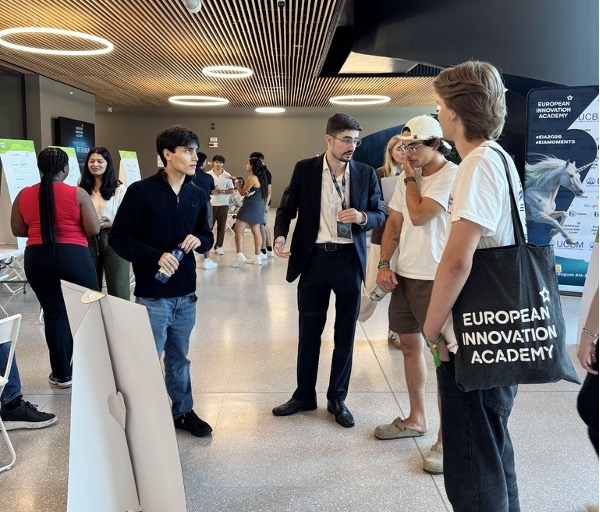
Our teams weren’t formed only around friendship. We needed different skills and roles, including a CEO, CMO, CTO, and CPO. That meant thinking about what each person could contribute.
I took on the role of Chief Marketing Officer (CMO), which connected naturally with my professional background. I was responsible for areas including market research, customer personas, messaging, SEO, and our broader marketing strategy. Other team members brought different skills and perspectives to the project.
Working with an international cohort also meant that people didn’t always approach problems the same way. We had different communication styles, experiences, and opinions about what we should prioritize. That could make collaboration challenging, but it also made the project much more interesting.
One thing I would tell future study abroad students is not to look only for people who seem similar to you. Some of the value comes from working with someone who sees the same problem in a different way.
3. Study Abroad Can Be Much More Hands-On Than You Expect.
I knew the European Innovation Academy focused on entrepreneurship, but I didn’t fully understand how quickly we would move from learning concepts to application.
Our team decided to work on an idea for an all-purpose sustainable makeup brush designed to help reduce makeup-related waste. From there, we couldn’t simply sit around debating whether it was a good idea. We needed to find out whether potential customers agreed.
Within two days, our team conducted 43 customer interviews to understand the viability of the product, customer needs, and potential price point. We developed a customer persona, worked on our marketing strategy, and eventually created both a prototype and a website.
We were also introduced to a stack of technology and artificial intelligence (AI) tools that could help us work faster, including Figma and Lovable. Instead of learning about customer research, product development, marketing, and AI as separate topics, we were using them together to solve one problem.
That was one of the biggest differences between this experience and a traditional class. The assignment wasn’t finished when the session ended. What we learned in the morning often changed what our team needed to do that afternoon.
4. Your Days Can Be Intense, So Don’t Expect a Vacation.
Studying abroad in Rome sounds glamorous—and parts of it absolutely were. But a study abroad program is still an academic experience.
Our days included keynotes, clinics, mentor conversations, team meetings, research, customer interviews, assignments, product development, and preparation for upcoming milestones. There were times when our team had to make decisions quickly because another deadline was already approaching.
I learned quickly that I couldn’t approach the three weeks as a vacation with some classes here and there. The program required focus, preparation, and teamwork.
For students considering an intensive study abroad program, I think this is important to know beforehand. You don’t need to create a sightseeing itinerary for every evening before you arrive. Give yourself room to understand the program schedule first. Once you know which days will be especially demanding, you can make much better decisions about when to explore.
5. You Can Study Hard and Still Experience the City.

The intensity of the program didn’t mean we spent three weeks seeing Rome only through a classroom window.
Some of my favorite memories happened after the formal work for the day was finished. We explored Rome, ate together, walked through the city, talked about our experiences, and spent time getting to know one another outside our team roles.
In some ways, those hours made the academic experience better. When you’ve spent the day solving problems with someone, sharing a meal or walking through Rome gives you a completely different opportunity to know them. Conversations move away from deadlines and deliverables and toward families, countries, careers, cultures, and what brought each person to the program.
Avoid treating “studying” and “experiencing the city” as two completely separate parts of study abroad. Some of the experience happens precisely because you’re doing both at the same time.
Eating gelato by the Trevi Fountain is a must!
6. Making Friends Happens in Small Moments.
Before going abroad, its easy to wonder whether you’ll make friends, especially when you’re joining an established program for only a few weeks. I assumed friendships would probably develop through classes and team projects, and they did. But they also grew through much smaller moments.
It might be sitting together after a long program day, trying to figure out where to eat, walking somewhere as a group, laughing about something that went wrong, playing cohort games, or talking while waiting for the next activity to begin.
A cohort of 60 people gave me opportunities to meet people from many different backgrounds, while smaller groups naturally formed through teams, activities, and shared interests.
For someone nervous about the social side of studying abroad, I would suggest focusing less on “making friends” and more on participating. Join the activity. Sit with someone you haven’t spoken to yet. Go to dinner. Ask someone where they’re from. Those small interactions add up surprisingly quickly.
7. Leave Some Room for the Experience You Didn’t Plan.
Before Rome, I was focused on practical questions: getting there, completing the program, managing my responsibilities, and making the most of the academic opportunity. What I couldn’t plan were all the things that would happen around those responsibilities.
There were mentor conversations I didn’t know I would have, people I didn’t know I would meet, team activities I couldn’t have anticipated, and places in Rome that became meaningful simply because of what happened there.
Even something as ordinary as walking through the university became part of my experience. One of my favorite places was a passage lined with red bookshelves. I would walk through it early in the morning before our sessions began. It wasn’t a landmark I had researched before traveling to Rome, but it became one of those small places I looked forward to seeing.
That’s why I would resist planning every hour of a study abroad experience. Make plans, of course. Visit the places you’ve dreamed about seeing, but leave some space for a conversation, an invitation, a neighborhood, a meal, or an ordinary moment you couldn’t have found in a travel guide.
What Is Studying Abroad Actually Like?
For me, it wasn’t two weeks of sightseeing, and it wasn’t simply taking a class in Italy.
It was arriving at a university where I knew very few people and, within hours, introducing myself to strangers. It was becoming a CMO, interviewing potential customers, learning new tools, meeting mentors, working toward deadlines, and trying to build something with people whose experiences were different from mine.
It was also eating together, exploring Rome, participating in cohort activities, making new friends, and discovering that some of the moments I would remember most weren’t on the official schedule.
If I could tell a student considering study abroad one thing, it would be this: you don’t need to know exactly what the experience will look like before you go.
And once our teams were formed and we settled into the rhythm of the program, another question became much more interesting: What could we actually build in two weeks?
Next in series: Seven Things Experiential Learning Taught Me While Studying Abroad
Related Blog Posts
Four Things I Learned from Saying Yes to Study Abroad
Rome Was My Classroom is a six-part blog series about my two-week study abroad experience in Rome, Italy, as a doctoral student at St. John’s University and the lessons I brought home.

A Leap of Faith: From Romania to St. John’s and Beyond
From Romania to St. John’s, international student Adina Stancu shares how her leap of faith opened the door to a college experience filled with global opportunities, meaningful connections, and a life she once never imagined.



From St. John’s to the Philippines: Finding Faith and Purpose Through Service
A St. John’s University student reflects on a service experience in the Philippines and the faith, purpose, and connections that made the journey meaningful.

Finding Community and Leadership at St. John’s University
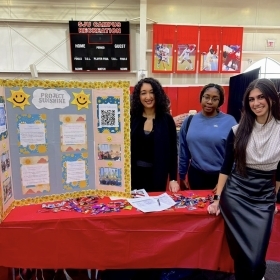
For one St. John’s University commuter, getting involved on campus opened the door to friendships, service opportunities, leadership experiences, and a stronger sense of belonging.