Seven Things Experiential Learning Taught Me While Studying Abroad
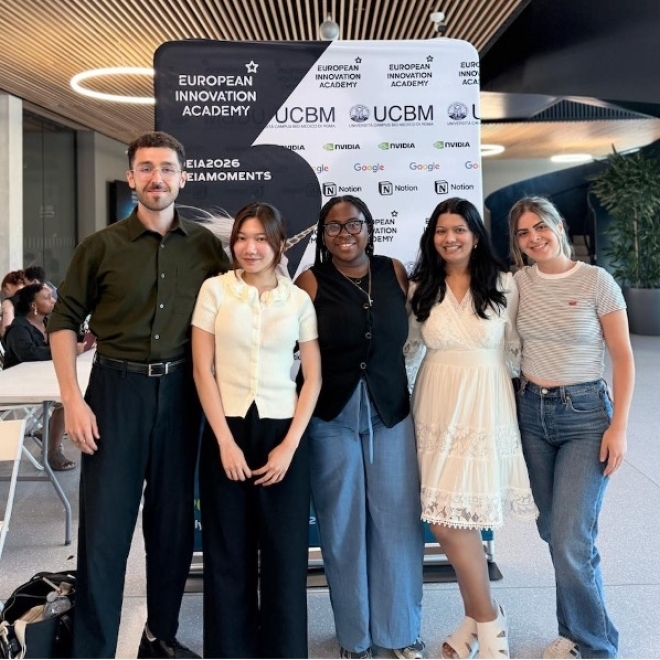
Rome Was My Classroom is a six-part series about my study abroad experience and the lessons I brought home from two weeks in Rome, Italy.
At the European Innovation Academy (EIA), we weren’t given a business case, asked to analyze it, and then told to write a paper about what someone else should have done. Instead, we were asked to form teams, identify a problem, develop a solution, test whether people wanted it, and turn our idea into something we could present.
Our team decided to develop an all-purpose sustainable makeup brush designed to help reduce makeup-related waste. I took on the role of Chief Marketing Officer (CMO), responsible for market research, customer personas, messaging, search engine optimization, and our overall marketing strategy.
Over the course of the program, we took our idea from initial research and marketing strategy to a working prototype and, eventually, an award-winning pitch.
Here are seven lessons I learned along the way.
1. An Idea Needs a Problem Worth Solving.
Our team consisted of two students from Switzerland; one from London, England; and another student from St. John’s University. We were interested in developing an all-purpose makeup brush that could offer a more sustainable alternative to owning and replacing multiple brushes.
But before we could start building, we needed to understand what the product would solve and why someone would want it.
The EIA program directors pushed us to slow down and think about the problem before jumping into a solution. One idea shared during the program came from Andrea Pomponi[TC1] : “People wake up with problems; they hire products to make progress in their lives.”
Instead of asking “How do we make this brush?” we needed to ask more fundamental questions: What problem are we solving? Who experiences that problem? Would they change their habits for another solution?
Those questions became the foundation for everything that followed.
2. Good Questions Lead to Better Research.
Within two days, our team conducted 43 customer interviews. We wanted to understand whether there was enough interest in the product, what potential customers valued, and what they might realistically be willing to pay.
The goal wasn’t to convince 43 people that our idea was brilliant—it was to listen and collect information. What kinds of makeup brushes did people already use? What did they like or dislike about them? What would make an all-purpose brush useful? How important was sustainability in their purchasing decisions? What price would feel reasonable?
One of the biggest insights I took away from the program was that what people say they want isn’t always the strongest indicator of what they’ll buy. Their existing habits, previous purchases, and willingness to spend can tell you much more.
For me, that was a useful distinction. Someone saying “I would totally buy that” is encouraging. Someone explaining what they currently buy, why they buy it, and how much they spend gives you information you can work with.
3. Understanding Your Audience Makes All the Difference.
It’s easy to create a customer persona by sitting in a meeting and imagining your ideal buyer: their age, interests, habits, preferences, and pain points. But we now had information from actual conversations to help shape those decisions.
Our research helped us think more carefully about whom we wanted to reach, how we should position the product, which benefits mattered most, and how price could influence a purchasing decision.
Another idea from the program stayed with me: narrowing your market doesn’t necessarily shrink your opportunity. It helps the right customer recognize themselves.
If you’re marketing a makeup product to “everyone who wears makeup,” you have an enormous audience but very little specificity. Once you understand exactly whom you’re trying to reach and what matters to them, your messaging becomes much clearer.
Our customer persona wasn’t just something we needed for an assignment. It influenced our messaging, website, marketing strategy, and how we eventually presented the product.
4. You Don’t Need Everything Figured Out to Start Building.
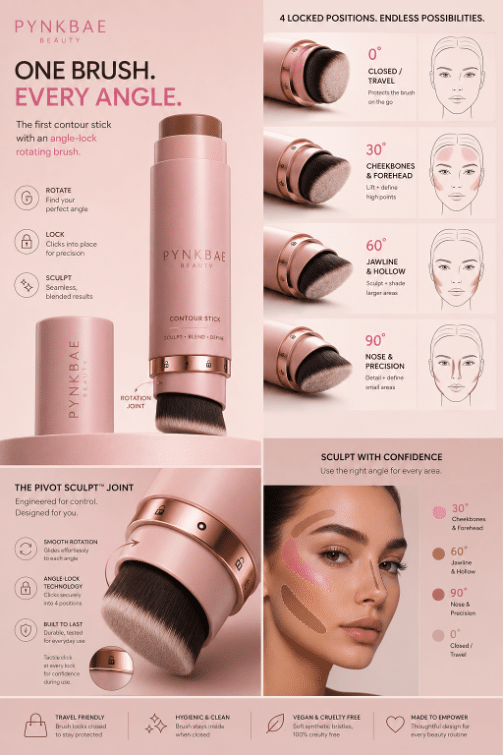
Research could tell us whether there was an opportunity, but eventually, we had to move beyond talking about the product and start building it.
Once our team developed a prototype and website, the pace of the program became particularly interesting. We weren’t spending a semester developing one component at a time. We were researching, learning, making decisions, and building almost simultaneously.
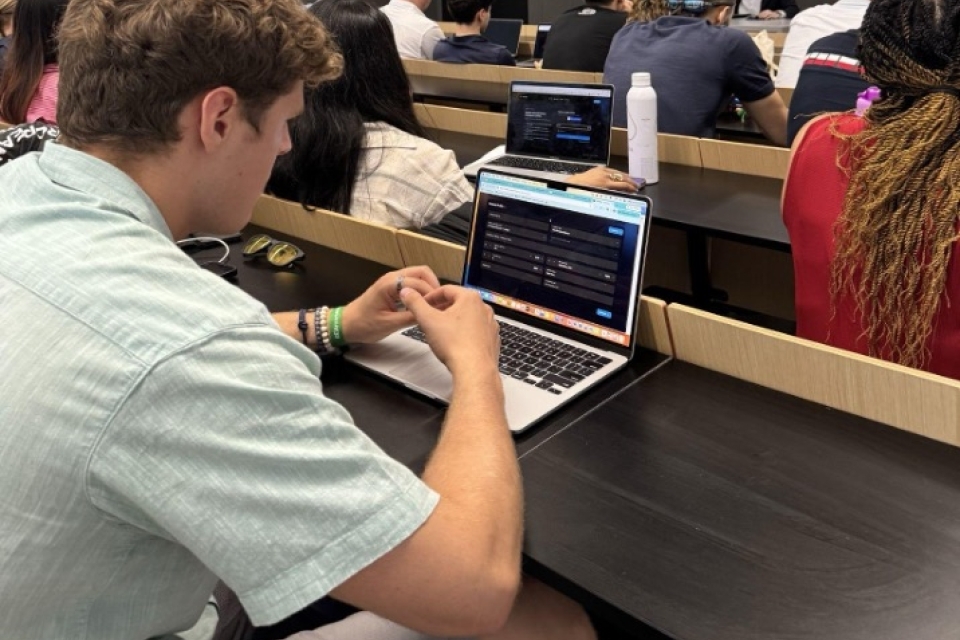
We were also introduced to a range of artificial intelligence (AI) and digital tools that helped us move from concept to something tangible much faster. We worked with tools such as Figma and Lovable as we developed our product and digital experience.
This was one of the most practical parts of EIA for me because it demonstrated how much the process of building an idea is changing. A student entrepreneur may not have a large development team, design agency, research department, or marketing staff. But today’s tools can help a small team create early prototypes, explore designs, build digital experiences, develop messaging, and test ideas much faster than before.
The technology didn’t tell us whether we had a good idea. Our research and conversations with potential customers were still essential. What the technology did was help us move faster from an idea to something people could see and respond to.
5. Mentors Are a Vital Part of the Process.
Another major difference between this experience and a traditional classroom was the role of mentors.
We had access to people with experience across entrepreneurship, marketing, technology, product development, business strategy, and investment. During clinics and mentoring sessions, we could bring them what we were working on and receive feedback while we were still building.
Sometimes that meant getting validation that we were moving in the right direction. Other times, it meant leaving a conversation with more questions than we had when we entered.
And that was useful.
When you’re working intensely on an idea, you can become very close to it. Something may seem obvious to your team because you’ve discussed it repeatedly. A mentor can look at it for the first time and ask a surprisingly simple question about the customer, competition, price, or value proposition that exposes something you haven’t fully considered.
Instead of receiving feedback after submitting a final assignment, we got feedback while there was still time to make changes.
6. Marketing Should Be Part of the Process From the Start.
One of the most useful parts of serving as CMO was seeing how early marketing entered the process. We weren’t waiting until the prototype was finished to ask “Okay, how should we promote this?”
Marketing decisions were happening alongside product decisions.
Who is this for? What problem should we lead with? How should we describe the value? What language does our customer use? How much are they willing to pay? Where would they discover a product like this? What would make them trust it enough to try?
My role included market research, customer persona development, messaging, SEO, and the broader marketing strategy. Each piece depended on what we were learning from customers and the product itself.
That connection between product development and marketing was one of the most valuable takeaways I brought home from the experience. You can’t create effective messaging around a customer you don’t understand.
7. A Good Idea Needs a Story That People Can Connect With.
Toward the end of the program, everything we had been working on needed to come together in our pitch. We had a problem, customer research, target audience, pricing considerations, prototype, website, and marketing strategy. But putting all those things onto slides wouldn’t automatically make someone care about our idea.
One of the recurring themes during our pitch preparation was the importance of storytelling. The goal wasn’t simply to show what the product looked like. We needed to explain the problem, show why it mattered, support our idea with what we had learned, and demonstrate how our solution could improve the experience.
That made the pitch more than a presentation assignment. It challenged us to bring everything we had learned together and answer one important question: Why should anyone care about what we built?
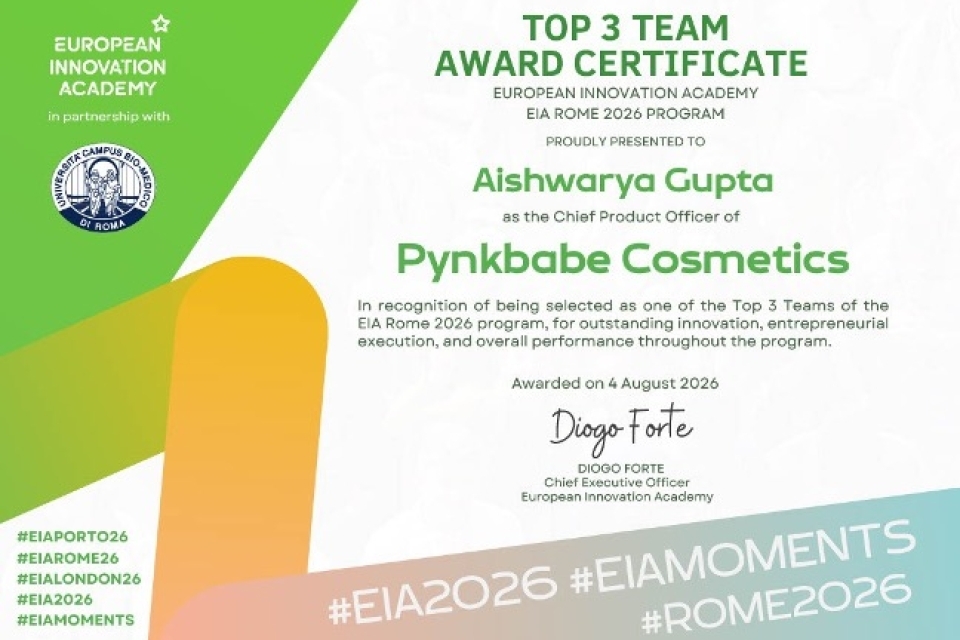
By focusing on that question, we ultimately became one of the top three teams at EIA 2026.
So, What Did We Build During the Program?
When I look back at the project, the final prototype is only one part of what we built.
We started with an idea for an all-purpose sustainable makeup brush. From there, we formed a team with different roles, evaluated product viability and pricing, developed a customer persona, created a prototype, built a website using digital and AI tools, developed a marketing strategy, learned from mentors, and eventually turned everything into a pitch.
That’s what hands-on learning looked like during my study abroad experience.
For a student considering studying abroad, that’s something worth looking for when researching programs. Ask more than just “Where will I go?” Ask: “What will I actually get to do while I’m there?”
Rome gave me an incredible place to study. EIA gave me something to build. And building it gave me a completely different way to learn.
Related Blog Posts
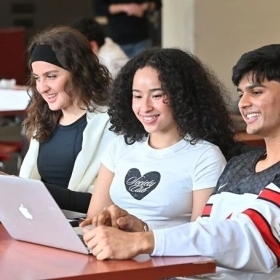
Six Time Management Hacks That Helped Me Master My First Semester
Between lectures, endless assignments, and trying to maintain an active social life, my early semesters felt like a constant fire drill. I was always reacting to deadlines at the last minute, running on low energy, and feeling overwhelmed.
As a St. John’s University doctoral student, working professional, and mom, I needed a plan that could work in real life—not just on paper. Over time, I realized working harder wasn’t the solution—I needed to change how I managed my time. I needed to change how I approached my schedule and make more intentional decisions.
Here are the six time management secrets I applied to master my semester and how you can do the same.

Diana Tachie-Mensah’s First-Gen Journey
Meet Diana Baaba Nhyirah Tachie-Mensah ‘26TCB, a first-year graduate student in accounting at St. John’s University. Through her experiences balancing work, graduate studies, and supporting her family, Diana reflects on the responsibility she feels to make the most of her opportunities and the importance of finding a community that understands her first-gen journey.

Geo Flores Peralta’s First-Gen Journey
Meet Geo Flores Peralta, a senior majoring in biology at St. John’s University. As a first-generation Mexican American college student, Geo has learned to advocate for himself, navigate unfamiliar experiences, and challenge expectations about what is possible for his future.
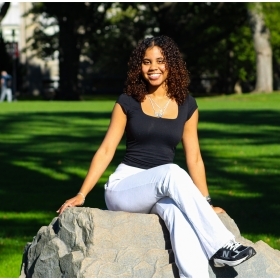
Keiry Diplan Beltre’s First-Gen Journey
Meet Keiry Diplan Beltre, a first-year nursing student at St. John’s University whose college journey is deeply connected to her family’s story. Having immigrated from the Dominican Republic at age five, Keiry sees pursuing higher education as an opportunity to honor her parents’ sacrifices, build a brighter future, and make the most of the opportunities they worked hard to provide.