
Navigating Global Trade: Nunzio De Filippis ’03TCB Carries Family Legacy into Modern Supply Chain Leadership
For Nunzio De Filippis ’03TCB, the global supply chain industry was woven into his life at an early age. Born in Brooklyn, NY, and raised on Long Island, he spent much of his youth learning about the business his father built after founding CargoTrans in 1989.
That early childhood exposure quickly provided Mr. De Filippis with a clear sense of direction. “I knew what I wanted to do when I was 12 years old, so I followed in my father’s footsteps,” he explained. “I jokingly tell people that I’m an ‘SOB’—a son of a broker.”
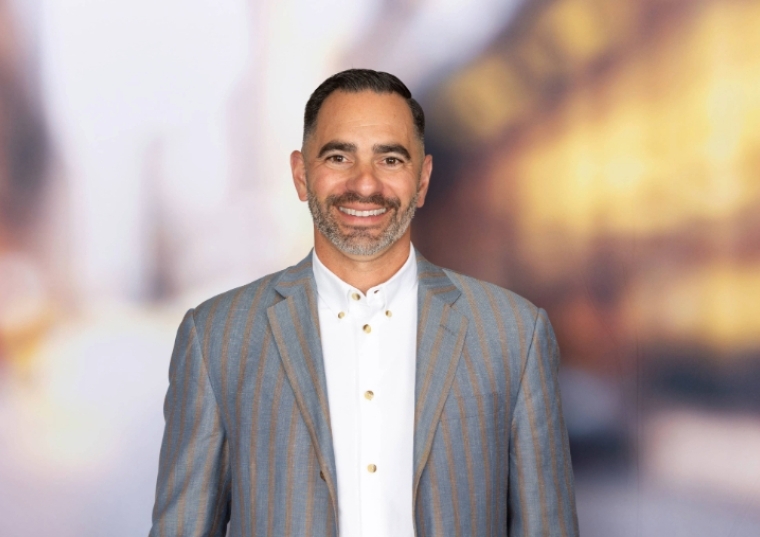
St. John’s location was a big reason I chose it. I could be fully engaged in my college experience while staying closely connected to the business.
For Nunzio De Filippis ’03TCB, the global supply chain industry was woven into his life at an early age. Born in Brooklyn, NY, and raised on Long Island, he spent much of his youth learning about the business his father built after founding CargoTrans in 1989.
That early childhood exposure quickly provided Mr. De Filippis with a clear sense of direction. “I knew what I wanted to do when I was 12 years old, so I followed in my father’s footsteps,” he explained. “I jokingly tell people that I’m an ‘SOB’—a son of a broker.”
As a family business, CargoTrans shaped the rhythm of the De Filippis household; every member was immersed in its day-to-day operations. While other families marked school breaks with summer camps or vacations, time off from school meant time in the office.
“Whenever there was a school break, I was at CargoTrans,” he recalled. “Being around adults in a professional environment at a young age left a lasting impression on me. I was absorbing how the business worked without even realizing it.”
A graduate of Chaminade High School in Mineola, NY, St. John’s was the obvious choice for Mr. De Filippis, as it allowed him to give equal attention to his education and employment at the family business. “Right outside of JFK Airport in Jamaica was the nucleus of our industry,” he explained. “Licensed customs brokers, freight forwarders, warehouses, and US Customs were all concentrated there. In the early 2000s, when physical documents still had to be hand delivered, proximity mattered. St. John’s location was a big reason I chose it. I could be fully engaged in my college experience while staying closely connected to the business.”
At St. John’s, Mr. De Filippis studied marketing, with a concentration in international business. “My professors knew where I was working, so they allowed me to take some of the things I was handling at work and present them to the class,” he explained. “It wasn’t necessarily part of the curriculum, but it was a great opportunity for me to get out of my comfort zone and do some public speaking.”
Meanwhile, at CargoTrans, his father came to depend on him as a valued team member. “Right around freshman year, my dad started pulling me into meetings and asking, ‘Nunzio, what do you think?’ It filled me with confidence.”
Soon after earning his bachelor’s degree at St. John’s, he earned his Licensed Customs Broker certification. Today, he is Co-Chief Executive Officer of CargoTrans, a title he shares with his brother.
“When I first joined the management team, I felt like my job was to be the chief problem solver,” he said. “Shipments get delayed, paperwork gets held up, airlines change schedules—you spend your days putting out fires.”
Over time, however, his role evolved. “As you gain experience, you realize the real value isn’t just solving problems—it’s building systems that prevent those fires from starting in the first place,” he explained.
Before the pandemic and the recent wave of tariff volatility, supply chain professionals and licensed customs brokers often operated behind the scenes with little public awareness of their role. But COVID-era shipping disruptions and ongoing trade tensions have changed that.
“Recently, supply chains and tariffs have become kitchen-table conversations,” he said. “The spotlight has shifted onto our industry. What we do—managing risk, navigating regulations, keeping goods moving—has become more visible and more understood.”
Rather than seeing the volatility as a burden, he views it as validation. “We’ve been given the opportunity to step up, guide companies through uncertainty, and show how critical this work really is. I’ve always said we’re a bit like the invisible hand,” he said. “You order something, and it just shows up. But behind that simplicity is an entire supply chain working together. I’m incredibly proud of being a part of that.”
More Stories Like This
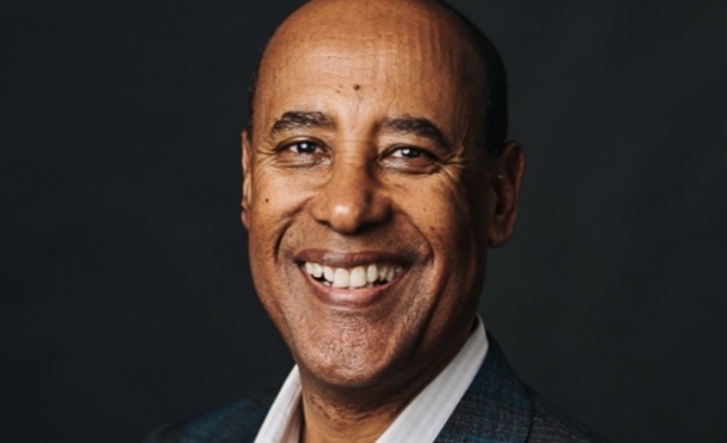
Mesfin Tegenu ’88M.S. originally accepted to medical school in his native Ethiopia, but a revolution and change of government disrupted the curriculum so much that he decided it was not feasible to continue. He pivoted to pharmacy and finding a school in the US, where a friend recommended St. John’s University.
Today, Mr. Tegenu is Chief Executive Officer and Chairman of RxParadigm, Inc a health-care technology company focused on improving transparency and efficiency in the pharmaceutical supply chain. His company works with hospitals, insurers, and pharmaceutical manufacturers to streamline complex reimbursement processes while ensuring compliance with evolving federal regulations, including new Medicare drug-pricing initiatives.
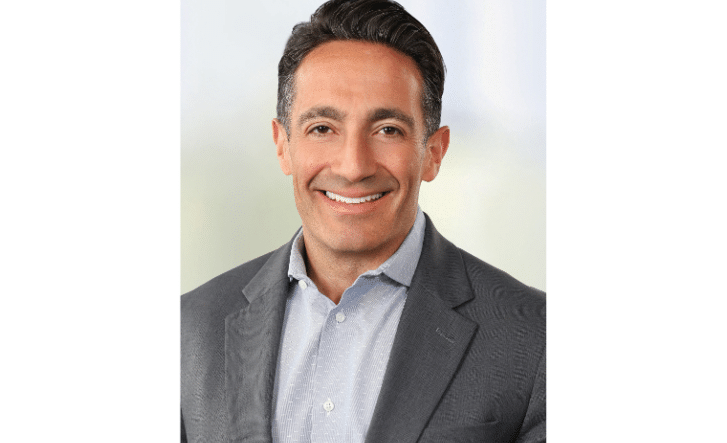
Salvatore A. Melilli ’96CBA actually never wanted to go to college. As a child of two immigrants from Italy, Mr. Melilli was born in Brooklyn, NY, and raised in both Brooklyn and on Staten Island, where he started working in the restaurant industry at a young age.
"I was working at a restaurant and did all types of things. I started as a busboy, waiter, and bartender. I did almost everything in the kitchen except cook,” he shared. “I fell in love with the restaurant industry—and I was adamant about not going to college."
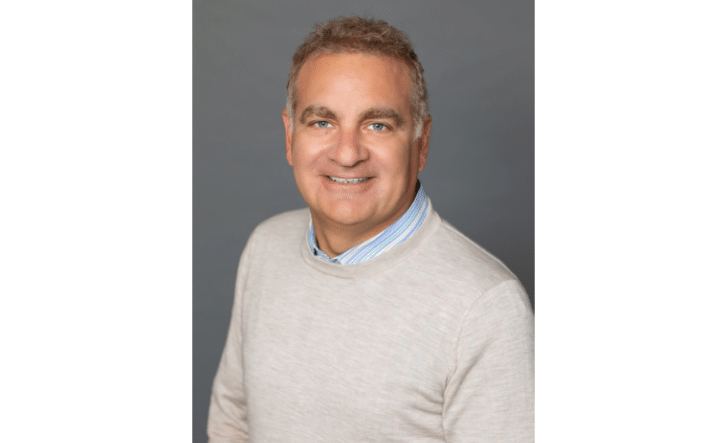
Smithtown, NY, native Michael Finamore ’96L believes that attending St. John’s University’s School of Law helped propel him to the great success he has enjoyed as an attorney and businessman. “When the opportunity came to go to law school, St. John’s was on the top of my list,” he stressed. “I love the culture of the city and the vibrancy, but still having that community around you.”
He added, “The School of Law was the perfect environment for me to pursue my dreams of becoming a prosecutor and trial lawyer as the community was, and still is, renowned for its jurists, public servants, and strong litigators.”