
Alumnus Reflects on Lifetime of Distinguished Military and Civilian Service
Being of service to his country, community, and family has been the guiding principle for Lawrence Pettit ’64C.

“I traveled the world and served with a lot of great guys. It’s been an interesting life.”
After graduating from high school, Mr. Pettit, a native of Queens, NY, and the son of a nurse and a New York City police officer, worked in the bond market in downtown Manhattan while also taking classes at Brooklyn Community College.
An affair of the heart initially led him to St. John’s. “I met a girl who went to St. John’s, so I enrolled in 1962 and majored in Economics since I worked in the bond market,” he recalled.
One of Mr. Pettit’s most memorable experiences at St. John’s was his Phi Kappa Tau fraternity membership. “That’s one of my highlights,” he said. “I made many great friends there and still attend reunions when I can.”
In August 1964, inspired by his brother’s example, Mr. Pettit joined the United States Air Force, graduating Officer’s Training School as a Second Lieutenant. From there, he set off on a 20-year global odyssey, distinguishing himself in various critical roles that included combat in the skies over North Vietnam.
He first served as a Minuteman missile deputy at Whiteman Air Force Base in Missouri, part of a two-man crew that operates and maintains the readiness of intercontinental ballistic missiles (ICBMs) from underground launch control centers. “Two of us sat down in a hole in the ground for more than two years,” he recalled, noting that was perhaps the least favorite of his many assignments.
While at Whiteman, he met his future wife, Patricia; they have been married for 57 years.
Later, Mr. Pettit served as a navigator for KC-135 Stratotankers at Altus Air Force Base in Oklahoma, before training as a pilot for F-4C Phantom II jets. “I didn’t succeed at becoming a pilot, so I became a weapons systems officer,” he noted.
A critical role, the weapons officer is responsible for operating radar, jamming systems, weapons release, assisting with navigation, fuel planning, and communication with other assets, among other vital aircraft functions. “I spent my next nine years in that role—and it was fantastic,” he stressed.
Mr. Pettit then served at Udorn Royal Thai Air Force Base (since closed) in Thailand, where he was part of the elite 555th Fighter Squadron. Nicknamed the “Triple Nickel,” it was among the top squadrons in air-to-air kills during the Vietnam conflict.
“We constantly flew bomber and fighting missions,” he explained, and shot down two MiG-21 fighters over North Vietnam. “We lost a lot of good men” in those years, he noted.
In addition to Vietnam, Mr. Pettit’s military career took him to Turkey, Greece, Iran, and England, among other countries. Following his combat service, he was transferred to Luke Air Force Base in Arizona as a radar systems instructor and Life Support Officer for the 56th Fighter Training Wing.
He also served two tours in South Korea and was vice commander at the Gila Bend Gunnery Range in southwest Arizona. His last assignment returned him to Luke Air Force Base as a command post supervisor.
After 20 years of active service, “I was getting older, and it was time to retire.” During Mr. Pettit’s military service, he was awarded two Silver Stars, seven Distinguished Flying Crosses, two Meritorious Service Medals, 17 Air Medals, and three US Air Force Commendation medals. He retired in 1984 with the rank of major.
Mr. Pettit’s combat efforts were honored with the public display of his two Phantoms: one is displayed at the Combat Air Museum at Topeka Regional Airport. The other resides at Kansas Air National Guard Headquarters in Topeka.
“That was a great honor,” he said.
As with his military service, Mr. Pettit’s civilian career was marked with various meaningful, service-oriented roles, much of which was volunteer-based. Yet, he noted it took some time to find his footing. “I can’t stand inactivity,” he commented.
He spent time teaching in charter schools in central Arizona, where his family settled. He was director of the Guiding Star Lodge in Phoenix, AZ, a facility providing addiction rehabilitation to Native American women and children.

Mr. Pettit volunteered as a 911 operator with the Glendale Police Department for several years. His volunteer service also included a 22-year affiliation with the Maricopa County Sheriff's Posse, including 10 years as the organization’s commander.
Mr. Pettit returned to Luke Air Force base as a civilian training and instruction developer for F-16 Fighting Falcon pilots, spending 18 years in the role.
He told the harrowing story of a training exercise with a student pilot in which he was forced to eject both himself and the pilot after a failed barrel roll when the plane was 7,000 feet from the ground. Mr. Pettit broke his ribs during the ejection, but was otherwise unharmed.
“I think the pilot washed out,” he recalled. “I never saw him again, thankfully.”
These days, Mr. Pettit enjoys a well-deserved retirement and spends most of his time aiding his wife’s rehabilitation after a long illness. “She’s making a great comeback,” he said with relief.
When reflecting on his lifetime of military and civilian service, Mr. Pettit is modest and deferential. “I traveled the world and served with a lot of great guys. It’s been an interesting life.”
More Stories Like This
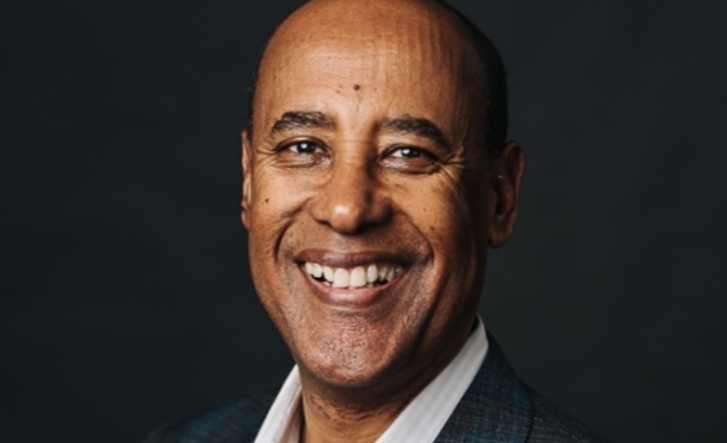
Mesfin Tegenu ’88M.S. originally accepted to medical school in his native Ethiopia, but a revolution and change of government disrupted the curriculum so much that he decided it was not feasible to continue. He pivoted to pharmacy and finding a school in the US, where a friend recommended St. John’s University.
Today, Mr. Tegenu is Chief Executive Officer and Chairman of RxParadigm, Inc a health-care technology company focused on improving transparency and efficiency in the pharmaceutical supply chain. His company works with hospitals, insurers, and pharmaceutical manufacturers to streamline complex reimbursement processes while ensuring compliance with evolving federal regulations, including new Medicare drug-pricing initiatives.
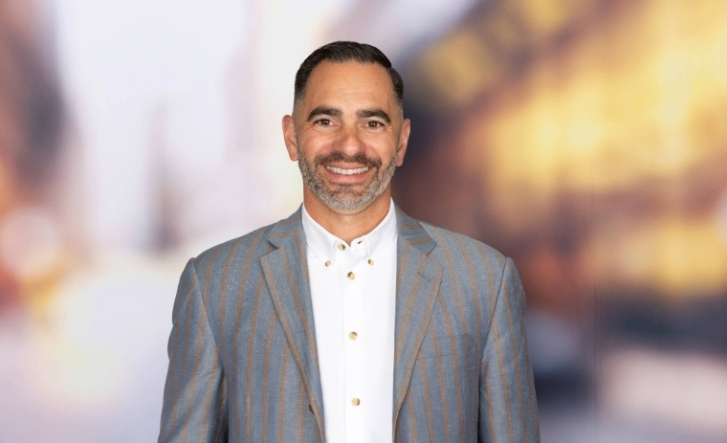
For Nunzio De Filippis ’03TCB, the global supply chain industry was woven into his life at an early age. Born in Brooklyn, NY, and raised on Long Island, he spent much of his youth learning about the business his father built after founding CargoTrans in 1989.
That early childhood exposure quickly provided Mr. De Filippis with a clear sense of direction. “I knew what I wanted to do when I was 12 years old, so I followed in my father’s footsteps,” he explained. “I jokingly tell people that I’m an ‘SOB’—a son of a broker.”
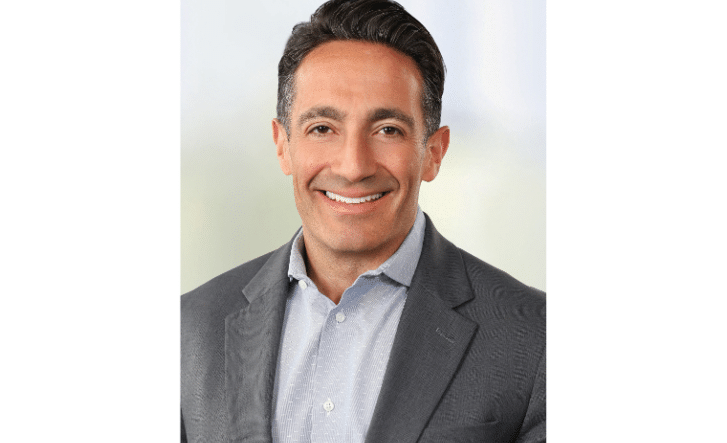
Salvatore A. Melilli ’96CBA actually never wanted to go to college. As a child of two immigrants from Italy, Mr. Melilli was born in Brooklyn, NY, and raised in both Brooklyn and on Staten Island, where he started working in the restaurant industry at a young age.
"I was working at a restaurant and did all types of things. I started as a busboy, waiter, and bartender. I did almost everything in the kitchen except cook,” he shared. “I fell in love with the restaurant industry—and I was adamant about not going to college."