4 Flexible Ways to Earn a College Degree on Your Schedule
The traditional college model wasn’t designed for the way most students live today. Work schedules, family responsibilities, financial realities, and shifting timelines all influence how—and when—you pursue your degree. For many, the biggest challenge isn’t choosing a major; it’s finding a pathway that actually aligns with the life you’re already managing. That’s why colleges and universities like St. John’s University are reshaping what flexible learning can look like.
In this guide, we break down four realistic pathways that give you more control over how you learn so you can find an option that truly fits.
1. Online and Hybrid Learning
Being on campus five days a week is simply not realistic for most students today. Whether you’re working, commuting from a distance, or need more control over your time, online and hybrid learning offer flexible options that make earning a degree more accessible.
Synchronous vs. Asynchronous Online Classes
Fully online programs typically come in two formats:
- Synchronous courses: You join live class sessions at scheduled times—similar to an in-person class, just online. This format is ideal if you prefer real-time interaction with faculty and classmates.
- Asynchronous courses: You complete lectures, assignments, and discussions on your own schedule. This format works well if you need maximum flexibility because of work, family responsibilities, or time-zone differences.
How Hybrid Programs Combine Flexibility with Hands-On Learning
Hybrid programs blend online coursework with short, intentional, in-person experiences. You complete most learning online, then come to campus for labs, intensives, or hands-on sessions. This model works especially well for fields requiring practical skill development—like education or laboratory sciences—where face-to-face interaction enhances learning.
Hybrid learning gives you the convenience of online coursework while preserving the collaborative, experiential elements that help certain disciplines come alive.
2. Accelerated or Fast-Track Degree Programs
If you’re eager to get ahead—whether that means entering the workforce sooner or moving quickly toward graduate school—accelerated and fast-track pathways help you reach those milestones faster.
Complete Your Bachelor’s Degree in 3 Years.
Three-year bachelor’s programs condense a traditional four-year experience into three. You take the same courses, just in a more focused sequence. Most students carry 18–21 credits per semester, which works well if you have clarity about your goals and feel ready for a concentrated pace.
Who thrives in three-year programs?
- Students with clear career goals who want to enter the workforce sooner
- Those planning to pursue graduate school and wanting to save a year of tuition
- Motivated learners who prefer intensive, focused study
Combined Bachelor’s–Master’s Programs
If graduate school is part of your long-term plan, a combined pathway gives you a meaningful head start. You begin taking graduate-level courses early, and certain credits count toward both degrees. Most students finish with a bachelor’s and a master’s in about five years—saving time, lowering tuition, and keeping academic momentum strong.
Benefits of 4+1 programs:
- Save up to one full year of graduate school tuition.
- Build advanced expertise in your field faster.
- Maintain academic momentum without stopping between degrees.
- Strengthen your résumé with a graduate credential earlier in your career.
These options are especially appealing if you’re motivated, career-driven, and looking for an efficient route to advanced credentials.
Related Story:Fast Track to Impact: How St. John’s Accelerated My Homeland Security Career
3. Evening and Weekend Classes
For many students, college is just one part of a full schedule. Evening and weekend classes allow you to keep making academic progress without stepping back from work or other responsibilities.
Courses typically meet after 6 p.m. or on weekends, giving you a consistent rhythm that supports full-time employment. You’re taking the same classes, taught by the same faculty—just at times that fit your life.
This format is especially common in fields like business, education, and health care, where real-world experience and continued learning often overlap.
Key advantages:
- Maintain your income while earning your degree.
- Apply classroom concepts directly in your workplace.
- Build a professional network of peers at similar career stages.
- Avoid sacrificing job advancement for academic progress.
4. Part-Time Degree Pathways
Part-time pathways allow you to take fewer classes each term while still moving toward your degree. Taking six to nine credits per semester instead of 12–15 means you’ll graduate in five or six years instead of four, but you’ll do so while balancing work, family responsibilities, and your own well-being.
Part-Time Learning Works Especially Well if You’re
- Working full-time;
- Raising children or caring for family members;
- Returning to school and want to ease back in;
- Managing health-related challenges; or
- Serving in the military or transitioning between duty stations.
Which Flexible Pathway Fits Your Life?
Frequently Asked Questions (FAQs)
What are flexible degree programs?
Flexible degree programs offer multiple pathways—such as online learning, hybrid formats, accelerated timelines, part-time study, and transfer-friendly options—that allow students to earn a college degree on a schedule that fits their life.
Who are flexible degree pathways designed for?
These pathways support students balancing work, family responsibilities, financial commitments, military transitions, or a return to school after time away. They’re also popular among first-generation, adult, and transfer students.
Are online and hybrid programs as rigorous as in-person programs?
Yes. Accredited universities hold online and hybrid courses to the same academic standards as on-campus programs. Courses are typically taught by the same faculty and follow the same learning outcomes.
How long does it take to finish an accelerated degree?
Accelerated bachelor’s programs can be completed in three years. Combined bachelor’s–master’s pathways allow students to earn two degrees in about five years.
Can I work full time while earning a college degree?
Yes. Many students work full time while taking evening, weekend, online, or part-time courses.
Find Your Path at St. John’s University.
If you’re looking for a school that respects your time, goals, and commitments, St. John’s offers all of these pathways to help you move forward on your own schedule. Whether you prefer online learning, an accelerated program, evening classes, or a part-time route, you can build an academic plan that supports where you are and where you’re headed next.
Related Blog Posts

What to Look for on a College Website: Nine Things to Check
A college website can tell you a lot more than how much tuition costs or when an application is due.
You can meet the professors you could learn from, discover research happening on campus, find scholarships you may be eligible for, explore internships and other hands-on opportunities, and see how current students are turning their college experiences into opportunities for the future.
As you research your college options, here are nine places on a university website worth clicking into.

A Leap of Faith: From Romania to St. John’s and Beyond
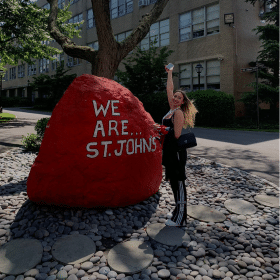
From Romania to St. John’s, international student Adina Stancu shares how her leap of faith opened the door to a college experience filled with global opportunities, meaningful connections, and a life she once never imagined.


College Brag Sheet: What It Is and What to Include (with Examples)
You have asked your teacher, counselor, or another mentor to write you a letter of recommendation. But, before they can start writing, they may ask you for something you have probably never heard of: a brag sheet.
Despite the name, a brag sheet is not about showing off. It is your opportunity to share the experiences, accomplishments, goals, and qualities that make you who you are.