
Alumna’s Women’s Empowerment Jewelry Line Has its Roots at St. John’s
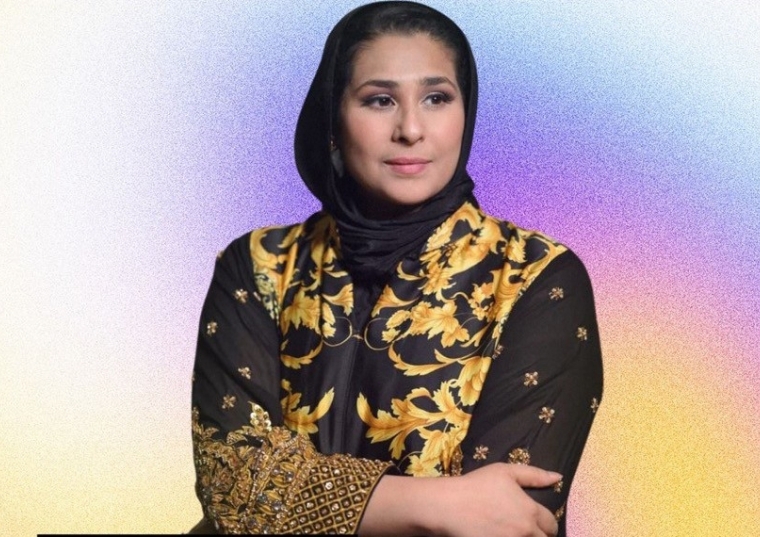
According to Nida Jamal ’03SJC, only at St. John’s University could she have acquired the skill and courage to start a global jewelry line rooted in sustainability.
“Beginning perhaps in high school, I sensed there would come a time in my life when I would want to return to Pakistan and do something meaningful,” Ms. Jamal recalled. “Perhaps to do charity or philanthropic work, or to build a school.”
Learning about Judaism, Christianity, and other world religions at St. John’s helped me realize how similar we all are. That experience led me down another path, one that inspired me to learn more about my own roots and who I am.
“If you are not exposed to the diversity of a campus like St. John’s, you probably would not find yourself traveling to the Himalayan mountains starting a jewelry line,” Ms. Jamal continued. “That exposure, along with living in New York City, helped shape who I am today.”
Born in Pakistan and raised in the United States, Ms. Jamal was living in Yonkers, NY, and attending high school when she first learned about St. John’s. Encouraged by her parents to stay in state for college, she enrolled, graduating with a degree in biochemistry from St. John’s College of Liberal Arts and Sciences.
Ms. Jamal originally planned to attend dental school and pursue a career as an oral surgeon, but her path changed following the death of her mother. She instead shifted her focus toward philanthropy and diplomatic engagement through connections at the Embassy of Pakistan to the United States in Washington, DC, as well as through Comprehensive Disaster Response Services, a nongovernmental organization dedicated to advancing health care and educational initiatives in Pakistan.
In 2020, she traveled to the Himalayan region of Pakistan, where she met local women trained in gem cutting and jewelry making. Inspired by their talent and resilience, she established ArHaz Jewels, a gemstone and jewelry brand that employs hundreds of local artisans and brings their handcrafted creations to patrons in the United States.
Her efforts have helped elevate the standard of living for women in Pakistan. In 2023, the nonprofit Vital Voices Global Partnership, founded by Hillary Rodham Clinton, included Ms. Jamal among its 50 “global visionaries” for her work with the women of the region.
ArHaz, named after her daughter Zahra spelled backwards, has roots in Persian and roughly translates to “purposeful,” a quality that has long defined Ms. Jamal, but which took on deeper meaning during her years at St. John’s. As a Muslim studying at a Catholic institution, she embraced the University’s Vincentian mission of service and compassion. In doing so, she discovered her own purpose as both a philanthropist and a businesswoman.
“At St. John’s, I was exposed to many amazing people,” Ms. Jamal said. “The community was rich in diversity, but also in acceptance. As a Muslim, I never felt like an outsider.”
“Learning about Judaism, Christianity, and other world religions at St. John’s helped me realize how similar we all are,” Ms. Jamal continued. “That experience led me down another path, one that inspired me to learn more about my own roots and who I am.”
That path eventually led to a trip to the Himalayan mountains, where she traveled into the mines and worked alongside local gemstone miners. Traditionally, such work is done by men; in Pakistan’s tribal regions, women have historically had very low participation in the workforce.
While men still conduct most of the mining, local women cut the gemstones and create the jewelry designs. All stones are ethically sourced in alignment with the United Nations’ Sustainable Development Goals. Ms. Jamal said she pays her workers four times the prevailing wage in the region.
Ms. Jamal’s husband, a surgeon, says she has contributed more to the world with her “accidental” jewelry line than she would have as an oral surgeon. The couple, who live in the Washington, DC, area, have five children who have been raised in the Vincentian culture of service.
“My husband says that what I am doing now is impacting hundreds of women,” Ms. Jamal said. “Maybe I am not helping a child with a cleft palate, but I am helping a child go to school because I have employed their mother. Now, these women have access to health care, stability, and opportunity—and that is what matters most to me.”
More Stories Like This

Long before she was a Senior Vice President, Finance and Strategy, at Knot Standard, Valerie Bleza '04TCB was balancing a demanding accounting curriculum with the rigors of collegiate cheerleading. That early test of discipline at St. John's University set the tone for a career defined by long hours, constant reinvention, and a willingness to meet challenges directly.
"I always knew I would go to St. John's because both my parents were in accounting and the University had a strong program," she said.

Growing up in Ghana, St. John’s University seemed an unlikely college destination for Akua Frempong ’07TCB, ’08M.S. Two decades and two degrees later, it appears it was an ideal landing spot.
“My family moved to the United States when I was in 10th grade,” Ms. Frempong said. “We settled in Briarwood, NY, right by St. John’s. When it came time for me to choose a college, my father drew a circle around a map of New York City and said you are going to a school somewhere inside this circle.”
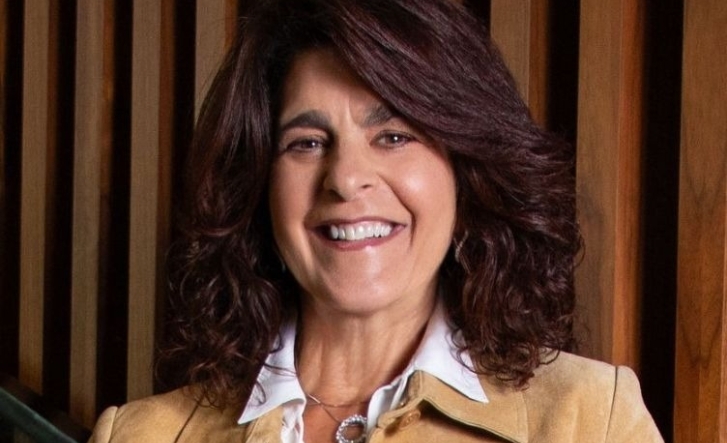
After a nearly 40-year career with one of the nation’s premier insurance companies, St. John’s University alumna Maria Scarangella, M.B.A., PCC, SHRM-SCP ’87CBA is embarking on a new entrepreneurial chapter—channeling a lifetime of experience into building something entirely her own.
“My connection to St. John’s runs deep—it is truly a family institution for us,” explained Ms. Scarangella, who studied management. “My father, Joseph Califano, Ph.D., was a professor of philosophy at St. John’s for over 40 years. His dedication to teaching and intellectual rigor set the standard for everything I’ve pursued.”