
Health-Care Innovator Embraces Opportunity at Every Turn
For Akram Boutros ’82SJC, life has been shaped by unexpected turns.
Born in Cairo, Egypt, Mr. Boutros was almost 13 years old when his family moved to the United States in 1974. He and his brothers believed they were leaving for a vacation. Only after departing Egypt did their father reveal that the family would be making a new home in New York City.

When a door closes, don’t continue staring at it. Look elsewhere. When you turn your back on it, you begin to see the opportunities in front of you.
The transition was difficult. Mr. Boutros initially rebelled against the unexpected move but eventually came to understand his father’s decision.
“At the time, it felt like an unbelievably terrible thing,” he recalled. “But I’m not sure I would have done anything differently than he did.”
Realizing he was not going back, Mr. Boutros decided to put his energy into acclimating to his new home and embracing the opportunities before him. One morning, he realized just how far he had come.
“I woke up and realized I was no longer dreaming in Arabic,” he said. “I was dreaming in English.”
His path to St. John’s University was similarly unplanned. Both of his older brothers were already students at the University, so Mr. Boutros followed in their footsteps, applying to St. John’s as the only college on his list.
At St. John’s, Mr. Boutros pursued a double major in biology and chemistry, spending countless hours in St. Albert Hall taking classes and working in the chemistry dispensing lab. He still remembers the professors and mentors who showed him kindness during his undergraduate years.
The University also became the setting for a more personal milestone. During his freshman year, Mr. Boutros met his future wife, Suzanne, in St. Albert’s cafeteria. Their relationship would become a steady source of support throughout his career, giving him the confidence to take chances he might not otherwise have taken.
Mr. Boutros went on to medical school, initially imagining a career in academia. But as he advanced through medicine, colleagues recognized another strength.
“They said to me, ‘You’re good at teaching, but you’re great at business.’ We need somebody like you,” Mr. Boutros said.
He transitioned into health-care administration, helping transform hospitals throughout New York before eventually moving to Cleveland, Ohio, to lead The MetroHealth System. After decades of seeing health care from the provider’s perspective, Mr. Boutros would eventually experience it in a completely different way: as a patient.
For the first time, he experienced hospital care continuously rather than through the brief snapshots he had seen as an executive. He recognized how administrative processes and technology could sometimes interfere with patient care and create unnecessary obstacles for caregivers.
That firsthand experience inspired Mr. Boutros to found Nexus Bedside, a company developing a new operating model for hospitals designed to improve patient care while reducing administrative burdens.
Today, all three of Mr. Boutros’s daughters work alongside him at Nexus Bedside. His youngest daughter, Tess, joined the company first, followed by Shannon. Jasmine, whose experience includes both health care and technology, later joined the company as its Chief Technology Officer.
For Mr. Boutros, who has spent decades building a career in health care, working alongside his daughters is a particularly meaningful accomplishment. “I’m really proud of that,” he said.
Looking back on his journey, Mr. Boutros points to one constant: Suzanne’s stability at home. Her support shaped not just the risks he was willing to take, but the way he led: steadier, more trusting of his , and less anxious about what he could not control. He believes it made him a more effective leader than he would have been on his own.
From the moment he left Egypt to the creation of Nexus Bedside, Mr. Boutros has learned to see uncertainty not simply as an obstacle, but as an invitation to look elsewhere.
“When a door closes, don’t continue staring at it,” he said. “Look elsewhere. When you turn your back on it, you begin to see the opportunities in front of you.”
More Stories Like This
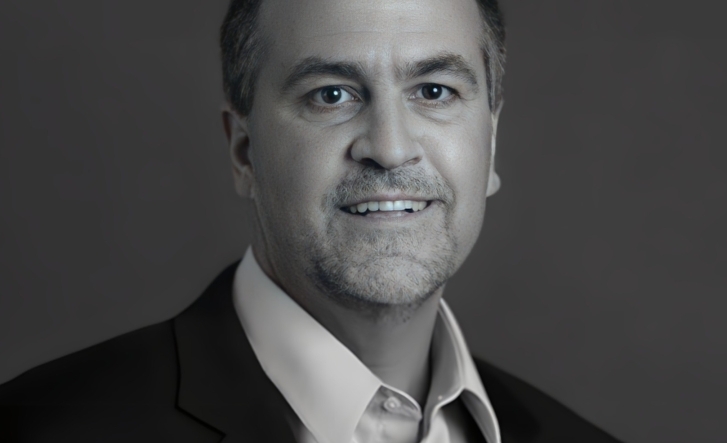
For John M. Haslbauer, C.P.A. ’82CBA, college was about grit, hustle, and staying close to home. Raised in a working-class family in Bayside, Queens, Mr. Haslbauer knew early on that if he wanted a degree, he’d have to earn it—literally.
“I came from a very blue-collar family. We had five kids in the family. My dad was an auto body mechanic and my mom was at home,” he recalled. “I had to work my way through college, and since I wasn’t going away to school, I also needed a school that was close by.”
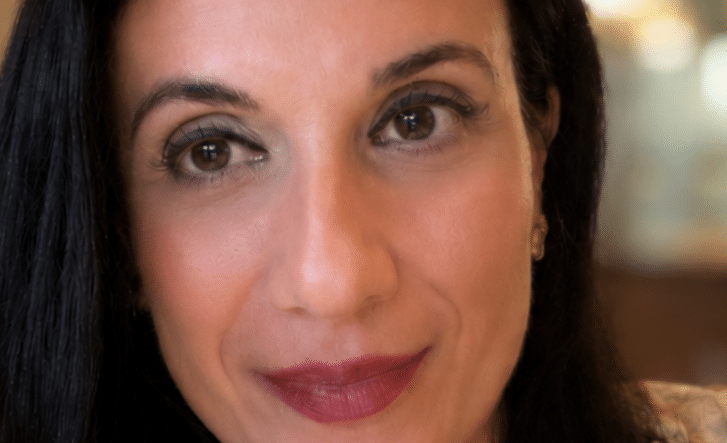
When Irene Christoforou-Gioules, Ph.D. ’97SJC, ’99M.A. began her undergraduate studies at St. John’s University, she arrived on the Queens, NY, campus eager to learn everything she could. Even in required courses that her friends dreaded, Dr. Christoforou-Gioules approached the work with enthusiasm as her capacity for critical thinking deepened.
“I put myself in those classes because I really wanted to learn,” she said. “I did not want to just get a degree. I wanted to learn everything.”
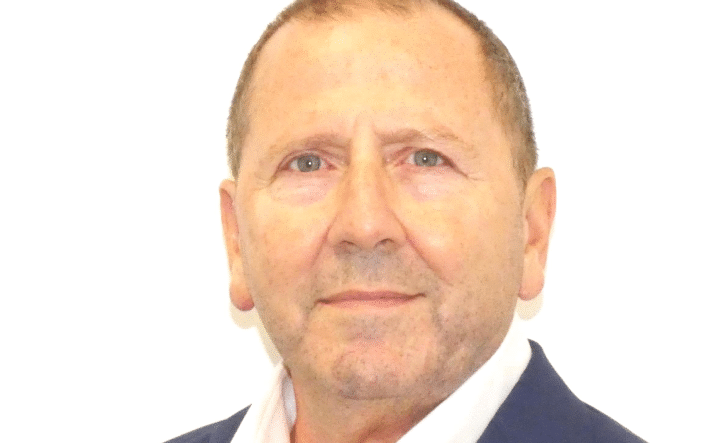
For Peter Kontopirakis '83CBA, '88M.B.A., “Ninety percent of success is showing up.” That included night classes, full-time work, little sleep, Wall Street résumé drops, global assignments, and eventually leading internal audit for Mizuho in the Americas as Managing Director and Chief Auditor.
A native of Brooklyn, NY, this is a classic St. John’s story. The son of hardworking parents of modest means, and the first in his family to earn a college degree, he understood his pathway to a degree and, ultimately, to success would be hard-won.