
An Empty Nester’s Guide to Sending Your Child to College
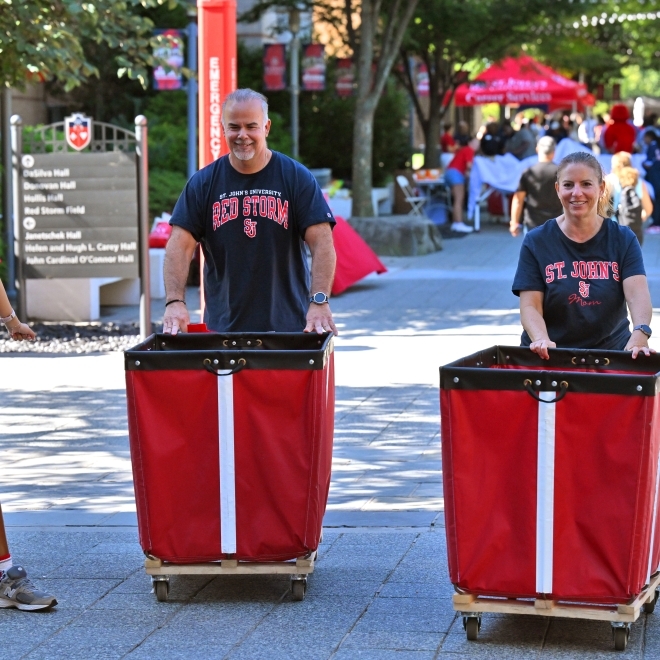
There’s a strange moment that comes with sending your child off to college: After 18 years of preparing them to leave, you suddenly realize you didn’t spend nearly as much time preparing yourself. You’ve spent years keeping track of homework, practices, appointments, meals, and whereabouts, only to discover that your biggest responsibility now may be learning not to text, “Where are you?” every 20 minutes.
Becoming an empty nester is an adjustment, but so is becoming the parent of a college student. Suddenly, your child is making decisions without you, solving problems on their own, and figuring out what it means to be an adult. Your role hasn’t disappeared; it has just changed. And one of the hardest—and most important—parts of that change is learning when to step in, when to step back, and when to simply be there.
Here are a few things I’ve learned along the way.
They Will Be Okay.
Whether you’re a helicopter parent, a free-range caregiver, or you fall somewhere in between, your kids are far more resilient than you might think. Sure, you’re likely to get phone calls and texts from them at all hours, about any number of concerns (more on that later), but for the most part, 17- and 18-year-olds are a hearty bunch.
They may struggle with homesickness, have a bad day, eat terribly for a week, miss an assignment, or discover that their roommate has some truly baffling habits, but that doesn’t mean something has gone terribly wrong. In many cases, these are the experiences that help them learn how to navigate life on their own and take on the responsibilities that align with becoming an adult.
Above all, remember that you’re not losing the five-year-old version of your child. You’re dropping off a young adult—a fully formed human you’ve already been seeing less as the years have passed.
Your job now isn’t to make sure they never struggle. It’s to remind them that they can handle the struggle.
Making Friends Takes Time.
Sometimes, first-year students hit it off right away. They might bump into someone while waiting in line and, boom—through a stroke of serendipity—they’ve made a friend for life.
But, for most young adults, it’s more of a slow burn.
They may spend the first few weeks adjusting to college, trying different clubs, sitting with different people at meals, or wondering whether everyone else has already found their new best friends. Don’t panic. They will figure it out. And the worst thing you can do is ask, “So, have you made any friends yet?”
Instead, ask questions that get you the information you’re seeking without sounding like you’re conducting a wellness check. “What’s going on this weekend?” is an innocent enough question, and it should give you a pretty good feel for, well, what’s going on.
And if the answer is “nothing,” resist the urge to immediately launch into problem-solving mode. Sometimes, “nothing” is just a quiet weekend. Sometimes, it’s the beginning of figuring out what comes next.
Sometimes, They Just Want to Hear Your Voice.
My son routinely calls me seeking answers to life’s deep questions, such as, “What protein should I get in my burrito bowl?” or “What’s the best way to dry out Allbirds that may or may not have been left out in the rain?”
When I brought this up to a friend, he said something that should have been obvious to me: My son doesn’t really care about the answers to his questions. He just wants to hear a familiar voice.
And that may be one of the most important things to remember. Those seemingly random calls aren’t necessarily a sign that your child can’t survive without you. Sometimes, they’re simply checking in and reminding you that, even though they’ve left, you’re still part of their everyday life.
So, answer the burrito questions (carnitas). Offer your Allbirds expertise (stuff them with paper to dry them from the inside out). You’ve spent 18 years preparing for this moment, after all.
You’ll Adjust, Too.
They say that water always finds its level. And while it will certainly take some time for you to adjust to becoming an empty nester, rest assured: You will get used to this new normal.
If you’re a semi-empty nester and you still have other kids at home, pay extra attention to them. Spoil them a little, if need be. They will appreciate it, especially after so much focus has recently been on their sister or brother.
Believe me, when they’ve had enough of your coddling, they will let you know.
You’ll discover that dinner doesn’t have to be coordinated around multiple schedules. You’ll realize that the laundry somehow gets done much faster. You’ll go to the grocery store and delight in the smaller bill when you get to the checkout.
You may even rediscover things you enjoyed before your life revolved around your children’s schedules. Take advantage of it. Go out to dinner. Take a trip. Pick up an old hobby. Sit on the couch and watch an entire movie without anyone asking you to pause it.
And just when you’ve settled into this new, simplified version of your home life, your first-year student will return just before Thanksgiving and throw your world back into its rightful state of turmoil.
And you’ll love it.
Related Blog Posts

What to Look for on a College Website: Nine Things to Check
A college website can tell you a lot more than how much tuition costs or when an application is due.
You can meet the professors you could learn from, discover research happening on campus, find scholarships you may be eligible for, explore internships and other hands-on opportunities, and see how current students are turning their college experiences into opportunities for the future.
As you research your college options, here are nine places on a university website worth clicking into.


A Leap of Faith: From Romania to St. John’s and Beyond
From Romania to St. John’s, international student Adina Stancu shares how her leap of faith opened the door to a college experience filled with global opportunities, meaningful connections, and a life she once never imagined.



College Brag Sheet: What It Is and What to Include (with Examples)
You have asked your teacher, counselor, or another mentor to write you a letter of recommendation. But, before they can start writing, they may ask you for something you have probably never heard of: a brag sheet.
Despite the name, a brag sheet is not about showing off. It is your opportunity to share the experiences, accomplishments, goals, and qualities that make you who you are.

Feeling Behind on College Applications? 6 Things to Do
If your social media feed has suddenly become filled with classmates talking about college essays, campus visits, or where they’re applying, it can be easy to feel like everyone is ahead of you.
You may be wondering where to start or how much you need to accomplish before application deadlines begin to arrive.
Here are six things to do if you’re feeling behind on college applications.