What Is It Like to Be a Risk Consultant? A St. John’s Graduate Shares Career Insights
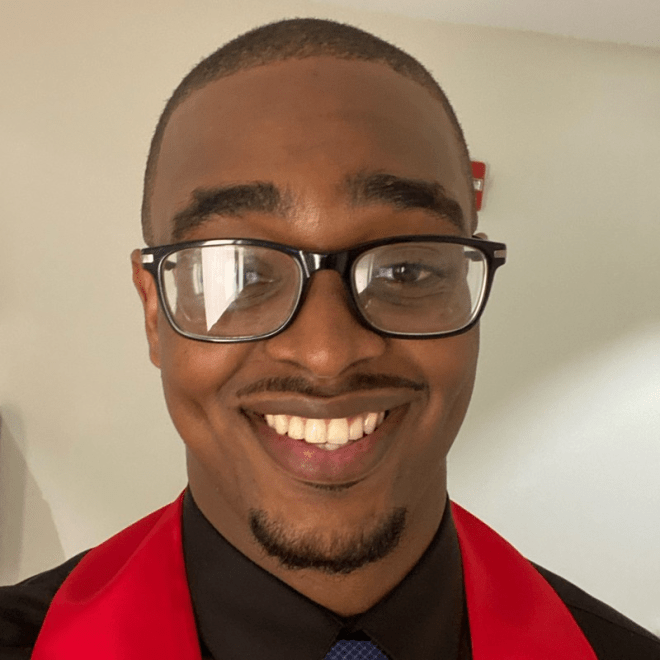
In this Q&A, St. John’s University alumnus Christian Amazan ’21TCB, '22MS shares what risk consulting really involves, what surprised him most about the field, and how his time at St. John’s University prepared him for his role as a Senior Risk Consultant at Ernst & Young (EY).
What is a Risk Consultant?
A risk consultant helps organizations identify, assess, and manage potential risks that could impact their operations, finances, or reputation. This often involves reviewing internal processes, analyzing data, and working closely with different teams to understand how a business functions. In fields such as internal auditing, risk consultants evaluate whether systems and controls are effective and recommend improvements to help organizations operate more efficiently and securely.
Q&A with Christian Amazan ’21TCB, '22MS
Q: How did you first discover internal auditing?
I didn’t even know what internal auditing and risk consulting were until my junior year at St. John’s University. I always knew I wanted to work in banking, but I didn’t know in what capacity. During my interview with EY, the partner I spoke with suggested I might be a good fit for internal auditing.
That conversation during the interview is what pushed me to take the introductory internal auditing class with Professor David Y. Chan, Ph.D. His classes are what led me to pursue the Risk and Financial Advisory master’s program.
And once I took it, I had three or four coffee chats with him that same month because I was so interested in the course content and the profession itself. It just kept pulling me further in.
Q: For students trying to picture this career, what does a typical day look like?
Every day is different, and the work is highly project-based.
If I’m on an audit, I might be responsible for one area—like the treasury function—while someone else on my team focuses on something completely different. We’re working toward the same deadline, but our workstreams don’t overlap much.
You’re given a timeline and trusted to deliver, but how you structure your day is up to you. You decide whom you need to meet with, what conversations to have, and how to move your work forward. And because you’re often switching between clients, the work is constantly evolving.
Q: What’s one aspect of the role that often surprises students?
How people-focused it is.
There’s definitely a technical side, but your work is only as strong as the relationships you build. You’re stepping into processes you’re not part of every day, so you rely on others to explain how things actually work.
That means building trust—so people are comfortable sharing information, raising concerns, and being honest about challenges.
Q: Which skills do you use most in your role that students might overlook?
Writing. You need to be such a strong writer that someone unfamiliar with your work can read what you wrote and understand everything you did.
That’s a skill you have to build over time. And it keeps evolving, because different people process information differently. What makes sense to one person might not make sense to someone else.
So you’re constantly adjusting how you write, frame things, and communicate your point. At my firm, we call it executive writing, and it’s something I didn’t expect to be this important, but you use it every day.
Q: Which skills or experiences from the St. John’s Risk and Financial Advisory master’s program do you use most today?
The program really helped me build a foundation for thinking and communicating in this field.
The internal auditing courses, for example, teach you the language of the profession, which is a big advantage. You’ll see people from business, biology, and even liberal arts majors, so not everyone has that foundation going in.
There’s also an advanced internal auditing class that walks you through the full audit process. The professors actually put themselves in the client’s position and speak to you that way, so you’re not just learning concepts, you’re experiencing what the job will feel like.
Another key piece was learning from professors who had real industry experience. That exposure, combined with mentorship and networking opportunities, made the transition into my first role much smoother.
Q: How is artificial intelligence (AI) impacting your work as a risk consultant?
It’s adjusting at different speeds across different departments. For my department, the focus right now is on helping people better leverage AI tools like Microsoft Copilot. So, beyond asking it a question, actually knowing how to prompt it correctly, how to use it to analyze large data sets, and how to structure outputs like reports or visuals.
We’ve also started using internal tools that can automate parts of our work. For example, instead of manually writing out certain testing documentation—which could take 40 minutes to an hour—you can upload the supporting documents, and the tool will generate a draft for you.
That changes the scale of what we can do. Instead of testing a sample, you can test an entire population because the groundwork is automated.
That said, it’s not replacing people. You still need to understand the context, review the output, and make sure everything is accurate. The tool doesn’t always get it right, so you have to step in, adjust it, and sometimes correct it yourself.
Right now, we see AI as something that reduces manual work and improves efficiency, but you still need someone there to think critically and ensure the final output is right.
Q: What advice would you give to students exploring this field?
The first thing is to develop your brand early—nd that starts with taking the risk of figuring out your area of interest.
If you’re interested in internal auditing or risk, ask yourself: in what industry? Banking, health care, manufacturing? Once you have a direction, start building a foundation, take a course, explore certifications, and learn about the risks in that space.
Then, reach out to people on LinkedIn. I spent summers sending messages and asking for coffee chats. It took time, but those conversations gave me real insight into the field. Before I graduated, I had spoken with at least four chief audit executives at different banks in New York City.
And don’t wait until you feel completely confident. In your first conversation, your voice will shake. During your second, you’ll forget what you were going to say. Your third, your elevator pitch, will fall apart completely. By the fifth person, you’ll be fine. The person you’re talking to — whether it’s a recruiter or a faculty member—knows you’re nervous. They’ll give you time. You just have to show up.
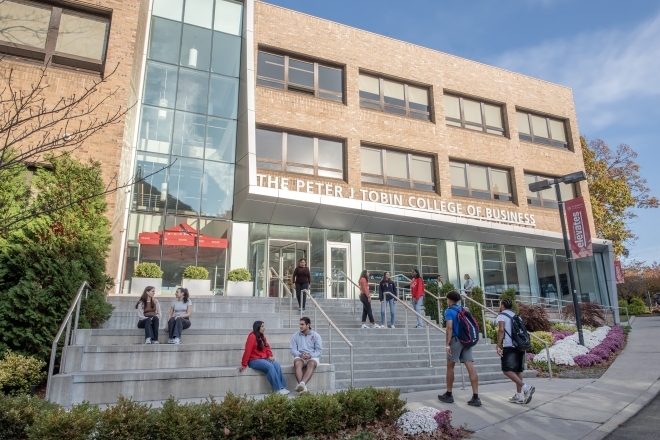
Interested in a career in internal audit and risk management?
The Risk and Financial Advisory M.S. program at St. John’s University equips students with the technical expertise, analytical thinking, and hands-on experience needed to succeed in today’s evolving business environment. Explore career opportunities in risk advisory, internal auditing, fraud examination, and enterprise risk management through the Risk and Financial Advisory M.S. program.
Related Blog Posts
A Leap of Faith: From Romania to St. John’s and Beyond
From Romania to St. John’s, international student Adina Stancu shares how her leap of faith opened the door to a college experience filled with global opportunities, meaningful connections, and a life she once never imagined.


Getting Involved on Campus: Finding Community and Confidence at St. John’s
Starting college can feel overwhelming. A St. John’s University student shares how getting involved helped her find her place, build confidence, and feel at home on campus.
