Studying Cybersecurity Abroad: A Week in Rome
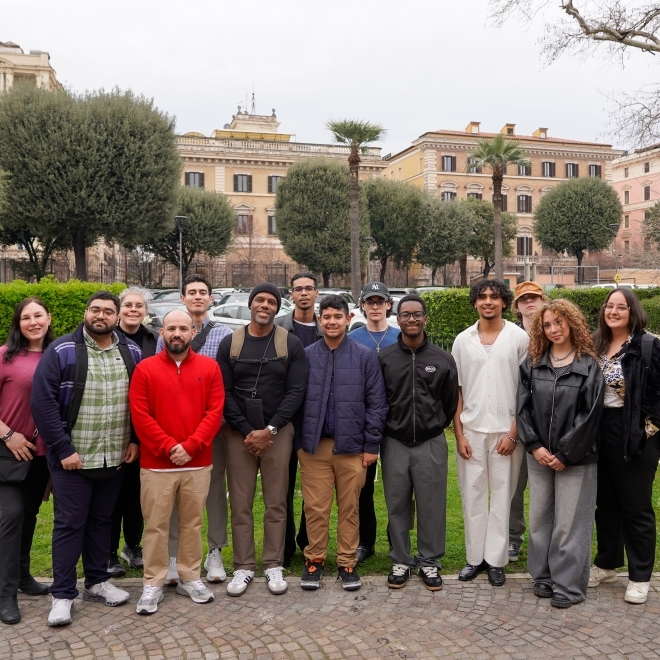
I have been to Italy before; multiple times, in fact. So when I decided to attend St. John’s University’s Cybersecurity in a Global Context program, the destination itself was not what gave me pause. What was different this time was that I was going without my wife. After years of traveling together, there is something oddly disorienting about navigating familiar streets alone. But that feeling of strangeness turned out to be exactly the point.
Arriving and Going “Dark”
After an orientation on Saturday evening, Sunday was a free day. I used it the way I usually do in a city I know well: I just walked. Rome is the kind of city that rewards wandering. There is no shortage of things to stumble upon, and taking it slow helped me settle in and shake off the long flight. By Monday morning, I was ready to work.
Monday kicked off with one of the more memorable labs I have had in this program: a dark-web exploration workshop. Using Linux VMs, we set up and navigated the Tor Browser, learned the basics of operational security, and got a firsthand look at what exists beyond the surface web. No purchasing or account creation was done. This was strictly for observational purposes…in case you were wondering.
We also dove into open-source intelligence (OSINT) that day. We covered tools such as Maltego, Spiderfoot, and Sherlock, and explored how investigators legally gather public data to build profiles, track movements, and support incident response.
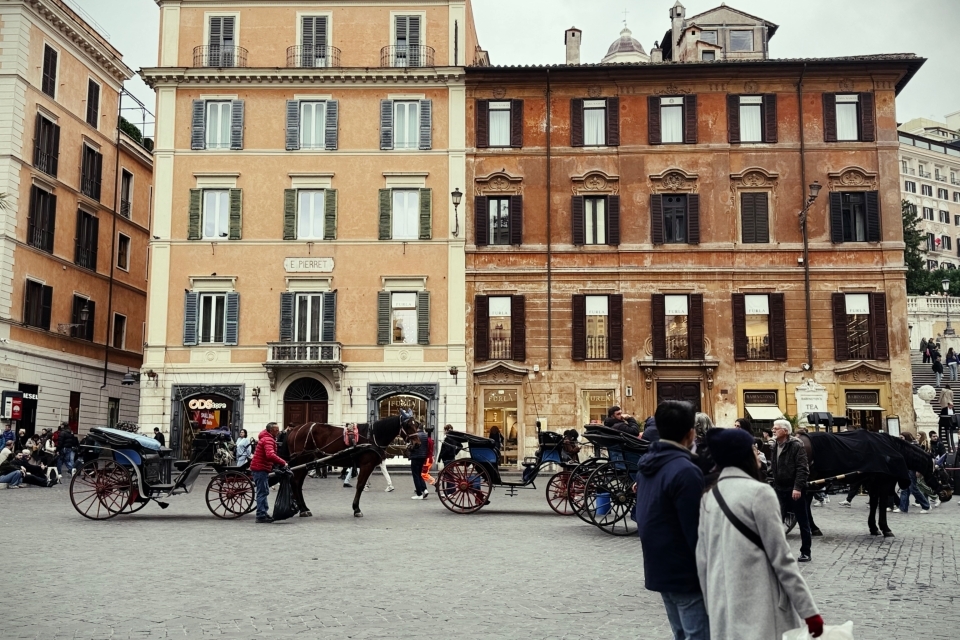
After lunch, we headed out for a guided walking tour of Rome’s city center, starting at Piazza del Popolo. The afternoon was a welcome contrast to the morning’s screen time.
The Feds Show Up
Tuesday brought a compelling guest presentation from a Federal Bureau of Investigation (FBI) veteran with more than 20 years in the field. She spoke about the bureau’s cyber operations, covering everything from business email compromise and ransomware to dark-web marketplace takedowns and interagency coordination.
She also walked us through how the FBI works alongside the Cybersecurity and Infrastructure Security Agency, United States Department of Homeland SecurityNational Security Agency, and international partners, including Italian law enforcement, to pursue cybercriminals across borders. The presentation reinforced what I already believed: we have some of the most competent and professional people protecting us, both domestically and abroad. Hearing about the scale of international collaboration, and specifically how the FBI has built strong working relationships with Italian authorities who act quickly when the evidence is solid, gave me genuine confidence in those systems. The work they do is incredible.
How is it Already Wednesday?
Wednesday was the most varied day of the trip. We started early at St. Peter’s Square for a papal audience. To be honest, I was not entirely sure what to expect, as this experience was not part of any of my previous travels. What I certainly did not expect was for our group to be called out by name. Hearing the University acknowledged in that setting, surrounded by travelers from every corner of the world, was something else. The energy and passion in the crowd were genuinely moving.
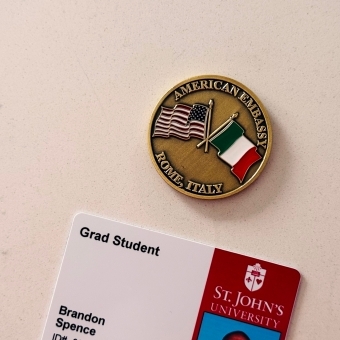
From there, we visited the US Embassy, which paired naturally with everything we had heard from the FBI the day before. Seeing the institutional side of how America operates internationally reinforced the bigger picture of what government cybersecurity professionals actually do and why it matters.
The evening took a lighter turn with a visit to GAMM, the video game museum. I expected to enjoy it, but I had not anticipated the level of nostalgia the experience would bring. There is something about seeing the evolution of gaming laid out across decades that hits differently when you grew up alongside it.
LINK University
Thursday brought us to LINK University for two guest lectures that pushed the academic content in directions I did not anticipate.
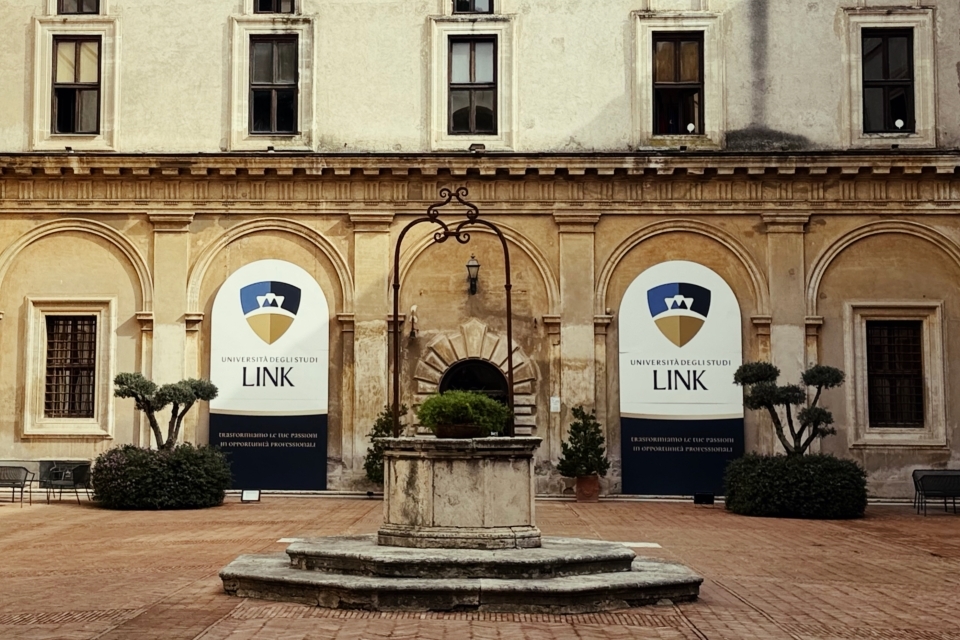
The first lecture, delivered by a professor of comparative law and M&A practitioner, examined the role of Artificial Intelligence (AI) in financial markets. His central argument was that while AI has the theoretical potential to democratize shareholder activism, allowing small investors to organize campaigns from a laptop, the current reality is largely the opposite. Large corporations are already using AI to monitor investor sentiment and preemptively neutralize activist movements before they gain traction.
The takeaway was that AI does not automatically level the playing field; it amplifies whoever has the most resources to deploy it. Naturally, my security-focused perspective turned toward how well-funded AI might pose an even greater threat to less advantaged groups if society is not mindful.
The second lecture came from a neuroscientist who posed a question I had never considered before: Why do current AI systems still struggle with causal reasoning?
His answer was rooted in evolutionary biology. The human brain developed its core cognitive functions hundreds of millions of years before language existed. Current large language models are fundamentally pattern-matching and association engines. They can predict the next word in a sequence, but they cannot reason about cause and effect in the way even an 18-month-old infant can.
Hearing this framed in terms of neuroscience, rather than solely computer science, gave me a new lens through which to think about the AI tools we use every day in cybersecurity. In some ways, it also eased some of the concerns raised during the previous lecture.
The day ended with the farewell dinner. Though it was not the close of the trip, it was a meaningful way to bring the group together, reflect on the week, and appreciate the connections we had made.
The Vatican
Friday included two Vatican-centered visits. The morning began at the Museo Tecnico Storico della Radio Vaticana, a radio museum tucked behind St. Peter’s Basilica in a space not normally open to the public. Walking through decades of radio and audio equipment, and learning how the Vatican has used broadcast technology to communicate with the world, was genuinely fascinating. There is something fitting about a cybersecurity cohort standing in a room full of historic communication infrastructure.
The afternoon took us through the Vatican Museums and into the Sistine Chapel. If you have not been, no description truly does it justice. The detail in Michelangelo’s ceiling is staggering, and learning about the optical illusions built into the work leaves you mesmerized. It also makes you realize that if Michelangelo could figure that out more than 500 years ago, before the age of calculators and laser levels, you can probably figure out how to get that assignment done on time.
Should You Go?
Whether you have been to Rome before or are getting your passport stamped for the first time, this trip offers experiences that cannot easily be replicated on your own. Sitting in a lab in Rome learning how to navigate Tor is different from watching a tutorial at home. Hearing an FBI agent discuss international cybercrime partnerships while physically being in the country where those partnerships operate adds a dimension that is difficult to quantify.
Connecting with classmates and professors in that kind of setting also builds something that does not happen in a Canvas discussion board. These trips create a unique bond. Some of the most valuable moments of the week were not on the schedule. After arriving as strangers, we left as recognizable faces and friends.
So, should you go? I would offer an emphatic yes.
Related Blog Posts
Seven Things I Wish I Knew Before Studying Abroad
Rome Was My Classroom is a six-part series about my study abroad experience and the lessons I brought home from my two-week stay in Rome, Italy.
Before leaving for Rome, I had plenty of questions. What would a typical day look like? Would I make friends? How intense is this program? Would I have time to actually experience Rome, or would I spend two weeks inside a classroom?
Here are seven things I wish I had known before arrival.
Four Things I Learned from Saying Yes to Study Abroad
Rome Was My Classroom is a six-part blog series about my two-week study abroad experience in Rome, Italy, as a doctoral student at St. John’s University and the lessons I brought home.
A Leap of Faith: From Romania to St. John’s and Beyond
From Romania to St. John’s, international student Adina Stancu shares how her leap of faith opened the door to a college experience filled with global opportunities, meaningful connections, and a life she once never imagined.


From St. John’s to the Philippines: Finding Faith and Purpose Through Service
A St. John’s University student reflects on a service experience in the Philippines and the faith, purpose, and connections that made the journey meaningful.
